ગુ
ગુ
આ લેખ હજી આ ભાષામાં ઉપલબ્ધ નથી, તેથી અંગ્રેજીમાં બતાવ્યો છે.
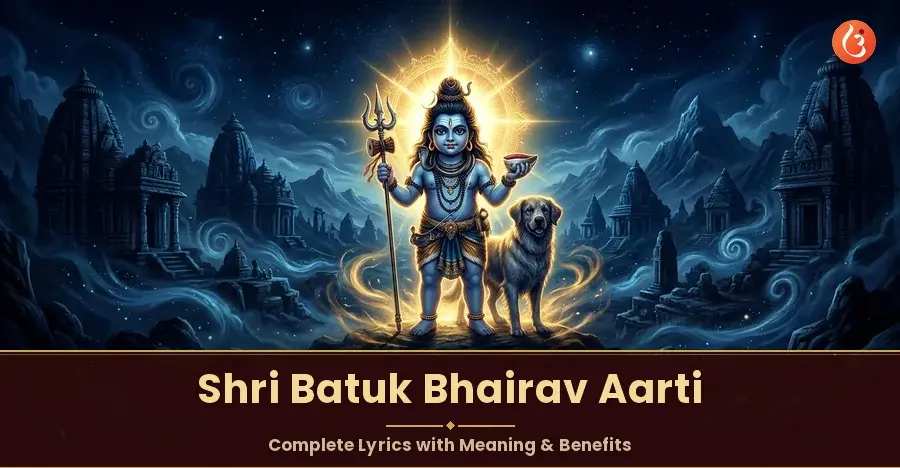
The Shree Batuk Bhairav Aarti (श्री बटुक भैरव आरती) is a powerful devotional hymn dedicated to the child form of Lord Bhairav, a fierce manifestation of Lord Shiva. According to the Shiva Purana, reciting this aarti invokes Bhairav's protective energies, shielding devotees from negative forces, unseen dangers, and the fear of untimely death. It's a core ritual for seeking courage and overcoming life's biggest obstacles.
This is the complete text of the Shree Batuk Bhairav Aarti. Verified pandits recommend chanting it with a pure heart and focused mind to receive the full blessings of the deity.
Jai Bhairava Deva, Prabhu Jai Bhairava Deva,
Sura Nara Muni Saba, Karate Prabhu Tumhari Seva.
॥ Om Jai Bhairava Deva ॥Tuma Papa Uddharaka, Duhkha Sindhu Taraka,
Bhakton Ke Sukha Karaka, Bhishana Vapu Dharaka.
॥ Om Jai Bhairava Deva ॥Vahana Shvana Virajata, Kara Trishula Dhari,
Mahima Amita Tumhari, Jai Jai Bhayahari.
॥ Om Jai Bhairava Deva ॥Tuma Bina Shiva Seva, Saphala Nahin Hove,
Chaturvatika Dipaka, Darshana Duhkha Khove.
॥ Om Jai Bhairava Deva ॥Tela Chataki Dadhi Mishrita, Bhashabali Teri,
Kripa Kijiye Bhairava, Kariye Nahin Deri.
॥ Om Jai Bhairava Deva ॥Panvon Ghungharu Bajata, Damaru Damakavata,
Batukanatha Bana Balaka, Jana Mana Harashavata.
॥ Om Jai Bhairava Deva ॥Batukanatha Ki Aarti, Jo Koi Jana Gave,
Kahe Dharanidhara Vaha, Nara Manavanchhita Phala Pave.
॥ Om Jai Bhairava Deva ॥
Understanding the meaning behind the words deepens your connection during the prayer. Here's what each verse of the Batuk Bhairav Aarti truly signifies. It's not just about recitation; it's about feeling the essence of Bhairav's power.
Verse 1: Jai Bhairava Deva...
"Victory to you, Lord Bhairav! Gods, humans, and sages all serve you with devotion."
This opening verse establishes Bhairav's supreme status, acknowledged across all realms of existence.
Verse 2: Tuma Papa Uddharaka...
"You are the liberator from sins, the one who helps us cross the ocean of sorrow. You bring happiness to your devotees and possess a formidable form."
This highlights Bhairav's dual nature: terrifying to evil but a source of immense comfort and joy to his followers.
Verse 3: Vahana Shvana Virajata...
"You ride majestically upon your divine dog (Shvan), holding a trident (Trishul) in your hand. Your glory is infinite. Victory to you, the remover of all fear!"
This describes his iconic imagery. The dog represents dharma and vigilance, while the trident signifies his control over the three Gunas. The dog is not merely a vehicle but a symbol of unwavering loyalty and righteousness. It represents the cosmic laws that Bhairav upholds, sniffing out adharma wherever it may hide.
Verse 4: Tuma Bina Shiva Seva...
"Without your blessing, service to Lord Shiva cannot be successful. You are the radiant lamp of the four directions, and your darshan (sight) removes all misery."
This is a key verse. According to Shaiva tradition, Bhairav is the Kshetrapal (guardian of the temple), and his permission is essential for reaching Shiva. This verse underscores his role as the supreme gatekeeper. In many ancient Shiva temples, such as the Kashi Vishwanath Temple, the darshan is considered incomplete without first paying homage to the Bhairav shrine. He holds the keys to Shiva's domain.
Verse 5: Tela Chataki Dadhi Mishrita...
"Offerings of oil, yogurt, and other items are made to you. Oh Bhairav, please bestow your grace upon us without any delay."
A direct appeal for blessings, referencing the traditional offerings (bhog) that please the deity.
Verse 6: Panvon Ghungharu Bajata...
"The bells on your feet jingle, and your damaru drum resonates. As Batukanath, the boy-lord, you delight the hearts of your people."
This verse specifically honors his child (Batuk) form - playful, yet immensely powerful.
Verse 7: Batukanatha Ki Aarti...
"Whoever sings this Aarti of Batukanath, says the poet Dharanidhara, that person will receive all their desired fruits (wishes)."
This is the Phala Shruti (statement of benefits), promising that sincere devotion through this aarti leads to the fulfillment of one's deepest wishes.
Many devotees know Lord Bhairav as the fierce, wrathful form of Shiva, the one who punishes evil. But what about Batuk Bhairav? The Shiva Purana provides the context for his origin. Batuk Bhairav is the gentle, child (Batu) form of this mighty deity.
The story tells of a demon named Aapad, who received a boon making him invulnerable to any god, demon, or man. His only weakness was that he could be defeated by a five-year-old child. As Aapad's tyranny grew, the gods pleaded with Lord Shiva for help. To overcome the demon's boon, Shiva manifested his own divine energy into the form of Batuk Bhairav, a beautiful and powerful five-year-old boy. This child-form vanquished Aapad, earning the name "Apaduddharana," the remover of calamities.
Think of it this way: while Kaal Bhairav represents the fearsome power of time and destruction, Batuk Bhairav embodies protection and compassion. He is considered more accessible, especially for householders. His iconography reflects this blend of innocence and power. He is often shown with curly locks of hair, three eyes, and carrying a staff (danda) and a skull bowl (kapala). Worshipping him is believed to grant quick blessings and shield the family from harm, black magic, and negative planetary influences. He is the guardian who is both powerful and merciful. Absolutely essential.
You can learn more about Lord Shiva's different forms and their significance in our guide to the Twelve Jyotirlingas of Lord Shiva.
Chanting the Batuk Bhairav Aarti isn't just a ritual; it's a spiritual tool for profound transformation. Devotees who perform it regularly, especially on Sundays, report significant changes. Why does this matter so much? Because it aligns you with the protective energies of the ultimate guardian.
To get the maximum benefit, you should perform the Aarti with the correct procedure (vidhi). It’s simple, but your sincerity is what counts the most. Here’s a step-by-step guide from temple pandits.
While daily Aarti at home is powerful, participating in a formal puja conducted by verified pandits at a traditional temple can amplify the blessings. These rituals follow ancient protocols that unlock deeper spiritual benefits.
At Utsav, you can connect with these sacred traditions directly.
Recommended Pujas:
When you participate, pandits will chant your Name and Gotra in the Sankalp, ensuring the blessings are directed to you. You'll receive a video of the puja and authentic prasad delivered to your home.
The Shree Batuk Bhairav Aarti is attributed to the poet Dharanidhara, whose name is explicitly mentioned in the final verse (phala shruti): Kahe Dharanidhara Vaha, Nara Manavanchhita Phala Pave. While detailed historical records of Dharanidhara are scarce, he is placed within the medieval Bhakti tradition. The composition is not part of an ancient Purana but is a standalone devotional hymn written in a vernacular Hindi dialect, likely Brajbhasha, which was common for such works. Its theology is deeply rooted in the Puranic descriptions of Bhairav found in texts like the Shiva Purana. For centuries, this aarti has been transmitted through oral tradition among devotees and later preserved in popular prayer booklets (aarti sangrahs), becoming an integral part of Bhairav worship.
Scriptural Authority:
Temple Verification:
- Baba Batuk Bhairav Mandir, Ujjain - Ritual practices and timings for the pujas mentioned are verified with this temple.
Related Pujas on Utsav:


બટુક ભૈરવ, ઉજ્જૈન
રવિવાર - 29 નવેમ્બર, 2026 - Ravivar Visesh