ગુ
ગુ
આ લેખ હજી આ ભાષામાં ઉપલબ્ધ નથી, તેથી અંગ્રેજીમાં બતાવ્યો છે.
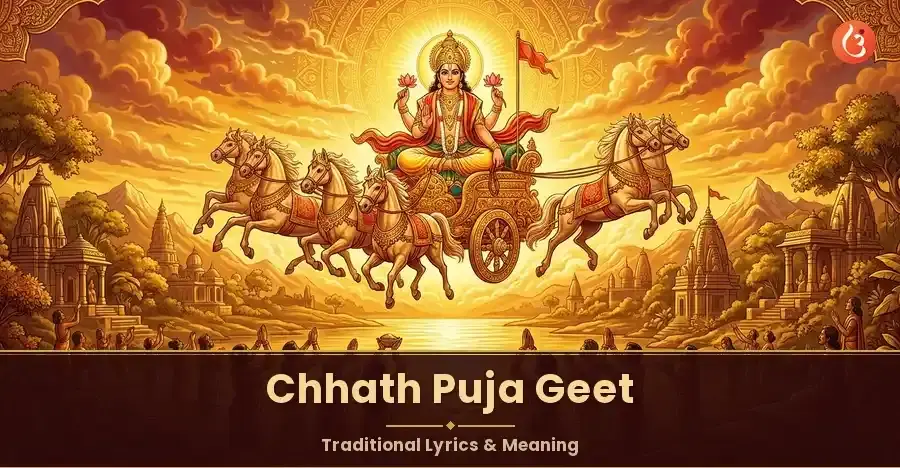
Chhath Puja songs (छठ पूजा के गीत) are not just music; they are a form of sacred sadhana (spiritual practice) that empowers devotees through the rigorous 36-hour fast. These folk hymns, passed down through generations in Bihar, Jharkhand, and Eastern UP, narrate the story of the vrat (fast), praise Chhathi Maiya and Surya Dev, and channel a devotee's focus. Emerging from the heartland of India, this tradition connects directly to the ancient Vedic practice of sun worship, yet it retains a uniquely intimate, folk character. They are the spiritual fuel for one of Hinduism's most demanding festivals.
Chhath songs are a living tradition, an oral library of faith passed from mother to daughter. According to the folk traditions of Bihar, these aren't composed texts but divine expressions of devotion. Their power doesn't come from complex Sanskrit but from raw, heartfelt emotion sung in regional dialects like Bhojpuri, Maithili, and Magahi. This accessibility ensures every person, regardless of their background, can connect directly with the divine.
The lyrical themes are remarkably specific, acting as a musical companion to every ritual. There are songs for the first day, Nahay Khay, which speak of purification and preparing the body and soul. Other songs describe the bittersweet feeling of Kharna, the last meal before the arduous fast begins. As devotees walk to the riverbanks, they sing geets that narrate the journey, transforming a simple walk into a pilgrimage. The songs invoke Chhathi Maiya, believed to be the sister of Surya, asking her to accept their offerings and convey their prayers to the Sun God.
So, what are they about? The lyrics beautifully capture every single moment of the four-day festival. You'll hear songs about preparing the thekua (a special prasad), weaving the soop (bamboo tray), the long walk to the river ghats, and the offerings made to the setting and rising sun. They are a complete audio guide to the puja vidhi, wrapped in melody. It's this deep connection to the ritual that makes them absolutely essential.
The Chhath vrat is incredibly demanding, involving a continuous 36-hour period without food or water. This is where the music's true purpose is revealed. For the Vratis (devotees observing the fast, mostly women), singing these songs is a form of collective meditation. It's not a performance; it's a spiritual tool. The simple act of singing, often accompanied only by the rhythm of clapping hands, generates a powerful spiritual vibration (dhwani) that is believed to purify the atmosphere and the devotee's own consciousness.
Here’s how it works:
This song, famously sung by Sharda Sinha, is one of the most iconic Chhath geets. The lyrics depict a conversation where the rising Sun God asks a devotee for whom she is undertaking such a difficult fast.
Kelwa ke paat par uge lan surujmal jhaanke jhuke
He karrelu Chhath baratiya se jhaanke jhukeHum tohse puchhi baratiya e baratiya ke kekra laagi
He karrelu Chhath baratiya se kekra laagiHamro je putwa tohan aisan putwa se unke laagi
He kareli Chhath baratiya se unke laagiNariyar ke paat par uge lan surujmal jhaanke jhuke
He karrelu Chhath baratiya se jhaanke jhukeHamro je swami tohan aisan swami se unke laagi
He kareli Chhath baratiya se unke laagi
Understanding the meaning reveals the deep love and sacrifice embedded in the song. It’s not just a hymn; it’s a story of selfless devotion.
The four-day Chhath Puja festival in 2026 is a major event. According to the Hindu solar calendar, here are the key dates you'll need to know.
| Date | Day | Event | Significance |
|---|---|---|---|
| November 13, 2026 | Friday | Nahay Khay | (Bathe and Eat) The first day involves a ritual bath in a holy river. Vratis eat a single pure, sattvic meal of kaddu-bhaat (bottle gourd curry with rice) and chana dal, marking the start of their spiritual discipline. |
| November 14, 2026 | Saturday | Kharna | (The Day of Fasting) Devotees observe a full-day fast, which is broken briefly after sunset with a sacred meal of kheer (rice pudding) cooked with jaggery and roti. After this meal, the rigorous 36-hour waterless fast begins. |
| November 15, 2026 | Sunday | Sandhya Arghya | (Evening Offering) This is the peak of the festival. Vratis stand in waist-deep water at the riverbank and offer arghya (a prayerful offering of water and milk) to the setting sun, thanking it for its life-giving energy. |
| November 16, 2026 | Monday | Usha Arghya | (Morning Offering) On the final day, devotees gather before dawn to offer arghya to the rising sun. This offering symbolizes a prayer for new beginnings, vitality, and blessings for the year ahead. The fast is broken after this ritual. |
To understand the power of Surya Dev beyond Chhath, you can explore the Surya Ashtakam, a powerful hymn for health and success.
For devotees who cannot perform the rigorous fast but still wish to seek the blessings of Surya Dev, participating in Vedic rituals is a powerful alternative. Many people face challenges due to health conditions, demanding work schedules, or living abroad where access to a clean river is not possible. Online pujas bridge this gap, allowing you to connect with the divine energies of the festival from anywhere in the world. The key to this connection is the Sankalp, where a pandit chants your name and gotra (lineage), creating a sacred bond that dedicates the ritual's merits to you and your family.
Utsav connects you with verified pandits who perform these pujas on your behalf.
Recommended Pujas for Surya Dev:
When you participate, pandits chant your name and gotra during the Sankalp, and you receive a video of the puja and authentic prasad from the temple.
Unlike scriptures with a single author, Chhath Puja songs have no canonical composer. They are a living repository of anonymous folk poetry, created and refined over centuries by countless unnamed devotees, predominantly women in Bihar, Jharkhand, and Eastern UP. Their linguistic register is not classical Sanskrit but the vernacular dialects of the people, such as Bhojpuri, Maithili, and Magahi. While the songs are an oral tradition, the vrat (ritual) they describe has deep roots in Puranic lore, particularly the story of King Priyavrata found in the Markandeya Purana, which is often cited as a foundational narrative for the festival. The practice itself echoes ancient Vedic sun worship traditions dedicated to Surya Dev. These sacred melodies have been transmitted orally (shruti) from generation to generation, passed from mother to daughter, preserving their emotional and spiritual integrity.
Cultural Authority:
Scriptural Context:
- The worship of Surya (Sun God) is detailed in the Rigveda and Markandeya Purana. While Chhath is primarily a folk tradition, its roots connect to ancient Vedic solar worship.
Panchang & Dates:
- Festival dates for 2026 are based on the Hindu solar calendar, verified against Drikpanchang.com.
Related Pujas on Utsav:


હર કી પૌડી, હરિદ્વાર
મંગળવાર - 08 ડિસેમ્બર, 2026 - માગશર અમાસ