ગુ
ગુ
આ લેખ હજી આ ભાષામાં ઉપલબ્ધ નથી, તેથી અંગ્રેજીમાં બતાવ્યો છે.
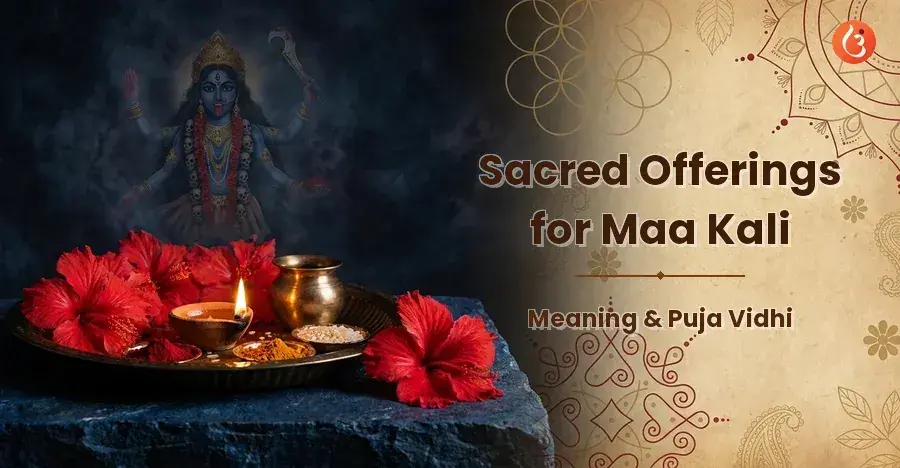
Worshipping Maa Kali, the fierce and compassionate goddess of time and transformation, is a powerful practice rooted in deep symbolism. The offerings made to her aren't just random items; they are sacred codes that unlock a deeper connection. According to the Mahanirvana Tantra, specific offerings align the devotee's energy with her formidable power.
Before we explore the offerings, it's essential to understand who you're connecting with. Maa Kali (महाकाली) is not a goddess of random destruction. As described in the Devi Mahatmyam, she is the primordial energy (Adi Shakti) who emerges to destroy evil that threatens cosmic order. She is the fierce form of Maa Durga, the consort of Lord Shiva, and the ultimate reality in many Shakta traditions.
Her dark complexion represents the formless, all-encompassing nature of Brahman. Her lolling tongue seeks to consume negativity, and her garland of skulls represents the liberation of souls from the cycle of ego and rebirth. Worshipping her isn't about fear; it's about seeking the courage to destroy your own inner demons. It's a profound act.
The offerings in Kali Puja are deeply symbolic, designed to resonate with her elemental and fierce nature. Practices at major Shakti Peethas like the Kalighat Temple in Kolkata have codified these traditions over centuries. Here's what you need to know.
The red hibiscus is non-negotiable in Kali Puja. Its deep red color mirrors her fierce energy and her tongue, which laps up the blood of demons. The flower’s shape, resembling a yoni, also signifies divine feminine power and creation. It's believed that offering a garland of 108 red hibiscus flowers is one of the quickest ways to gain her attention and blessings. This isn't just a flower; it's a direct energetic key.
Maa Kali enjoys a diverse feast, representing the fullness of life. The bhog offered at temples like Dakshineswar often includes both vegetarian and, in some traditions, non-vegetarian items. Why? Because she transcends conventional purity rules.
This is where many get confused. In advanced Tantric worship, the five "M's" or Panchamakara are offered: Madya (wine), Mamsa (meat), Matsya (fish), Mudra (parched grain), and Maithuna (ritual union). For most devotees, these are symbolic. Karana (wine) is often substituted with coconut water or hibiscus sharbat. These offerings represent transcending worldly attachments and taboos, offering every aspect of life - even the "impure" - back to the Divine Mother who is the source of all.
The smoke from dhoop and the fire from camphor do more than just create a devotional atmosphere. According to Agama texts, the fragrant smoke purifies the ritual space, carrying the devotee's prayers upwards. Camphor, which burns without leaving any residue, symbolizes the complete dissolution of the ego at the feet of the Goddess. When you light camphor, you're symbolically saying, "I offer my ego to you to be consumed entirely."
Red sandalwood paste and sindoor are directly linked to Shakti's energy. Rakta Chandan is used to draw yantras and anoint the deity, invoking her fiery power. Sindoor, a mark of auspiciousness, is offered to honor her as the divine consort and the source of all creative power in the universe. Applying it signifies a devotee's complete surrender and acceptance of her protection.
So, why this specific list? It's not arbitrary. In the Shakta tradition, as outlined in texts like the Kaulavali-Nirnaya, the goal is to engage all senses in worship and to offer the Goddess elements that represent her own cosmic nature.
You're not just giving things; you're making a statement.
This is what makes Kali Puja so transformative. It's an active, powerful exchange of energy.
You don't need an elaborate setup to connect with Maa Kali. Verified Utsav pandits affirm that simple, heartfelt devotion is what matters most.
For devotees who wish to experience a complete, tantra-shuddha puja, participating in rituals at verified temples is the best path. Through Utsav, you can connect with pandits who perform these pujas with meticulous adherence to tradition.
When you participate, you don't just book a service; you become part of an ancient lineage of worship. The pandit will make the offerings on your behalf, chanting your Sankalp (name, gotra, and wish).
Fill the Sankalp Form, and within days, you'll receive a video of the puja and authentic temple prasad delivered to your home.


મા કાલીઘાટ મંદિર, કોલકાતા
મંગળવાર - 08 ડિસેમ્બર, 2026 - માગશર અમાસ