ગુ
ગુ
આ લેખ હજી આ ભાષામાં ઉપલબ્ધ નથી, તેથી અંગ્રેજીમાં બતાવ્યો છે.
Receiving prasad is the final, sacred step in completing your worship. According to the Dharma Shastras, the first and most important rule is to consume a portion of it immediately with utmost reverence. This act signifies your acceptance of the deity's divine blessing. Don't treat it as ordinary food; it's a sanctified offering meant to purify your mind and soul, connecting you directly to the divine energy of the puja you participated in.
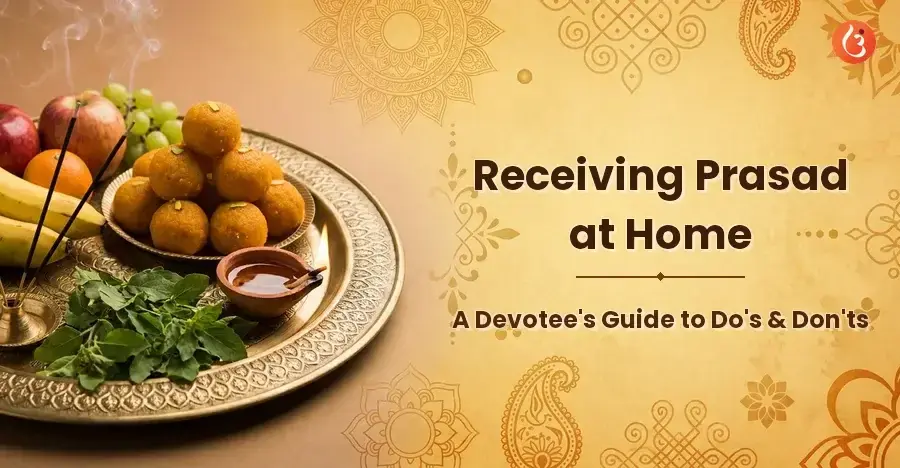
Prasad isn't just blessed food. It's a profound spiritual concept, grounded in the principle of devotional offering, or naivedya. In the Bhagavad Gita (Chapter 9, Verse 26), Lord Krishna explains that He accepts any offering - be it a leaf, a flower, a fruit, or water - if it's given with pure devotion. When the deity accepts this offering, the food becomes sanctified and infused with divine grace. It's no longer material substance; it's a physical medium for blessings. In this sanctified state, it is considered the deity's uchchishta (divine remnant), a great honor for any devotee to receive.
So, what does this mean for you? When you consume prasad, you're internalizing the deity's divine energy. It's a powerful act that purifies the mind, body, and soul. You're not just eating; you are completing a sacred cycle of devotion that started with your Sankalp (vow). It's a deeply personal and powerful experience.
When that package from a verified Utsav temple arrives, what's the first thing you should do? Our experienced pandits emphasize that your actions in these first few moments are critical to honoring the blessing. It’s simple, really. Here’s the step-by-step process.
Before you even open the box, handle it with respect. If you can, wash your hands first. Always accept the package with your right hand. Don't just leave it on the dining table or kitchen counter. The best practice is to place it in your puja room or on a clean, dedicated shelf before opening it. This small act sets the right intention.
This is the most important step. Don't wait. After opening the package, every member of the family should consume a small portion right away. This should ideally be the first thing you eat, not mixed with your regular meal (which would make it jutha, or defiled). This immediate consumption is your "yes" to the divine blessing being offered.
Prasad's power multiplies when it's shared. It's a core tenet of Sanatana Dharma. Once your family has partaken, distribute the remaining prasad to friends, neighbors, and anyone you wish to share the deity's grace with. You're not just giving food; you're spreading positive divine vibrations. It’s a beautiful act of spiritual generosity.
You've got to treat prasad differently from other food. Dry items like sugar balls, nuts, or puffed rice can be stored for several days in a clean, airtight container. Keep this container in a pure place, separate from your everyday snacks. Perishable prasad like fruit or milk-based sweets (mithai) should be consumed within a day or two. The key is to never let it spoil.
Why is there so much emphasis on consuming prasad? It's because the benefits are profound, as described in texts like the Agni Purana. It's not just a tradition; it’s a spiritual technology for your well-being. This sacred food acts as a bridge, connecting the physical body of the devotee with the subtle, divine energy of the deity. The effects are real.
Here are the key benefits you invite into your life:
Following the correct etiquette isn't about rigid rules; it's about maintaining the sanctity of the blessing. The Dharma Shastras provide clear guidelines that are simple to follow. Think of it as showing respect for a divine gift.
Here’s a quick guide to what you absolutely should and shouldn't do:
| The Do's (What You MUST Do) | The Don'ts (What to AVOID) |
|---|---|
| 1. Always use your right hand to give or receive prasad. | 6. Never let it touch your feet or fall on the ground. |
| 2. Consume it immediately after receiving it. | 7. Never refuse prasad when it's offered to you. |
| 3. Share it generously with family and friends. | 8. Don't mix it with regular food or leftovers (jutha). |
| 4. Maintain cleanliness and a reverent attitude. | 9. Never throw unwanted prasad in a dustbin. |
| 5. Cover your head as a sign of respect if possible. | 10. Don't eat it mindlessly while watching TV or working. |
| 11. Never criticize its taste or appearance. |
What if prasad spoils or you can't consume it? The proper way to dispose of it is to place it in the earth near a plant, ideally under a tree, or in a clean, flowing body of water.
For the 5 lakh+ devotees who have participated in pujas through Utsav, receiving prasad at home completes the spiritual circuit. It’s how we bridge the distance between you and the temple. You don't just watch a puja; you become a part of it. The process is simple and sacred.
When you Participate in a puja, our verified pandits at temples like the Deergh Vishnu Mandir in Mathura chant your Nama (name) and Gotra (lineage) in the Sankalp. The prasad from that very ritual - blessed specifically for you - is then hygienically packaged and sent to your home. It’s not just any prasad; it’s your prasad. This is the real deal.
Understanding prasad is part of a larger devotional practice. As you deepen your connection, you might find these guides helpful. Many of the principles of offering and receiving are universal in Hindu customs.
Om Namo Bhagavate Vasudevaya (Dwadashakshari Mantra)
ॐ नमो भगवते वासुदेवाय
Om Namo Bhagavate Vāsudevāya
This is the revered Dwadashakshari Mantra, the twelve-syllable invocation central to Vaishnava traditions and prominently featured in the Srimad Bhagavatam. It is a profound salutation to Lord Vasudeva (an incarnation of Vishnu, or Krishna himself), the divine consciousness that pervades all of existence. The mantra translates to, "I bow to the Supreme Lord, the divine one who resides in all beings." Chanting it is an act of complete surrender (sharanagati) and a powerful tool for spiritual purification, seeking not just material blessings but ultimate liberation (mukti) from the cycle of samsara. It is often called the ultimate mukti-mantra.
For dedicated spiritual practice (sadhana), the mantra is traditionally chanted 108 times, typically using a tulsi mala, which is sacred to Lord Vishnu. This disciplined repetition, known as japa, helps to steady the mind, open the heart to devotion, and internalize the divine vibrations of the mantra.
The most spiritually potent time for recitation is during the Brahma Muhurta, the auspicious period approximately 90 minutes before sunrise. Thursdays (Guruvar), being associated with Lord Vishnu, and the sacred day of Ekadashi are considered especially powerful for this practice, amplifying its spiritual benefits and deepening the devotee's connection to the divine.
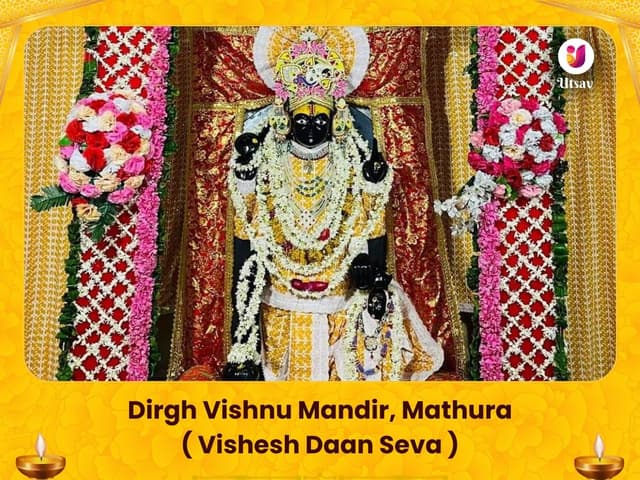

દીર્ઘ વિષ્ણુ મંદિર, મથુરા
ગુરુવાર - 03 ડિસેમ્બર, 2026 - Guruvar Visesh