ગુ
ગુ
આ લેખ હજી આ ભાષામાં ઉપલબ્ધ નથી, તેથી અંગ્રેજીમાં બતાવ્યો છે.
The Durga Kavach (दुर्गा कवच) is a powerful collection of shlokas from the Markandeya Purana that acts as a spiritual shield for the devotee. Lord Brahma revealed it to the sage Markandeya, explaining how invoking Maa Durga's various forms creates a divine armor against all harm. It's not just a prayer; it's a profound protective ritual. Over 1 Lakh+ Devotees participate in Navratri pujas through Utsav annually.
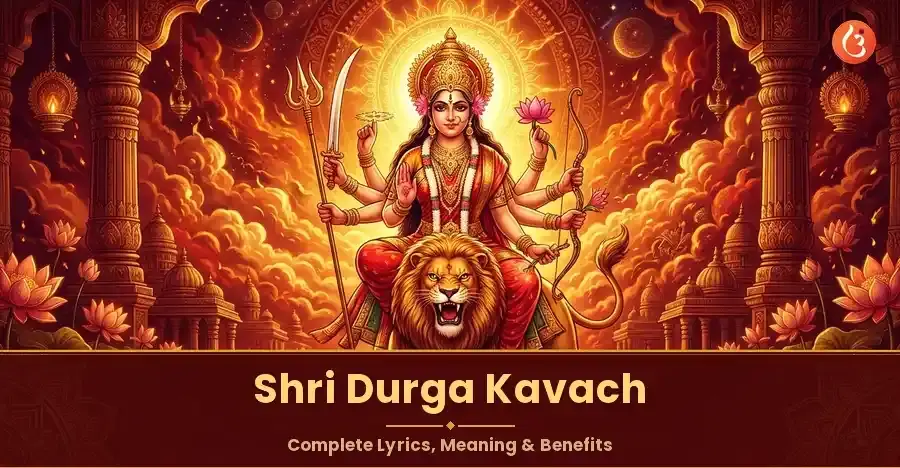
The Devi Kavacham, or Durga Kavach, is a foundational text within the Markandeya Purana (मार्कण्डेय पुराण), serving as a prelude to the celebrated Durga Saptashati. Its origin is a divine dialogue where the sage Markandeya asks Lord Brahma for a way to protect humanity. Brahma then imparts this secret Kavach, a hymn that systematically invokes Durga's shaktis to protect every single part of the devotee's body.
ॐ अस्य श्रीचण्डीकवचस्य ब्रह्मा ऋषिः, अनुष्टुप् छन्दः,
चामुण्डा देवता, अङ्गन्यासोक्तमातरो बीजम्, दिग्बन्धदेवतास्तत्त्वम्,
श्रीजगदम्बाप्रीत्यर्थे सप्तशतीपाठाङ्गत्वेन जपे विनियोगः ॥
It’s not just a collection of verses. It's a highly structured spiritual practice. The real power comes from understanding that you're building a fortress of divine energy, piece by piece, with each shloka. This isn't just about belief; it's about active participation in your own spiritual protection.
Here is the complete, uninterrupted text of the Durga Kavach for recitation.
Om Asya Sri Chandikavachasya Brahma Rishihi, Anushtup Chandaha,
Chamunda Devata, Anganyasokta Mataro Beejam, Digbandha Devatastattvam,
Sri Jagadamba Prityarthe Saptashati Pathangatvena Jape Viniyogaha.
Om Markandeya Uvacha
Om Yadguhyam Paramam Loke Sarvarakshakaram Nrinam.
Yanna Kasyachidakhyatam Tanme Bruhi Pitamaha.
Asti Guhyatamam Vipra Sarvabhutopakarakam.
Devyastu Kavacham Punyam Tachhrinushva Mahamune.
Prathamam Shailaputriti Dwitiyam Brahmacharini.
Tritiyam Chandraghanteti Kushmandeti Chaturthakam.
Panchamam Skandamateti Shashtham Katyayaniti Cha.
Saptamam Kalaratriti Mahagauriti Chashtamam.
Navamam Siddhidatriti Navadurga Prakirtitah.
Uktanyetani Namani Brahmanaira Mahatmana.
Aindri Gajasamarudha Vaishnavi Garudasana.
Maheshwari Vrisharudha Kaumari Shikhivahana.
Lakshmih Padmasana Devi Padmahasta Haripriya.
Shwetarupadhara Devi Ishwari Vrishavahana.
Brahmi Hamsasamarudha Sarvabharana Bhushita.
Ityeta Matarah Sarvah Sarvayoga Samanvitah.
Nanabharana Shobhadhya Nanaratnopashobhitah.
Drishyante Rathamarudha Devyah Krodhasamakulah.
Shankham Chakram Gadam Shaktim Halam Cha Musalayudham.
Khetakam Tomaram Chaiva Parashum Pashameva Cha.
Kuntayudham Trishulam Cha Sharngamayudhamuttamam.
Daityanam Dehanashaya Bhaktanamabhayaya Cha.
Dharayantyayudhanittham Devanam Cha Hitaya Vai.
Aindri Rakshatu Mam Purvya Agneyyamagnidevata.
Varahi Dakshine Rakshad Vayavye Mrigavahini.
Udeechyam Patu Kaumari Aishanyam Shuladharini.
Urdhvam Brahmani Me Rakshadadhastad Vaishnavi Tatha.
Evam Dasha Disho Rakshechamunda Shavahana.
Jaya Me Chagratah Patu Vijaya Patu Prishthatah.
Ajita Vamaparshwe Tu Dakshine Chaparajita.
Shikhamudyotini Rakshe-duma Murdhni Vyavasthita.
Maladhari Lalate Cha Bhruvau Rakshed Yashaswini.
Trinetra Cha Bhruvormadhye Yamaghanta Cha Nasike.
Shankhini Chakshushormadhye Shrotrayordwaravasini.
Kapolau Kalika Rakshetkarnamule Tu Shankari.
Nasikayam Sugandha Cha Uttaroshthe Cha Charchika.
Adhare Chamritakala Jihvayam Cha Saraswati.
Dantan Rakshatu Kaumari Kanthadeshe Tu Chandika.
Ghantikam Chitraghanta Cha Mahamaya Cha Taluke.
Kamakshi Chibukam Rakshed Vacham Me Sarvamangala.
Grivayam Bhadrakali Cha Prishthavanshe Dhanurdhari.
Nilagriva Bahih Kanthe Nalim Nalakuvari.
Skandhayoh Khadgini Rakshed Bahu Me Vajradharini.
Hastayordandini Rakshe-dambika Changulishu Cha.
Nakhan Chuleshwari Rakshetkukshau Rakshetkuleshwari.
Stanau Rakshenmahadevi Manahshokavinashini.
Hridaye Lalita Devi Udare Shuladharini.
Nabhau Cha Kamini Rakshed Guhyam Guhyeshwari Tatha.
Putana Kamika Medhram Gude Mahishavahini.
Katyam Bhagavati Rakshejjanuni Vindhyavasini.
Janghe Mahabala Rakshetsarvakama Pradayini.
Gulphayornarasimhi Cha Padaprishthe Tu Taijasi.
Padangulishu Shri Rakshetpadadhastala Vasini.
Nakhandanshtrakarali Cha Keshanchaivordhvakeshini.
Romakupeshu Kauberi Tvacham Vagishwari Tatha.
Rakta Majjavasa Mansanyasthi Medansi Parvati.
Antrani Kalaratrishcha Pittam Cha Mukuteshwari.
Padmakoshi Kshetre Rakshed Valim.
Shukram Brahmani Me Rakshechchayam Chatreshwari Tatha.
Ahankaram Mano Buddhim Rakshenme Dharmadharini.
Pranapanau Tatha Vyanamudanam Cha Samanakam.
Vajrahasta Cha Me Rakshetpranam Kalyana Shobhana.
Evam Rahasyam Viprarshi Brahmakavacham Samuddhrutam.
Ya Pathetprayato Nityam Trisandhyam Shraddhayanvitah.
Daivikala Bhavettasya Trailokyeshvaparajitah.
Jivedvarshashatam Sagramapamrityuvivarjitah.
Nashyanti Vyadhayah Sarve Lutavisfotakadayah.
Sthavaram Jangamam Chaiva Kritrimam Chapi Yadisham.
Tani Sarvani Nashyanti Visha Mantradikani Cha.
Bhuchara Khecharashchaiva Jalajashchopadeshikah.
Sahaja Kulaja Mala Dakini Shakini Tatha.
Antarikshachara Ghora Dakinyashcha Mahabalah.
Graha Bhuta Pishachashcha Yaksha Gandharva Rakshasah.
Brahmarakshasa Vetalah Kushmanda Bhairavadayah.
Nashyanti Darshanattasya Kavache Hridi Samsthite.
Manonnatirbhavedragyastejovriddhikaram Param.
Yashasa Vardhate Sopi Kirtimandita Bhutale.
Japet Saptashatim Chandim Kritva Tu Kavacham Pura.
Yavadbhumandalam Dhatte Sashailavanakananam.
Tavattishthati Medinyam Santatih Putra Pautriki.
Dehante Paramam Sthanam Yatsurairapi Durlabham.
Prapnoti Purusho Nityam Mahamaya Prasadatah.
Labhate Paramam Rupam Shivena Saha Modate Om.
Reciting is powerful, but understanding the meaning transforms the practice. Here's what you are invoking.
You begin by acknowledging the lineage: Brahma is the Rishi (seer), Anushtup is the meter, and Chamunda is the deity. You state your purpose: to please the divine mother, Jagadamba. Markandeya then asks Brahma for the ultimate secret of protection for all beings. It's a humble request for a universal blessing.
Brahma agrees to reveal the most sacred and secret armour of the Devi. He then lists the nine primary forms of Durga, the Navadurga (Shailaputri, Brahmacharini, etc.), establishing the divine source of the protection you are about to invoke.
This section is incredible. It describes the different Matrikas (divine mothers) and their vahanas (vehicles) and weapons. You're not just calling on one form; you're summoning an entire divine army. Aindri on her elephant, Vaishnavi on Garuda, Maheshwari on her bull - each armed and ready to defend the devotees and destroy their enemies. It's a visualization of overwhelming divine force.
This is the core of the Kavach. It's a systematic, head-to-toe spiritual fortification.
You are literally wrapping every cell of your being in divine light.
This is the promise. What happens when you chant the Kavach with devotion?
According to pandits who perform these rituals, the benefits of the Durga Kavach go beyond simple recitation. They manifest in tangible ways when chanted with the correct intention and discipline.
To experience the full power of the Kavach, following the traditional method (vidhi) is essential. As verified pandits on the Utsav platform explain, the process is as important as the prayer itself.
The connection between Durga Kavach and Navratri is profound. Navratri celebrates the nine forms of Durga, the very same deities invoked in the Kavach. Chanting it during these nine nights is believed to amplify its power exponentially.
During Sharad Navratri 2026, the period is especially charged with Devi's energy. Reciting the Kavach each day, particularly on the auspicious tithi of Durga Ashtami, is a core practice for millions of devotees. It's considered the best time to establish your spiritual armour for the entire year ahead. This practice is central to the traditions at major Shakti Peethas like the Kalighat Kali Temple in Kolkata.
While personal recitation is powerful, participating in rituals performed by trained pandits can provide a deeper connection and address specific challenges. Utsav connects you with verified temples and pandits to perform authentic Devi pujas on your behalf.
Recommended Pujas for Divine Protection:
When you participate, the pandit makes the Sankalp with your name and gotra, you receive a video of the puja, and authentic temple prasad is delivered to your home.
The Durga Kavach is not attributed to a single human composer but is an integral part of the Markandeya Purana, a text traditionally ascribed to the sage Krishna Dvaipayana Vyasa. Within the scripture, its origin is a divine dialogue where Lord Brahma reveals this sacred hymn to the sage Markandeya. This Kavach forms the Purvanga (preliminary limb) to the celebrated Devi Mahatmyam (also known as Durga Saptashati).
Composed in classical Sanskrit, the Markandeya Purana is one of the older Puranas, with its core text dated by scholars to the Gupta period (c. 4th-6th century CE). It has been meticulously transmitted for centuries through oral Guru-shishya parampara and written manuscript traditions, especially within the Shakta lineage.
ब्रह्मा उवाच |
अस्ति गुह्यतमं विप्र सर्वभूतोपकारकम् |
Brahmā uvāca | Asti guhyatamaṃ vipra sarvabhūtopakārakam |
Scriptural Authority:
Recitation & Vidhi Tradition:
- The recitation vidhi is based on the guidance of verified Vaidik pandits and traditional practices followed in Shakti Peethas across India.
Panchang & Dates:
- Festival and tithi dates for 2026 are referenced from Utsav Panchang.
Related Pujas on Utsav:


દુર્ગા કુંડ મંદિર, વારાણસી
મંગળવાર - 01 ડિસેમ્બર, 2026 - Mangalvar Visesh