ગુ
ગુ
આ લેખ હજી આ ભાષામાં ઉપલબ્ધ નથી, તેથી અંગ્રેજીમાં બતાવ્યો છે.
The Shiv Raksha Stotra (शिव रक्षा स्तोत्र) is a powerful Vedic hymn dedicated to Lord Shiva for divine protection. As revealed to the great sage Rishi Yajnavalkya in a dream, this stotra systematically invokes Shiva's various forms to shield every part of the devotee's body and mind from harm. It's not just a prayer; it's a divine armor.
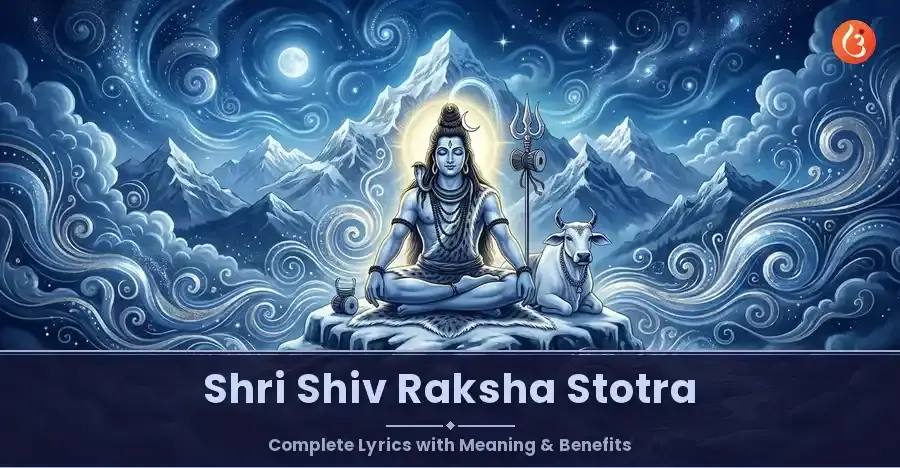
The origin of this stotra is incredibly special. According to the stotra's concluding verses (the Phala Shruti), it wasn't composed by a mortal in the ordinary sense. Instead, it was revealed directly by Lord Shiva himself to the great Vedic sage Rishi Yajnavalkya in a dream. This makes it a siddha mantra - a perfected hymn received through divine transmission. Yajnavalkya is one of the most revered sages of the Upanishadic period, a master of Brahmavidya (knowledge of the Absolute), so a hymn revealed to such a realized soul carries immense spiritual potency.
Some sources mistakenly attribute it to Rishi Budha Kaushika, but that's incorrect; he is associated with the Rama Raksha Stotra. The internal evidence of the Shiv Raksha Stotra itself confirms Yajnavalkya as the seer who brought this divine knowledge to the world. It’s a direct gift from Mahadev.
Here is the full, uninterrupted text for recitation.
Asya Sri Shiva Raksha Stotra Mantrasya
Yajnavalkya Rishihi, Sri Sadasivo Devata,
Anushtup Chandaha, Sri Sadasiva Preetyarthe
Shiva Raksha Stotra Jape Viniyogaha
Charitam deva-devasya, maha-devasya paavanam,
Apaaram paramo daaram, chatur-vargasya saadhanam. || 1 ||Gauri-vinaayako-petam, pancha-vaktram tri-netrakam,
Shivam dhyaatvaa dasa-bhujam, shiva-rakshaam pathen-narah. || 2 ||
Ganga-dharah shirah paatu, phaalam ardhendu-shekharah,
Nayane madana-dhvamsee, karnau sarpa-vibhushanah. || 3 ||Ghraanam paatu puraa-raatih, mukham paatu jagat-patih,
Jihvaam vaageeshvarah paatu, kandharaam shiti-kandharah. || 4 ||Shree-kanthah paatu me kantham, skandhau vishva-dhurandharah,
Bhujau bhu-bhaara-samhartaa, karau paatu pinaaka-dhruk. || 5 ||Hridayam shambu-rah paatu, nabhim paatu dhur-jatih,
Katim vyaaghraajinaam-baarah, sarvam paatu maheshvarah. || 6 ||Paadau paatu prithvee-dhartaa, paada-prishtham prahu-priyah,
Paada-antahsthitam paatu, paarsvau paatu dayaa-mayah. || 7 ||Sarvaan-gaan-me sadaa paatu, aakaasha-vapusah shivah,
Eka-lingah prabhu-rah paatu, dvau maam paatu shivaa-karah. || 8 ||Trini maam paatu vighneshah, chatvaari jagad-ishvarah,
Pancha maam paatu vishveshah, shan-maam paatu vrisha-dhvajah. || 9 ||Sapta maam paatu sarva-jnah, ashtau maam parameshvarah,
Nava maam paatu nagendrah, dasha maam deena-bandhavah. || 10 ||Ekaadasha maam eeshanah, dvaadasha-kam vrishabheshvarah,
Trayodasha-kam tryambakah, chaturdasha-kam chaturmukhah. || 11 ||Panchadasha-kam pancha-vaktrah, shodasha-kam shoolapaanih,
Saptadasha-kam chandramoulih, ashtaadasha-kam ambikaa-patih. || 12 ||Sarva-kaalam sadaa paatu, trishoolam paatu me sadaa,
Khadgam paatu mahaa-rudrah, paatu pinakam paarmeshtikah. || 13 ||
Evam shiva-balopetam, rakshaam yah sukritee pathet,
Sa bhukhtvaa sakalaan kaamaan, shiva-saayujyam-aapnuyaat. || 14 ||Graha-bhoota-pishaachaas-cha, trailokye vicharanti ye,
Doorat-aashu palaayante, shivasya-ananya-keertanaat. || 15 ||Yah svapne gaa-charma-raashau, shivam pashyati yo narah,
Tasya-ayuh saphalam jneeyaat, sarva-siddhis-cha jaayate. || 16 ||Yajnavalkya-kritam punyam, svapne proktam shivena yat,
Pratah-kaale pathed-yas-tu, sa gachchhet-paramam padam. || 17 ||
Understanding the meaning transforms recitation into a profound experience. Here’s what you are invoking.
Verses 1-2: Invocation
You begin by meditating on the pure and glorious deeds of Lord Shiva, the granter of the four pillars of life (Dharma, Artha, Kama, Moksha). You visualize Him with five faces, three eyes, and ten arms, accompanied by Gauri and Vinayaka. This sets the stage for receiving His protection.
Verse 3: Head and Senses
Verse 4-5: Face and Upper Body
Verse 6-7: Torso and Lower Body
Verses 8-13: Overall and Ethereal Protection
These verses invoke Shiva in his various numerical and elemental forms to protect all parts of your being at all times. For example, it calls upon Tryambakah (the three-eyed one) and Pancha-vaktrah (the five-faced one) to guard the devotee, ensuring protection that transcends the physical form. The prayer extends to His divine weapons like the Trishula (trident) and Pinaka bow, creating a 360-degree shield.
Verses 14-17: The Fruits of Recitation (Phala Shruti)
This is the promise. The one who recites this stotra with devotion enjoys all worldly desires and ultimately attains union with Shiva (Moksha). Negative entities like ghosts and spirits flee from the mere mention of Shiva's name. The final verse confirms that Rishi Yajnavalkya received this from Shiva in a dream, and chanting it in the morning leads to the supreme destination.
Reciting the Shiv Raksha Stotra is more than a ritual; it's a life-altering practice. According to the text itself and countless devotee experiences, the benefits are immense.
To receive the full benefits, it's best to follow the traditional method (vidhi). It’s simple and can be done at home.
While you can chant this stotra daily, certain days are especially powerful for connecting with Lord Shiva's energy.
Chanting the Shiv Raksha Stotra is a personal practice. You can complement it by participating in pujas performed by verified pandits at sacred temples, amplifying the protective blessings in your life.
Recommended Pujas on Utsav:
When you participate through Utsav, you fill a Sankalp Form with your name and gotra, and the pandit performs the puja on your behalf. You receive a video of the puja and blessed prasad delivered to your home.
Scriptural Authority:
Temple & Ritual Tradition:
- The recitation vidhi and auspicious timings are based on practices followed in major Shiva temples and as prescribed in the Dharma Shastras.
Related Pujas on Utsav:

રાહુ પૈઠાણી મંદિર, પૈઠાણી
શનિવાર - 28 નવેમ્બર, 2026 - Shanivar Visesh