Ganesh Aarti Guide: Lyrics, Meaning & Daily Vidhi (2024)
Author: Pandit Rajesh Sharma, Vedic Ritual Specialist
Pandit Sharma is a Vedic scholar with 15 years of experience in temple rituals and Hindu philosophy. He specializes in Ganesha worship and collaborates with Utsav to make ancient wisdom accessible to modern devotees.
Performing Ganesh Aarti is the essential Hindu ritual to invoke Lord Ganesha, the remover of obstacles, using lyrics, light, and pure devotion. According to the Ganesha Purana (Upasana Khanda, 62), offering this powerful prayer with a sincere heart clears a devotee's path of all difficulties. It's not just a tradition; it's the spiritual key to ensuring your ventures are blessed with success.
Quick Answer
- What: Ganesh Aarti (गणेश आरती) is a foundational Hindu hymn and light-offering ritual for Lord Ganesha, composed by Pandit Moreshwar Shale.
- Why: It's performed to remove obstacles (Vighnas), seek blessings for new beginnings, and express deep devotion.
- When: Daily, ideally during Brahma Muhurta (pre-dawn, around 4:30-5:30 AM) or Sandhya (twilight).
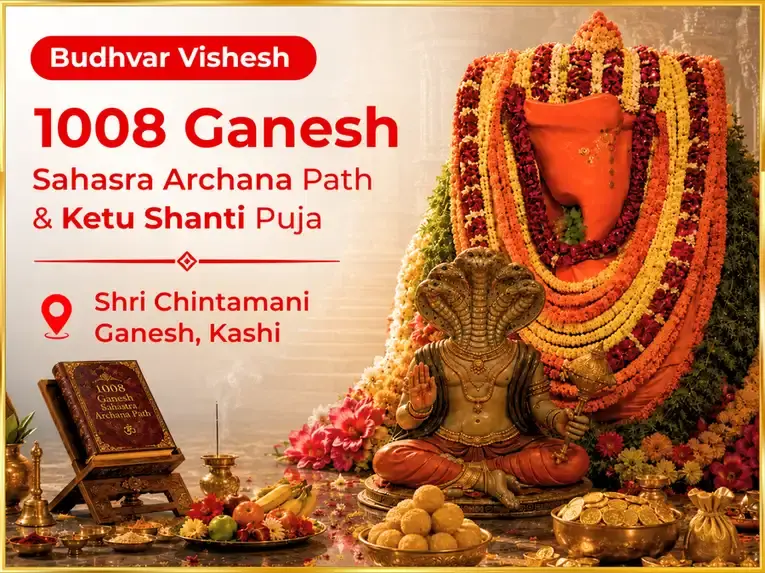
- How to Participate: For persistent challenges, you can Participate in the Budhvar Visesh Ganesh Maha Abhishek through Utsav's verified temples.
Table of Contents
- What’s the Real Power Behind Performing a Ganesh Aarti?
- "Jai Ganesh Deva": Full Lyrics & Deeper Meaning
- How Do You Perform the Daily Ganesh Aarti Vidhi Correctly?
- Why Is the Aarti Lamp Always Moved Clockwise?
- What Are the Must-Have Items for a Ganesh Aarti Thali?
- How Can You Deepen Your Devotion Beyond the Daily Aarti?
What’s the Real Power Behind Performing a Ganesh Aarti?
So, what’s really happening when you perform an aarti? It's so much more than just singing along. The Skanda Purana explains that the flame itself isn't just light; it’s a potent spiritual force that actively dispels ignorance and negative energies from your home and your mind. You're literally pushing out darkness. This isn't just symbolic. It’s a core Vedic principle where light represents divine consciousness, and offering it to the deity is a profound act of surrender and connection. You're inviting Ganesha's energy to illuminate your life's path. It's a beautiful and powerful exchange.
"Jai Ganesh Deva": Full Lyrics & Deeper Meaning
Composed in the 19th century by Pandit Moreshwar Shale, this aarti beautifully captures the essence of Lord Ganesha's attributes described in the Puranas. It’s not just a song; each line is a mantra that invokes a specific quality of the Vighnaharta (Remover of Obstacles).
Here's the line-by-line breakdown.
Jai Ganesh, Jai Ganesh, Jai Ganesh Deva
(जय गणेश, जय गणेश, जय गणेश देवा)
Meaning: Victory to you, Lord Ganesha, the divine one. This isn't just a greeting; it's an invocation that establishes his supreme presence before the ritual begins. You're setting the stage for a divine connection.
Mata Jaki Parvati, Pita Mahadeva
(माता जाकी पार्वती, पिता महादेवा)
Meaning: Your mother is Parvati, and your father is the great Lord Shiva. This line grounds Ganesha within the divine family, reminding us of his powerful lineage and cosmic importance. It's a declaration of his authority.
Ek Dant Dayavant, Char Bhuja Dhari
(एक दन्त दयावन्त, चार भुजा धारी)
Meaning: You are the one-tusked, compassionate one with four arms. This highlights two key attributes: his sacrifice (the broken tusk used to write the Mahabharata) and his immense power, represented by his four arms holding symbolic items.
Mathe Par Tilak Sohe, Muse Ki Savari
(माथे पर तिलक सोहे, मूसे की सवारी)
Meaning: A tilak adorns your forehead, and you ride upon a mouse. The tilak signifies spiritual wisdom. And the mouse? It represents the ego and desires, which Ganesha has completely mastered. It’s a powerful reminder for you to control your own ego.
Paan Chadhe, Phool Chadhe, Aur Chadhe Meva
(पान चढ़े, फूल चढ़े, और चढ़े मेवा)
Meaning: You are offered betel leaves, flowers, and dry fruits. This signifies offering the best of nature and the fruits of your own labor to the divine. It's an act of selfless devotion.
Laduan Ka Bhog Lage, Sant Karein Seva
(लड्डुअन का भोग लगे, सन्त करें सेवा)
Meaning: You are offered a bhog of ladoos, and the saints serve you. Ladoos are Ganesha's favorite, symbolizing the sweetness of spiritual liberation (moksha). The mention of saints reinforces his status as a deity worshipped by the wisest sages.
Andhan Ko Aankh Det, Kodhin Ko Kaya
(अंधन को आंख देत, कोढ़िन को काया)
Meaning: You give sight to the blind and a healthy body to the leper. This isn't just literal; it's deeply metaphorical. Ganesha grants spiritual insight (the "eyes" to see the truth) and removes the "diseases" of ego, fear, and doubt from your life.
Banjhan Ko Putra Det, Nirdhan Ko Maya
(बांझन को पुत्र देत, निर्धन को माया)
Meaning: You grant children to the barren and wealth to the poor. Again, this extends beyond the material. He blesses devotees with creativity and new beginnings ("putra") and provides both spiritual and worldly abundance ("maya").
'Sur' Shyam Sharan Aaye, Safal Kije Seva
('सूर' श्याम शरण आए, सफल कीजे सेवा)
Meaning: The composer says, "I have come to your refuge, please make my service fruitful." This is the ultimate surrender. It's a personal plea from the devotee, asking for Ganesha's grace to accept the offering and fulfill their spiritual goals.
How Do You Perform the Daily Ganesh Aarti Vidhi Correctly?
Performing the aarti at home doesn't have to be complicated, but following the correct vidhi (procedure) amplifies its spiritual impact. It's all about intention. The key isn't perfection; it's devotion.
Here’s a simple, authentic process you can follow:
- Purification (Shuddhi): Before you begin, take a bath and wear clean clothes. This is essential. It signifies purifying your body and mind to prepare for a sacred act. Sprinkle a little water around the puja area to cleanse the space.
- Prepare the Thali: Arrange your aarti thali with all the essential items (more on that below). Light the ghee lamp and the incense. The fragrance itself helps create a divine atmosphere.
- Invocation (Avahana): Stand before the idol of Lord Ganesha, ring the bell gently with your left hand, and chant "Om Gam Ganapataye Namaha" three times. You're formally inviting his presence.
- Perform the Aarti: Lift the thali in your right hand. Begin singing "Jai Ganesh Deva" while circulating the lamp in a clockwise direction in front of the deity. At major temples like Siddhivinayak in Mumbai, the morning Kakad Aarti is performed with immense energy just before sunrise. You can bring that same focused energy to your home.
- Offerings (Naivedya): After the song, offer the bhog (like ladoos or modaks) and a glass of water to the Lord. Place it before the idol and ask him to accept your offering.
- Accepting the Blessing: After a few minutes, gently cup your hands over the flame (without touching it) and bring them to your eyes and the top of your head. You're internalizing the divine light and energy of the aarti.
- Conclusion (Visarjan): Conclude by prostrating before the deity. Distribute the prasad among family members. It's now blessed.
For auspicious timings, you can always check the daily panchang. The Brahma Muhurta and twilight hours are considered the most spiritually charged times. You can check today's timings on the Utsav Panchang.
Why Is the Aarti Lamp Always Moved Clockwise?
Have you ever wondered why the direction is so specific? It’s not arbitrary. Moving the lamp in a clockwise (pradakshina) direction mirrors the natural, auspicious movement of the cosmos and the Earth's rotation. It's a deeply symbolic act.
This movement is believed to align your personal energy with the universal divine frequency, creating a positive and receptive spiritual field around you. You aren't just waving a lamp; you're attuning yourself to cosmic law. When you move it anti-clockwise, it's thought to disrupt this flow. So, the clockwise motion is essential for maintaining the sanctity and power of the ritual. The real deal.
What Are the Must-Have Items for a Ganesh Aarti Thali?
Your aarti thali is a microcosm of the universe, with each item representing one of the five cosmic elements (Pancha Tattvas). Here’s what you absolutely need:
- A Ghee Lamp (Diya): This represents the Fire element (Agni) and symbolizes light, truth, and consciousness. A cotton wick soaked in pure ghee is ideal.
- Incense Sticks (Agarbatti): Represents the Air element (Vayu). Its fragrance purifies the atmosphere and is believed to carry your prayers to the divine.
- Water (Jal): A small container of clean water represents the Water element. It signifies purity and the flow of life.
- Flowers (Pushpa): Fresh flowers represent the Earth element (Prithvi). They symbolize your devotion and the beauty of nature being offered back to its creator.
- Camphor (Kapur): This is special. When burned, it represents the Ether/Space element (Akasha) and is believed to burn away the ego completely, leaving no residue behind.
How Can You Deepen Your Devotion Beyond the Daily Aarti?
While the daily aarti is a beautiful and essential practice, there are times when you might face more significant obstacles that require a more intensive spiritual remedy. That's where specific pujas come in. They are structured rituals performed by trained pandits to address deeper karmic or astrological blockages.
If you're starting a new business, facing educational hurdles, or simply feel stuck, these pujas can provide a powerful boost:
- For Wisdom & Clarity: The Chintamani Ganesh Visesh Atharvashirsha Path is a profound ritual involving the chanting of a powerful Upanishad dedicated to Ganesha, helping to clear mental fog.
- During Festivals: On auspicious days like Ganesh Chaturthi, participating in a grand havan can magnify your prayers. The Ganesh Chaturthi Vishesh Aghor Ganapati Havan is one such powerful ceremony.
Participating in these pujas through Utsav connects you with verified temples and pandits who perform the rituals on your behalf, ensuring every detail is followed with scriptural precision. You simply fill the Sankalp Form, and the rest is handled.
Source: This guide was compiled with reference to the Ganesha Purana (Upasana Khanda), the Skanda Purana, and in consultation with pandits from the Siddhivinayak Temple tradition.