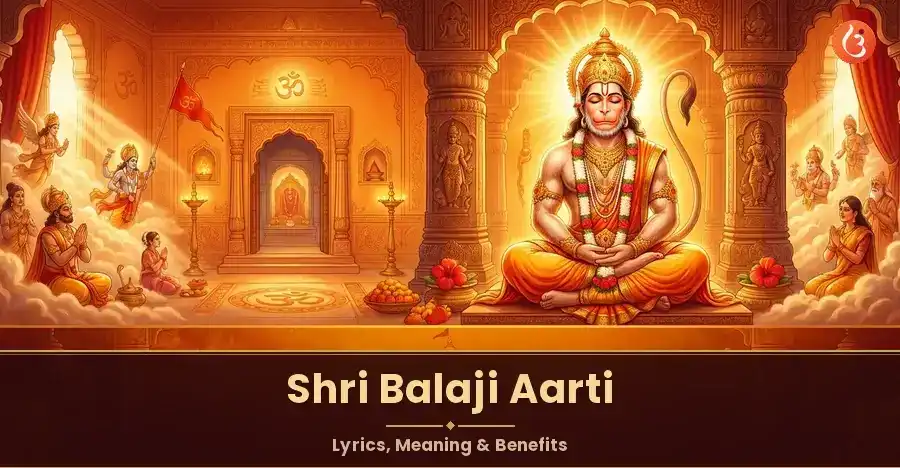
Shri Balaji Aarti: Lyrics, Meaning & Benefits of This Powerful Hanuman Prayer
The Shri Balaji Aarti is a powerful devotional hymn dedicated to Lord Hanuman in his form as Mehendipur Balaji of Rajasthan. It's not for Lord Venkateswara of Tirupati. According to temple tradition, reciting this Aarti invokes Hanuman's divine protection against negative energies and obstacles. Over 50,000 devotees have sought blessings through Utsav's Hanuman-related pujas.
Quick Answer
- What: A devotional hymn (Aarti) for Shri Mehendipur Balaji (श्री मेहंदीपुर बालाजी), a powerful form of Lord Hanuman.
- Why: To seek protection from obstacles (sankat), gain courage, and express devotion to Lord Hanuman.
- When: Tuesdays and Saturdays are ideal. It's especially powerful during Hanuman Jayanti and major festivals.
- How to Participate: You can connect with verified pandits for related pujas on Utsav, with Dakshina starting from ₹501.
Table of Contents
- Shri Balaji Aarti — Complete Lyrics in English
- Shri Balaji Aarti — Verse-by-Verse Meaning
- Why Should You Chant the Balaji Aarti?
- How to Recite the Balaji Aarti: Complete Vidhi
- Who Is Mehendipur Balaji?
- Participate in Pujas on Utsav
- Sources & References
Shri Balaji Aarti — Complete Lyrics in English
Here is the full text of the Shri Balaji Aarti. It's best recited with a pure heart and focused mind.
Stanza 1-2
Om Jai Hanumata Vira, Swami Jai Hanumata Vira।
Sankata Mochana Swami, Tuma Ho Ranadhira॥
Om Jai Hanumata Vira...॥
Pavana Putra Anjani Suta, Mahima Ati Bhari।
Duhkha Daridra Mitao, Sankata Saba Hari॥
Om Jai Hanumata Vira...॥
Stanza 3-4
Bala Samaya Mein Tumane, Ravi Ko Bhaksha Liyo।
Devana Stuti Kinhi, Taba Hi Chhoda Diyo॥
Om Jai Hanumata Vira...॥
Kapi Sugriva Rama Sanga, Maitri Karavai।
Bali Bali Maraya, Kapisahin Gaddi Dilavai॥
Om Jai Hanumata Vira...॥
Stanza 5-6
Jari Lanka Ko Le Siya Ki, Sudhi Vanara Harshaye।
Karaja Kathina Sudhare, Raghuvara Mana Bhaye॥
Om Jai Hanumata Vira...॥
Shakti Lagi Lakshmana Ke, Bhari Socha Bhayo।
Laya Sanjivana Buti, Duhkha Saba Dura Kiyo॥
Om Jai Hanumata Vira...॥
Stanza 7-8
Ramaahi Le Ahi-Ravana, Jaba Patala Gayo।
Tahi Mari Prabhu Laye, Jaya-Jaya-Kara Bhayo॥
Om Jai Hanumata Vira...॥
Raja-Dware Para Jo, Koi Sata Bar Gave।
Mana Ichhita Phala Pave, Sukha Sampati Gave॥
Om Jai Hanumata Vira...॥
Shri Balaji Aarti — Verse-by-Verse Meaning
Understanding the meaning makes the Aarti a much more powerful experience. It isn't just about the words; it's about the feeling behind them. Here’s what each verse truly signifies.
Stanza 1: Victory to the Brave Lord Hanuman
"Om Jai Hanumata Vira, Swami Jai Hanumata Vira। Sankata Mochana Swami, Tuma Ho Ranadhira॥"
This opening verse is a cry of victory to Hanuman, the brave warrior and master. You're acknowledging him as the "Sankata Mochana"—the remover of all calamities. It's a direct appeal to his most famous quality: providing relief when you're in deep trouble.
Stanza 2: The Son of the Wind God
"Pavana Putra Anjani Suta, Mahima Ati Bhari। Duhkha Daridra Mitao, Sankata Saba Hari॥"
Here, you honor his lineage as the son of the Wind God (Pavan) and Anjani. You recognize his immense glory and ask him to eradicate poverty, misery, and all afflictions. It's a complete surrender to his power.
Stanza 3: The One Who Swallowed the Sun
"Bala Samaya Mein Tumane, Ravi Ko Bhaksha Liyo। Devana Stuti Kinhi, Taba Hi Chhoda Diyo॥"
This recounts the famous childhood story where Hanuman, thinking the sun was a fruit, leaped up and swallowed it. The universe plunged into darkness. It took the prayers of all the Devas to convince him to release it. This verse reminds you of his incredible, almost unimaginable power.
Stanza 4: The Friend of Sugriva and Rama
"Kapi Sugriva Rama Sanga, Maitri Karavai। Bali Bali Maraya, Kapisahin Gaddi Dilavai॥"
This highlights Hanuman's role as a divine diplomat and strategist. He forged the essential alliance between Lord Rama and Sugriva, which was the turning point in the mission to find Sita. He didn't just fight; he made victory possible.
Stanza 5: The Bringer of Good News
"Jari Lanka Ko Le Siya Ki, Sudhi Vanara Harshaye। Karaja Kathina Sudhare, Raghuvara Mana Bhaye॥"
Remember when he single-handedly burned Lanka and brought back news of Sita? This verse captures that moment of triumph. He accomplished an impossible task, delighting the Vanaras (monkey army) and becoming incredibly dear to Lord Rama's heart.
Stanza 6: The Saviour of Lakshmana
"Shakti Lagi Lakshmana Ke, Bhari Socha Bhayo। Laya Sanjivana Buti, Duhkha Saba Dura Kiyo॥"
This recalls the most critical moment in the Ramayana's battle when Lakshmana was near death. Hanuman flew across the subcontinent to bring back the life-saving Sanjeevani herb, dispelling all sorrow. It’s a testament to his unwavering loyalty and ability to overcome any obstacle for his devotees.
Stanza 7: The Rescuer from the Netherworld
"Ramaahi Le Ahi-Ravana, Jaba Patala Gayo। Tahi Mari Prabhu Laye, Jaya-Jaya-Kara Bhayo॥"
When the demon Ahiravana abducted Rama and Lakshmana to the netherworld (Patala), it was Hanuman who went there, defeated the demon, and rescued them. This act earned him thunderous chants of victory and solidified his role as the ultimate protector.
Stanza 8: The Giver of Boons
"Raja-Dware Para Jo, Koi Sata Bar Gave। Mana Ichhita Phala Pave, Sukha Sampati Gave॥"
This is the Phala Shruti (verse of benefits). It promises that whoever sings this Aarti seven times with devotion will have their deepest desires fulfilled and will be blessed with happiness and prosperity. It's a direct assurance of the Aarti's power.
Why Should You Chant the Balaji Aarti?
Chanting the Balaji Aarti isn't just a ritual; it's a deeply transformative practice. For devotees of Mehendipur Balaji, it's a direct line to the deity's protective energy. Why does it matter so much?
First, it’s about divine protection. Mehendipur Balaji is famous across India for his power to shield devotees from negative energies, unseen obstacles, and mental distress. Chanting this Aarti creates a spiritual shield (kavach) around you and your family. The real deal.
Second, it builds inner strength and courage. The Aarti recounts Hanuman's greatest feats of bravery—swallowing the sun, burning Lanka, and saving Lakshmana. When you recite these verses, you internalize that same fearless spirit. It’s an essential practice for anyone facing immense challenges or struggling with fear.
Finally, it deepens your bhakti (devotion). The entire Aarti is an expression of pure love and reverence for Hanuman's selfless service to Lord Rama. It aligns your heart with his, fostering a powerful sense of devotion that brings immense peace.
How to Recite the Balaji Aarti: Complete Vidhi
To get the full benefits, performing the Aarti with the proper vidhi (procedure) is important. It’s not complicated, but following these steps makes the experience more sacred.
- Preparation: Begin by taking a bath and wearing clean clothes. Purity of body and mind is key. Tuesdays and Saturdays are the most auspicious days for Hanuman worship. You can check the exact timings for the day on the Utsav Panchang.
- Setup: Place an image or idol of Lord Hanuman (or Mehendipur Balaji) on a clean altar. Light a ghee or mustard oil lamp and offer fresh flowers (preferably red) and incense. A small offering of sweets like laddoo or fruits is also traditional.
- Invocation: Before starting the Aarti, close your eyes and meditate on Lord Hanuman for a few moments. Chant his beej mantra, "Om Hum Hanumate Namaha," 11 times to invoke his presence.
- Recitation: Sing the Aarti with a clear, loud, and devotional voice. If you have a bell and a conch, use them. The sound vibrations are believed to purify the atmosphere. The most important thing isn't a perfect voice, but a sincere heart.
- Closing: After completing the Aarti, perform pradakshina (circumambulate the altar) three times. Conclude by offering your prayers and distributing the prasad among your family members.
Who Is Mehendipur Balaji?
It's essential to understand who this Aarti is for. The "Balaji" here is Shri Mehendipur Balaji, whose world-famous temple is in the Dausa district of Rajasthan. This is a powerful and fierce form of Lord Hanuman.
He is not to be confused with Lord Venkateswara of Tirupati, who is also popularly known as Balaji.
Mehendipur Balaji is worshipped as a living deity who provides relief from sankat (calamities), especially those caused by negative or malevolent energies. His form is that of a child (hence, Bala-ji), but his power is immense. The temple is one of the most significant sites in India for devotees seeking spiritual healing and protection. This Aarti is a central part of the worship there.
Participate in Pujas on Utsav
While reciting the Aarti at home is a powerful practice, you can deepen your connection by participating in pujas performed by verified pandits at sacred sites.
Recommended Pujas:
- Venkateshwara Ashttotar Satanam Path Purnima Special: Connect with the divine energy of Lord Vishnu, of whom Lord Rama is an avatar. Dakshina starts from ₹851.
- Venkateshwara Ashttotar Satanam Path Ekadashi Special: Participate in this powerful path on the auspicious day of Ekadashi.
How to Participate:
1. Select your puja and Dakshina.
2. Fill out the Sankalp Form with your Naam and Gotra.
3. Receive a video of the puja with your details chanted.
4. Authentic prasad is delivered to your home within 7-10 days.
Sources & References
Scriptural Authority:
- The stories and attributes of Lord Hanuman referenced in the Aarti are primarily drawn from Valmiki's Ramayana, particularly the Sundara Kanda and Yuddha Kanda.
Temple Verification:
- The practices and significance are aligned with the traditions of the Mehendipur Balaji Temple in Dausa, Rajasthan.
Related Pujas on Utsav:
- All pujas are performed by verified pandits from our network of partnered temples.