Shri Janakinatha Aarti: Lyrics, Meaning & The Power of Sita-Rama's Bond
Shri Janakinatha Aarti (श्री जानकीनाथ आरती) is a devotional hymn that celebrates Lord Rama not just as a king, but as the beloved husband of Sita (Janaki). This aarti focuses on their divine relationship, making it a powerful prayer for marital harmony and devotion. Originating from the folk traditions of Mithila and Awadh, its verses are deeply inspired by the love described in Goswami Tulsidas's Ramcharitmanas. It’s more than a song; it's an invocation of their perfect partnership.
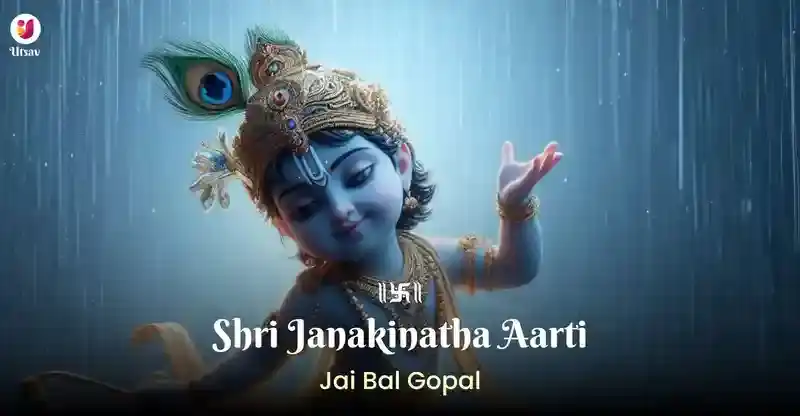
Quick Answer: Shri Janakinatha Aarti
- What: A traditional Hindu aarti dedicated to Lord Rama, celebrating him as 'Janakinatha' or the Lord of Janaki (Sita).
- Why: It's recited to honor the divine bond between Sita and Rama, seeking blessings for marital harmony, devotion, and righteous living.
- When: Especially powerful during Vivah Panchami, Ram Navami, and Dussehra, or as part of daily evening prayers.
- Source: Rooted in the folk Bhakti traditions of North India, with themes drawn from Valmiki's Ramayana and Tulsidas's Ramcharitmanas.
Table of Contents
- What Makes This Aarti Unique?
- Shri Janakinatha Aarti: Complete Lyrics in English
- Verse-by-Verse Meaning of the Aarti
- Why is Chanting This Aarti So Powerful?
- The Right Way to Recite Janakinatha Aarti (Complete Vidhi)
- Best Timings & Occasions for 2026
- Sources & References
What is Shri Janakinatha Aarti? The Story Behind the Hymn
Unlike other aartis that praise Lord Rama's solitary glory, the Janakinatha Aarti centers entirely on his identity as Sita's husband. The name itself—Janakinatha—means "Lord of Janaki." This isn't just a title; it's the whole point. It signifies a divine reality where the masculine and feminine principles are inseparable and complete only in each other. The hymn comes from a deep well of folk devotion, likely from the Awadhi and Mithila regions—Rama's kingdom and Sita's birthplace, respectively—where Sita Mata is revered as the daughter of the land.
Its spiritual authority stems directly from the Bala Kanda of the Ramcharitmanas, which beautifully narrates the divine wedding of Sita and Rama. Tulsidas describes their union as natural and eternal, like a word and its meaning. The aarti captures the essence of that sacred union. You won't find a single composer's name attached to it because it belongs to the collective heart of devotees, passed down through generations. It’s a prayer that sees the divine not just in a king, but in a loving partnership. What a beautiful thought.
Shri Janakinatha Aarti: Complete Lyrics in English
This is the full, uninterrupted text for your recitation.
॥ Shri Janakinatha Aarti ॥
Jai Janakinatha, Jai Shri Raghunatha।
Doua Kara Jorein Binavaun Prabhu! Suniye Bata॥Jai Janakinatha, Jai Shri Raghunatha॥
Tuma Raghunatha Hamare Prana Pita Mata।
Tuma Hi Sajjana Sangi Bhakti Mukti Data॥Jai Janakinatha, Jai Shri Raghunatha॥
Lakha Chaurasi Kato Meto Yama Trasa।
Nisidina Prabhu Mohi Rakhiye Apane Hi Pasa॥Jai Janakinatha, Jai Shri Raghunatha॥
Rama Bharata Lachhimana Sanga Shatruhana Bhaiya।
Jagamaga Jyoti Virajai, Shobha Ati Lahiya॥Jai Janakinatha, Jai Shri Raghunatha॥
Hanumata Nada Bajavata Nevara Jhamakata।
Svarna Thala Kara Arti Kaushalya Mata॥Jai Janakinatha, Jai Shri Raghunatha॥
Kirti Kalita Lalita Siya-Pi Ki।
Sumirata Joi Joi Kahun, Phala Pave Soi Soi॥Jai Janakinatha, Jai Shri Raghunatha॥
Deena Bandhu Deena Dukhahari।
Hohu Suprasanna Janki-Priya, Bhakta Hitakari॥Jai Janakinatha, Jai Shri Raghunatha॥
Verse-by-Verse Meaning of the Janakinatha Aarti
Here’s what those beautiful lines really mean. It’s not just praise; it’s a deep surrender to the divine couple.
Verse 1: Jai Janakinatha, Jai Shri Raghunatha...
Meaning: "Victory to the Lord of Janaki, victory to the Lord of the Raghu clan! With folded hands, I pray to you, O Lord! Please listen to my plea." This opening sets the theme immediately—it addresses Rama through his relationship with Sita. The posture of "Doua Kara Jorein" (with two hands joined) is the ultimate expression of humility and surrender.
Verse 2: Tuma Raghunatha Hamare Prana Pita Mata...
Meaning: "O Raghunatha, you are our life, our father, and our mother. You are our true companion, the giver of both devotion (Bhakti) and liberation (Mukti)." This verse establishes a deeply personal connection, seeing the divine in all core relationships. As the "Bhakti Mukti Data," he shows that one does not need to renounce the world to find liberation; a life of loving devotion is the path.
Verse 3: Lakha Chaurasi Kato Meto Yama Trasa...
Meaning: "Please cut the cycle of 8.4 million births and deaths and remove the fear of Yama (the god of death). O Lord, keep me near you day and night." It’s a direct plea for moksha, grounded in the desire for eternal closeness. The "Lakha Chaurasi" refers to the Hindu belief in 8.4 million species of life through which a soul may reincarnate.
Verse 4: Rama Bharata Lachhimana Sanga Shatruhana Bhaiya...
Meaning: "With Rama are his brothers Bharata, Lakshmana, and Shatrughna. A brilliant light shines around them, creating a scene of immense beauty." This paints a picture of divine family unity, a core theme in the Ramayana. This vision represents the perfect harmony of a household where righteousness and love reign supreme.
Verse 5: Hanumata Nada Bajavata Nevara Jhamakata...
Meaning: "Hanuman plays the celestial music as his anklets jingle. Mother Kaushalya performs the aarti with a golden plate in her hand." This verse brings the entire divine court into the scene of worship, making the devotee a part of the celebration. It beautifully merges divine service (Hanuman) with maternal love (Kaushalya), creating a complete picture of devotion.
Verse 6: Kirti Kalita Lalita Siya-Pi Ki...
Meaning: "The glory of Sita's beloved is beautiful and renowned. Whoever remembers them with a wish in their heart shall have that wish fulfilled." This is the Phala Shruti (statement of benefits), promising that sincere devotion to the couple yields results. The power of remembering their names (nama smaran) is highlighted as a direct path to grace.
Verse 7: Deena Bandhu Deena Dukhahari...
Meaning: "O friend of the helpless, remover of the sorrows of the distressed! Be pleased with us, O beloved of Janaki, you who are the well-wisher of your devotees." The final verse is a heartfelt appeal for grace, once again highlighting Rama's role as Sita's beloved. The title "Deena Bandhu" is especially significant, as it shows his compassion for those who feel lost or abandoned.
Why is Chanting This Aarti So Powerful? (Key Benefits)
Chanting this aarti isn't just a ritual; it's a practice that realigns your energy. According to Bhakti tradition scholars, focusing on the Sita-Rama bond brings specific, tangible benefits into your life.
- Promotes Marital Harmony: This is its primary power. By invoking the ideal partnership of Sita and Rama, you invite that same energy of mutual respect, love, and righteousness into your own relationships. It helps align a couple's energy with the divine archetype of dampatya (conjugal bliss).
- Instills Family Unity: The aarti mentions the four brothers together, reminding us of the importance of familial bonds. It’s a prayer for unity and strength within the family, helping to resolve conflicts by invoking the ideal of selfless brotherhood.
- Grants Courage and Removes Fear: The line "Meto Yama Trasa" is a direct appeal to overcome the deepest existential fears. Regular chanting builds inner strength and a sense of divine protection, granting the boon of abhaya (fearlessness).
- Fosters Pure Devotion (Bhakti): The aarti is simple, heartfelt, and direct. It’s a perfect tool for developing Bhakti Yoga, the path of love and surrender, as detailed throughout the Shri Rama Chalisa.
- Cultivates a Loving Gaze (Madhurya Bhava): Unlike hymns that focus on God's omnipotence, this aarti encourages Madhurya Bhava—seeing the divine as one's beloved. This intimate form of devotion is considered one of the highest paths to realization.
- Connects You to Righteousness (Dharma): Sita and Rama are the ultimate symbols of Dharma. Reciting their story aligns your actions and thoughts with a righteous path, helping you navigate life's challenges with integrity.
The Right Way to Recite Janakinatha Aarti (Complete Vidhi)
To get the full benefit, performing the aarti with the proper method (vidhi) is essential. It’s simple, and you can do it at home. Here’s how.
- Preparation (Shuddhi): Begin by taking a bath and wearing clean, fresh clothes. The space where you'll perform the aarti should be clean and quiet.
- Setup the Altar: Place an image or idol of Sita and Rama before you. Light a ghee or camphor lamp on a small plate (an aarti thali). You can also offer flowers, incense, and a small prasad (like fruit or sweets). Some devotees also place a kalash filled with water and topped with mango leaves to signify abundance.
- Invocation: Sit comfortably facing East. Close your eyes for a moment and sincerely invite Sita and Rama into your heart. Feel their presence.
- The Aarti Recitation: Stand up, take the lit lamp in your right hand, and wave it in a gentle, circular clockwise motion in front of the deities while singing the aarti. This circle symbolizes the devotee's consciousness revolving around the divine center. Ring a small bell with your left hand if you have one; its sound dispels negative energies.
- Closing: After the aarti is complete, sprinkle a little water around the lamp to cool it (aachaman). Then, cup your hands over the flame (carefully!) and bring them to your eyes and head to receive the divine energy and light.
- Prasad: Distribute the prasad to your family members. It's now blessed.
A Devotee's Tip: The most crucial element is bhava, or heartfelt feeling. Sing with love and surrender, not as a mechanical chore. It is the emotion behind the words that reaches the divine.
When Should You Recite the Janakinatha Aarti? (Best Timings & Occasions for 2026)
While you can recite this aarti any day, certain times are considered especially auspicious and amplify its spiritual power. As per the Panchang, these are the key moments.
- Vivah Panchami: This is the absolute best day. It celebrates the wedding anniversary of Sita and Rama. The energy of their divine union is most potent on this day. In Mithila and Ayodhya, this festival is celebrated with grand processions re-enacting the divine wedding. Check the Utsav Panchang for the exact date in 2026.
- Ram Navami: The birth of Lord Rama is another perfect occasion. Chanting this aarti on Ram Navami completes the celebration by honoring his divine consort, without whom his incarnation and life mission are incomplete.
- Dussehra (Vijayadashami): This day marks Rama's victory over Ravana—a victory for Dharma, which was fought to bring Sita home. Reciting the aarti on this day honors the profound love and righteous cause that fueled the great war.
- Daily Practice: For ongoing blessings, the best time is during your evening prayers (Sandhya), just after sunset. It brings a peaceful and devotional close to the day. Reciting it on a Friday, a day often associated with Devi forms like Sita, is also highly beneficial.
You can also explore other beautiful hymns like the Shri Ramayanji Aarti to deepen your connection.
Scripture Composer/History
The Shri Janakinatha Aarti is a traditional folk hymn (lok-bhajan) and does not have a single named composer; it is considered anonymous. Its origins lie in the collective devotional heart of the Bhakti tradition that flourished in North India from the 16th century onwards. The hymn's spiritual and thematic lineage is directly traced to Goswami Tulsidas's epic, the Ramcharitmanas. Specifically, its focus on the divine marital bond echoes the sentiments expressed in the Bala Kanda, which describes the wedding of Sita and Rama. Composed in a vernacular Hindi dialect with strong Awadhi influences, it was transmitted orally through generations of devotees in community gatherings and household worship, especially in the Awadh and Mithila regions.
Sources & References
Scriptural Authority:
- Valmiki's Ramayana (Bala Kanda) - Describes the divine marriage of Sita and Rama.
- Goswami Tulsidas's Ramcharitmanas - The foundational text for the Bhakti tradition's understanding of Sita-Rama's relationship.
Devotional Tradition:
- Awadhi and Mithila folk Bhakti traditions, passed down orally through generations.
Related Gyan on Utsav:
- Shri Rama Chalisa in English
- Lesser Known Characters Of Ramayana