Chandrasekhar Ashtakam: Lyrics, Meaning & Benefits for Overcoming Fear
By Pandit Vedic Sharma, Stotra & Scripture Specialist | Reviewed by Utsav editorial team
The Chandrasekhar Ashtakam (चंद्रशेखर अष्टकम) is a powerful eight-verse hymn to Lord Shiva, composed by Sage Markandeya to overcome the fear of death itself. According to the Skanda Purana, the young sage chanted this stotram at the exact moment Lord Shiva saved him from Yama, the god of death. It's not just a prayer; it's a testimony. Each verse is a direct appeal for protection, making its recitation a potent remedy for health, longevity, and freedom from all dangers.
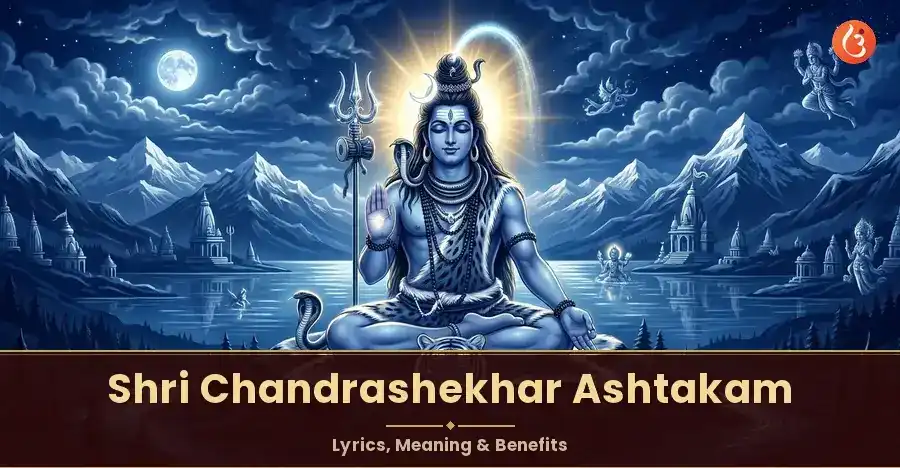
Table of Contents
- Chandrasekhar Ashtakam: Complete Lyrics in English
- Chandrasekhar Ashtakam: Verse-by-Verse Meaning
- Benefits of Reciting Chandrasekhar Ashtakam
- How to Recite: Complete Vidhi
- Best Days to Chant in 2026
- Who is Lord Chandrasekhar (Shiva)?
- Participate in Shiva Pujas on Utsav
- Sources & References
Chandrasekhar Ashtakam: Complete Lyrics in English
Verse 1-4
Chandrashekhara Chandrashekhara Chandrashekhara Pahi Mam |
Chandrashekhara Chandrashekhara Chandrashekhara Raksha Mam || 1 ||Ratna Sanu Sarasanam Rajatadri Shringa Niketanam |
Shinjini Krita Pannageshwara Machyutanala Sayakam |
Kshipra Dagdha Pura Trayam Tridashalayai Rabhi Vanditam |
Chandrashekhara Chandrashekhara Chandrashekhara Raksha Mam || 2 ||Pancha Padapa Pushpa Gandha Padambuja Dvaya Shobhitam |
Phala Lochana Jata Pavaka Dagdha Manmatha Vigraham |
Bhasma Digdha Kalevaram Bhava Nashanam Bhava Mavyayam |
Chandrashekhara Chandrashekhara Chandrashekhara Raksha Mam || 3 ||Mattavarana Mukhya Charma Kritottariya Manoharam |
Pankajasanadi Pancha Devata Padapadma Samarchitam |
Deva Sindhu Taranga Shrikara Sikta Shitala Jatadharam |
Chandrashekhara Chandrashekhara Chandrashekhara Raksha Mam || 4 ||Verse 5-8
Yaksharaja Sakham Bhagakshiharam Bhujanga Vibhushanam |
Shailaraja Suta Parishkrita Charu Vama Kalevaram |
Kshvelanila Galam Parashvadh Dharinam Mriga Dharinam |
Chandrashekhara Chandrashekhara Chandrashekhara Raksha Mam || 5 ||Kundali Krita Kundalishvara Kundalam Vrishavahanam |
Naradadi Munishvara Stuta Vaibhavam Bhuvaneshvaram |
Andhakantakam Ashritamara Padapam Shamantakam |
Chandrashekhara Chandrashekhara Chandrashekhara Raksha Mam || 6 ||Bhaktavatsalam Architam Nidhikshayam Haridamvaram |
Sarva Bhutapatim Paratpara Maprameya Manuttamam |
Soma Varina Bho Hutasana Somapanila Khakritim |
Chandrashekhara Chandrashekhara Chandrashekhara Raksha Mam || 7 ||Vishvasrishtividhayinam Punareva Palana Tatparam |
Samharantamapi Prapanchamasheshaloka Nivasinam |
Krida Nantamaharnisham Gananatha Yutha Samanvitam |
Chandrashekhara Chandrashekhara Chandrashekhara Raksha Mam || 8 ||Phala Shruti (Verse 9)
Mrityu Bhitam Mrikandu Sunustavam Jagatraya Mangalam |
Bhakti Shraddha Samanvitairapi Ya Prapadyanti Manavah |
Teshamayurarogyamakhilamcha Dirghataram Bhavet |
Chandrashekhara Eva Tashya Dadati Mukti Mayatnatah || 9 ||
Chandrasekhar Ashtakam: Verse-by-Verse Meaning
Meaning of Verses 1-3
Verse 1: This opening verse is a direct and heartfelt plea. It's not complex; it's a pure call for help. "O Chandrasekhar, protect me. O Chandrasekhar, save me." Chanting this establishes an immediate connection, acknowledging your vulnerability and seeking refuge in the divine.
Verse 2: Here, Sage Markandeya describes Shiva's cosmic power. He sits on Mount Meru, with the silver peaks of Kailash as his home. The serpent Vasuki is his bowstring, and Vishnu is his arrow. With this power, he instantly burned the three demonic cities (Tripura). You're not just praying to anyone; you're praying to the one whom all gods revere for his unmatched strength.
Verse 3: This verse paints a picture of Shiva's divine form. His feet are adorned with fragrant flowers from the five celestial trees. Yet, he is the one whose third eye incinerated Kamadeva (the god of desire). His body is smeared with sacred ash, and he is the destroyer of the cycle of birth and death (bhava). It's a powerful reminder that he can destroy your inner demons just as easily.
Meaning of Verses 4-6
Verse 4: Shiva's appearance is beautifully described. He wears the skin of a mighty elephant as his upper garment. His feet are worshipped by Brahma and the other primary gods. His matted locks are cooled and sanctified by the waves of the celestial river Ganga. This isn't a fearsome image; it's one of majestic and serene power.
Verse 5: This verse highlights his associations. He's a friend to Kubera (the lord of wealth), the one who destroyed the eye of Bhaga, and is adorned with serpents. The left side of his body is beautifully shared by Parvati, the daughter of the mountain king. He holds a battle-axe and a deer, symbolizing his control over both destructive forces and the wandering mind.
Verse 6: He wears the king of serpents as his earring and rides Nandi, the bull. His glory is sung by divine sages like Narada. Why does this matter? It shows that the wisest beings in the cosmos worship him. He is the ender of the demon Andhaka and a wish-fulfilling tree for those who seek his shelter.
Meaning of Verses 7-9 (Phala Shruti)
Verse 7: Shiva's compassion shines here. He is deeply affectionate towards his devotees (Bhaktavatsalam) and is the source of all treasures. He is the master of all beings, beyond all measure, and supreme. His form encompasses the eight elements: Sun, Moon, Earth, Water, Fire, Ether, Wind, and the worshipper. He is everything.
Verse 8: This verse describes his role as the creator, preserver, and destroyer of the universe. He is the one who resides in all worlds. Day and night, he is engaged in his cosmic play (lila), surrounded by his Ganas. It's a way of saying he is in complete control of the cosmic order.
Verse 9 (Phala Shruti): This is the verse of promise. It states that any human who recites this hymn—sung by the son of Mrikandu (Markandeya) when he was terrified of death—with faith and devotion, will be blessed. What are the blessings? A very long life, complete health, and finally, Chandrasekhar himself will effortlessly grant them liberation (Mukti). It's the ultimate assurance.
Benefits of Reciting Chandrasekhar Ashtakam
This hymn isn't just poetry; it's a shield forged in a moment of ultimate crisis. Its benefits are profound and directly linked to its origin story.
Spiritual Benefits
- Overcomes Fear of Death (Mrityu Bhaya Nivarana): This is its single most important benefit. Sage Markandeya chanted it to conquer death, and it infuses the devotee with the same courage. It invokes Shiva as Mrityunjaya, the victor over death, providing immense strength during health crises or periods of fear. You can learn more about Shiva's role as the conqueror of death in the Dwadash Jyotirlinga Stotram And Its Benefits.
- Grants Liberation (Mukti): The Phala Shruti explicitly states that Lord Chandrasekhar himself grants effortless liberation to the devotee. It's a direct path to the ultimate spiritual goal.
Astrological & Practical Benefits
- Promotes Health and Heals Diseases: The verses repeatedly appeal to Shiva as the divine physician (Vaidyanatha). Chanting it with faith is believed to provide relief from all physical and mental ailments. It's a powerful prayer for arogya (good health).
- Removes Sins and Obstacles: Sincere recitation is believed to dissolve negative karmas and clear away spiritual and material blockages that prevent progress in life.
- Grants Mental Peace and Protection: The constant refrain, "Pahi Mam, Raksha Mam" (Protect Me, Save Me), acts as a powerful mantra. It builds a shield of divine energy around you, protecting you from anxiety, negativity, and external dangers.
How to Recite: Complete Vidhi
To truly connect with the energy of this stotram, you can follow this traditional vidhi. It's not about blind ritual; it's about creating a focused, sacred space.
- Preparation: It's essential to start with a clean body and mind. Take a bath, wear fresh, clean clothes (white or light colors are ideal), and find a quiet, clean space.
- Direction: Sit on a mat or asana facing East (the direction of the rising sun) or North-East (the Ishan corner, associated with Shiva).
- Setup: Place an image, idol, or lingam of Lord Shiva before you. Light a ghee or sesame oil lamp. Offer fresh flowers, and if possible, a few Bilva leaves, which are very dear to him. Light incense to purify the atmosphere.
- Invocation (Sankalp): Before you begin, close your eyes and chant "Om Namah Shivaya" 11 times. State your intention or prayer silently. This focuses your energy.
- Recitation: Chant the Ashtakam with clear, steady pronunciation. Don't rush it. Feel the meaning of the words. It's recommended to recite it 1, 3, or 11 times in one sitting.
- Closing: After the recitation, sit in silence for a few minutes, meditating on Lord Shiva's form. Conclude with a final "Om Namah Shivaya" and a prayer of gratitude.
For an enhanced experience, chanting on Mondays (Somvar) is especially powerful. You can deepen your Monday worship by participating in the Somvar Vishesh Rin Mukteshwar Mahadev Weekly Daan Seva through Utsav.
Best Days to Chant in 2026
While you can chant this stotram daily, certain days amplify its divine energy. Mark these dates on your calendar.
| Date | Event | Significance for Devotees |
|---|---|---|
| Every Monday | Somvar | The weekly day dedicated to Lord Shiva. Perfect for regular practice. |
| February 26, 2026 | Maha Shivratri | The Great Night of Shiva. Chanting on this night is considered 1000x more powerful. |
| March 13, 2026 | Ravi Pradosh Vrat | A powerful evening vrat for health, honor, and longevity. |
| July-August 2026 | Shravan Maas | The entire holy month is dedicated to Shiva worship. Chanting daily yields immense benefits. |
| Throughout 2026 | Pradosh Vrat days | The evening time (1.5 hours before and after sunset) on the 13th day of each lunar fortnight is sacred to Shiva. |
Who is Lord Chandrasekhar (Shiva)?
Chandrasekhar (चंद्रशेखर) isn't just a name; it's a profound title. It means "The one who holds the moon (Chandra) on his crown (Shekhar)." The moon in Vedic thought represents the mind, emotions, and the cycles of time. So, what does it mean that Shiva wears it as a crown?
It signifies His absolute mastery over the mind and time. He is the supreme, unchanging consciousness, untouched by the constant fluctuations of our thoughts and emotions. The crescent moon also symbolizes that even a "flawed" entity (the moon waxes and wanes) can become an ornament for the divine when surrendered. For a devotee, this is a beautiful reminder. By taking refuge in Shiva, your own turbulent mind can find a place of honor and stillness. He is the ultimate source of calm in the chaos of the cosmos, the eternal consort of Goddess Parvati, and the supreme ascetic residing on Mount Kailash. His stories and significance are deeply explored in the context of the twelve sacred Jyotirlingas, which you can read about in our guide to the Omkareshwar Temple, a famous Jyotirlinga of Lord Shiva.
Participate in Shiva Pujas on Utsav
You can deepen your devotion and connect with Lord Shiva's grace by participating in authentic pujas performed by verified pandits at sacred temples.
- Somvar Vishesh Rin Mukteshwar Mahadev Weekly Daan Seva: Participate in special Monday rituals to seek blessings and relief from life's troubles and karmic debts. Dakshina from ₹251.
- Ravi Pradosh Vishesh Grishneshwar Jyotirlinga Abhishek: An auspicious puja performed at a revered Jyotirlinga on Pradosh day for health and success. Dakshina from ₹501.
- Ghrishneshwar Jyotirlinga Panchamrit Abhishek: Offer a sacred bath with five nectars to Lord Shiva at one of the twelve Jyotirlingas to fulfill your wishes. Dakshina from ₹851.
When you Participate, pandits will chant your name and gotra during the Sankalp, and you'll receive a video of the puja and blessed prasad delivered to your home.
Scripture Composer/History
The Chandrasekhar Ashtakam is canonically attributed to the great Puranic sage, Markandeya. Its origin is detailed within the Skanda Purana, where it is presented not as a pre-written hymn but as a spontaneous outpouring of devotion. According to the text, the sixteen-year-old Markandeya composed and recited these verses at the very moment Lord Shiva intervened to save him from Yama, the god of death. Composed in classical Sanskrit, the stotram's immense power is tied directly to this event. It has been transmitted for centuries through the Puranic oral and written traditions, passed from guru to disciple as a powerful testimony to Shiva's ability to conquer mortality itself.
Sources & References
Scriptural Authority:
- Skanda Purana: The primary source for the legend of Sage Markandeya's victory over death through Shiva's grace.
- Shiva Purana: Provides detailed descriptions of Lord Shiva's attributes, names, and cosmic roles.
- Traditional Attribution: The composition is credited to Sage Markandeya.
Temple & Ritual Verification:
- Ritual procedures and benefits have been verified with pandits associated with the Kashi and Trimbakeshwar temple traditions.
Panchang & Dates:
- Festival and tithi dates for 2026 are referenced from verified Panchang calculations.