Durga Kavach: Lyrics, Benefits & Rituals
By Pandit Rakesh Joshi, Vedic Scripture Scholar | Reviewed by Utsav editorial team
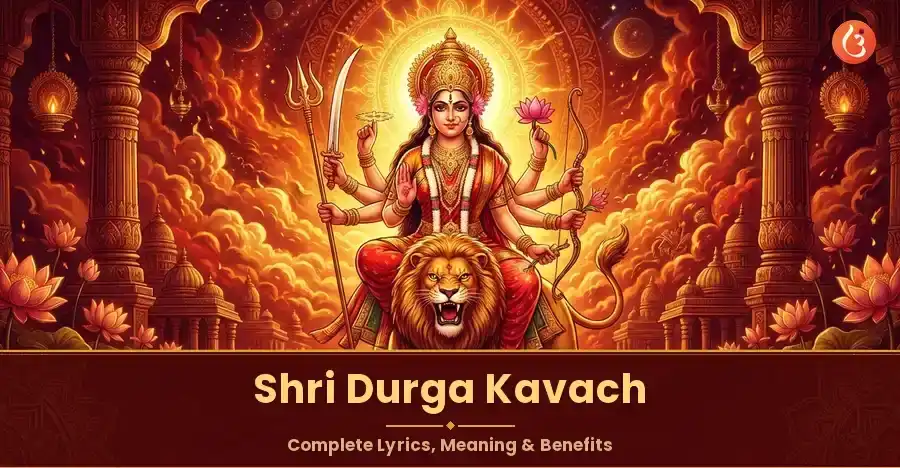
The Durga Kavach (दुर्गा कवच) is a powerful collection of shlokas from the Markandeya Purana that acts as a spiritual shield for the devotee. Lord Brahma revealed it to the sage Markandeya, explaining how invoking Maa Durga's various forms creates a divine armor against all harm. It's not just a prayer; it's a profound protective ritual. Over 1 Lakh+ Devotees participate in Navratri pujas through Utsav annually.
Quick Answer
- What: A powerful hymn from the Markandeya Purana that invokes Durga's forms for divine protection.
- Why: To create a spiritual "Kavach" (armour) against negative energies, fear, and obstacles.
- When: Most powerful during Navratri, especially on Durga Ashtami, and during Brahma Muhurta daily.
- How to Participate: Participate in special Devi Pujas with verified pandits on Utsav for Dakshina starting from ₹501.
Table of Contents
- What Is Durga Kavach & Its Divine Origin?
- Durga Kavach — Complete Lyrics in English
- Durga Kavach — Verse-by-Verse Meaning
- What Are the Real Benefits of Chanting Durga Kavach?
- How to Recite Durga Kavach: The Correct Vidhi
- The Sacred Link: Durga Kavach and Navratri 2026
- Participate in Devi Pujas on Utsav
- Sources & References
What Is Durga Kavach & Its Divine Origin?
The Devi Kavacham, or Durga Kavach, is a foundational text within the Markandeya Purana (मार्कण्डेय पुराण), serving as a prelude to the celebrated Durga Saptashati. Its origin is a divine dialogue where the sage Markandeya asks Lord Brahma for a way to protect humanity. Brahma then imparts this secret Kavach, a hymn that systematically invokes Durga's shaktis to protect every single part of the devotee's body.
ॐ अस्य श्रीचण्डीकवचस्य ब्रह्मा ऋषिः, अनुष्टुप् छन्दः,
चामुण्डा देवता, अङ्गन्यासोक्तमातरो बीजम्, दिग्बन्धदेवतास्तत्त्वम्,
श्रीजगदम्बाप्रीत्यर्थे सप्तशतीपाठाङ्गत्वेन जपे विनियोगः ॥
It’s not just a collection of verses. It's a highly structured spiritual practice. The real power comes from understanding that you're building a fortress of divine energy, piece by piece, with each shloka. This isn't just about belief; it's about active participation in your own spiritual protection.
Durga Kavach — Complete Lyrics in English
Here is the complete, uninterrupted text of the Durga Kavach for recitation.
Invocation (Viniyoga)
Om Asya Sri Chandikavachasya Brahma Rishihi, Anushtup Chandaha,
Chamunda Devata, Anganyasokta Mataro Beejam, Digbandha Devatastattvam,
Sri Jagadamba Prityarthe Saptashati Pathangatvena Jape Viniyogaha.
Dhyanam
Om Markandeya Uvacha
Om Yadguhyam Paramam Loke Sarvarakshakaram Nrinam.
Yanna Kasyachidakhyatam Tanme Bruhi Pitamaha.
Brahma Uvacha (Verses 1-5)
Asti Guhyatamam Vipra Sarvabhutopakarakam.
Devyastu Kavacham Punyam Tachhrinushva Mahamune.
Prathamam Shailaputriti Dwitiyam Brahmacharini.
Tritiyam Chandraghanteti Kushmandeti Chaturthakam.
Panchamam Skandamateti Shashtham Katyayaniti Cha.
Saptamam Kalaratriti Mahagauriti Chashtamam.
Navamam Siddhidatriti Navadurga Prakirtitah.
Uktanyetani Namani Brahmanaira Mahatmana.
Body Protection (Verses 6-15)
Aindri Gajasamarudha Vaishnavi Garudasana.
Maheshwari Vrisharudha Kaumari Shikhivahana.
Lakshmih Padmasana Devi Padmahasta Haripriya.
Shwetarupadhara Devi Ishwari Vrishavahana.
Brahmi Hamsasamarudha Sarvabharana Bhushita.
Ityeta Matarah Sarvah Sarvayoga Samanvitah.
Nanabharana Shobhadhya Nanaratnopashobhitah.
Drishyante Rathamarudha Devyah Krodhasamakulah.
Shankham Chakram Gadam Shaktim Halam Cha Musalayudham.
Khetakam Tomaram Chaiva Parashum Pashameva Cha.
Kuntayudham Trishulam Cha Sharngamayudhamuttamam.
Daityanam Dehanashaya Bhaktanamabhayaya Cha.
Dharayantyayudhanittham Devanam Cha Hitaya Vai.
Directional Protection (Verses 16-25)
Aindri Rakshatu Mam Purvya Agneyyamagnidevata.
Varahi Dakshine Rakshad Vayavye Mrigavahini.
Udeechyam Patu Kaumari Aishanyam Shuladharini.
Urdhvam Brahmani Me Rakshadadhastad Vaishnavi Tatha.
Evam Dasha Disho Rakshechamunda Shavahana.
Jaya Me Chagratah Patu Vijaya Patu Prishthatah.
Ajita Vamaparshwe Tu Dakshine Chaparajita.
Shikhamudyotini Rakshe-duma Murdhni Vyavasthita.
Maladhari Lalate Cha Bhruvau Rakshed Yashaswini.
Trinetra Cha Bhruvormadhye Yamaghanta Cha Nasike.
Shankhini Chakshushormadhye Shrotrayordwaravasini.
Kapolau Kalika Rakshetkarnamule Tu Shankari.
Individual Body Parts (Verses 26-42)
Nasikayam Sugandha Cha Uttaroshthe Cha Charchika.
Adhare Chamritakala Jihvayam Cha Saraswati.
Dantan Rakshatu Kaumari Kanthadeshe Tu Chandika.
Ghantikam Chitraghanta Cha Mahamaya Cha Taluke.
Kamakshi Chibukam Rakshed Vacham Me Sarvamangala.
Grivayam Bhadrakali Cha Prishthavanshe Dhanurdhari.
Nilagriva Bahih Kanthe Nalim Nalakuvari.
Skandhayoh Khadgini Rakshed Bahu Me Vajradharini.
Hastayordandini Rakshe-dambika Changulishu Cha.
Nakhan Chuleshwari Rakshetkukshau Rakshetkuleshwari.
Stanau Rakshenmahadevi Manahshokavinashini.
Hridaye Lalita Devi Udare Shuladharini.
Nabhau Cha Kamini Rakshed Guhyam Guhyeshwari Tatha.
Putana Kamika Medhram Gude Mahishavahini.
Katyam Bhagavati Rakshejjanuni Vindhyavasini.
Janghe Mahabala Rakshetsarvakama Pradayini.
Gulphayornarasimhi Cha Padaprishthe Tu Taijasi.
Padangulishu Shri Rakshetpadadhastala Vasini.
Nakhandanshtrakarali Cha Keshanchaivordhvakeshini.
Romakupeshu Kauberi Tvacham Vagishwari Tatha.
Rakta Majjavasa Mansanyasthi Medansi Parvati.
Antrani Kalaratrishcha Pittam Cha Mukuteshwari.
Padmakoshi Kshetre Rakshed Valim.
Shukram Brahmani Me Rakshechchayam Chatreshwari Tatha.
Ahankaram Mano Buddhim Rakshenme Dharmadharini.
Pranapanau Tatha Vyanamudanam Cha Samanakam.
Vajrahasta Cha Me Rakshetpranam Kalyana Shobhana.
Phala Shruti (Benefits) (Verses 43-56)
Evam Rahasyam Viprarshi Brahmakavacham Samuddhrutam.
Ya Pathetprayato Nityam Trisandhyam Shraddhayanvitah.
Daivikala Bhavettasya Trailokyeshvaparajitah.
Jivedvarshashatam Sagramapamrityuvivarjitah.
Nashyanti Vyadhayah Sarve Lutavisfotakadayah.
Sthavaram Jangamam Chaiva Kritrimam Chapi Yadisham.
Tani Sarvani Nashyanti Visha Mantradikani Cha.
Bhuchara Khecharashchaiva Jalajashchopadeshikah.
Sahaja Kulaja Mala Dakini Shakini Tatha.
Antarikshachara Ghora Dakinyashcha Mahabalah.
Graha Bhuta Pishachashcha Yaksha Gandharva Rakshasah.
Brahmarakshasa Vetalah Kushmanda Bhairavadayah.
Nashyanti Darshanattasya Kavache Hridi Samsthite.
Manonnatirbhavedragyastejovriddhikaram Param.
Yashasa Vardhate Sopi Kirtimandita Bhutale.
Japet Saptashatim Chandim Kritva Tu Kavacham Pura.
Yavadbhumandalam Dhatte Sashailavanakananam.
Tavattishthati Medinyam Santatih Putra Pautriki.
Dehante Paramam Sthanam Yatsurairapi Durlabham.
Prapnoti Purusho Nityam Mahamaya Prasadatah.
Labhate Paramam Rupam Shivena Saha Modate Om.
Durga Kavach — Verse-by-Verse Meaning
Reciting is powerful, but understanding the meaning transforms the practice. Here's what you are invoking.
Meaning of Invocation & Dhyanam
You begin by acknowledging the lineage: Brahma is the Rishi (seer), Anushtup is the meter, and Chamunda is the deity. You state your purpose: to please the divine mother, Jagadamba. Markandeya then asks Brahma for the ultimate secret of protection for all beings. It's a humble request for a universal blessing.
Meaning of Brahma's Reply (Verses 1-5)
Brahma agrees to reveal the most sacred and secret armour of the Devi. He then lists the nine primary forms of Durga, the Navadurga (Shailaputri, Brahmacharini, etc.), establishing the divine source of the protection you are about to invoke.
Meaning of Body Protection (Verses 6-15)
This section is incredible. It describes the different Matrikas (divine mothers) and their vahanas (vehicles) and weapons. You're not just calling on one form; you're summoning an entire divine army. Aindri on her elephant, Vaishnavi on Garuda, Maheshwari on her bull—each armed and ready to defend the devotees and destroy their enemies. It's a visualization of overwhelming divine force.
Meaning of Directional & Body Part Protection (Verses 16-42)
This is the core of the Kavach. It's a systematic, head-to-toe spiritual fortification.
- Directions: Aindri protects the East, Varahi the South, Chamunda all ten directions.
- Body: Jaya protects from the front, Vijaya from the back. Then it gets incredibly specific: Maladhari protects the forehead, Shankhini the eyes, Kalika the cheeks, Saraswati the tongue, and so on, covering every external and internal organ, down to the very pores of your skin (Romakupeshu Kauberi).
You are literally wrapping every cell of your being in divine light.
Meaning of Phala Shruti (The Fruits of Recitation)
This is the promise. What happens when you chant the Kavach with devotion?
- You become unconquerable in all three worlds.
- You live a long, healthy life, free from accidental death.
- All diseases, poisons, and negative spells are destroyed.
- Negative entities—ghosts, demons, evil spirits—cannot harm you and flee your presence.
- You gain respect, glory, and success. Your mind is uplifted.
- It is the key to unlocking the full power of the Durga Saptashati. Reciting the Kavach first is essential.
- Ultimately, through the grace of Mahamaya, the devotee attains a state of bliss, united with Shiva.
What Are the Real Benefits of Chanting Durga Kavach?
According to pandits who perform these rituals, the benefits of the Durga Kavach go beyond simple recitation. They manifest in tangible ways when chanted with the correct intention and discipline.
- Creates an Aura of Protection: The most immediate effect is the feeling of a protective shield. Devotees report a significant reduction in fear, anxiety, and the feeling of being vulnerable to negative influences. It's a spiritual confidence booster.
- Neutralizes Negative Energies: The Kavach is believed to be a powerful tool against all forms of negativity—be it from planetary afflictions (graha dosha), jealousy (nazar), or unseen entities. It purifies the devotee's energy field.
- Promotes Fearlessness and Courage: By invoking the fierce forms of Durga, you internalize their qualities. Regular chanting helps overcome deep-seated fears and gives you the courage to face life's challenges head-on.
- Aids in Spiritual and Material Success: The Phala Shruti explicitly states that the devotee gains honor, fame, and prosperity. It clears obstacles on your path, allowing for smoother progress in both worldly and spiritual pursuits. You can learn more about the power of related mantras in our guide to the Durga Mantra.
- Improves Health and Well-being: The shlokas that protect each body part are also seen as a form of divine healing, helping to prevent and overcome physical ailments.
How to Recite Durga Kavach: The Correct Vidhi
To experience the full power of the Kavach, following the traditional method (vidhi) is essential. As verified pandits on the Utsav platform explain, the process is as important as the prayer itself.
- Purification (Shuddhi): Begin by taking a bath and wearing clean, fresh clothes. Red, yellow, or orange are considered auspicious colors for Devi puja.
- Set the Space: Sit on a clean asana (mat) facing East or North in a quiet, undisturbed space. Place an image or idol of Maa Durga before you.
- Light the Lamp: Light a ghee or sesame oil lamp. The flame represents the divine light you are invoking. Light incense (dhoop) as well to purify the atmosphere.
- Sankalpa (Intention): This is critical. Take a little water in your right palm, state your name, gotra, and the specific purpose for which you are chanting the Kavach (e.g., for protection, health, or peace). Then, let the water flow to the ground.
- Recitation: Chant the Kavach with clear, correct pronunciation. Don't rush. Feel the meaning of each word as you create the shield around you. If you are new to it, listen to an authentic recording first to get the pronunciation right.
- Closing: After completing the recitation, meditate on the form of Maa Durga for a few minutes. Offer your heartfelt gratitude and then perform a small aarti.
The Sacred Link: Durga Kavach and Navratri 2026
The connection between Durga Kavach and Navratri is profound. Navratri celebrates the nine forms of Durga, the very same deities invoked in the Kavach. Chanting it during these nine nights is believed to amplify its power exponentially.
During Sharad Navratri 2026, the period is especially charged with Devi's energy. Reciting the Kavach each day, particularly on the auspicious tithi of Durga Ashtami, is a core practice for millions of devotees. It's considered the best time to establish your spiritual armour for the entire year ahead. This practice is central to the traditions at major Shakti Peethas like the Kalighat Kali Temple in Kolkata.
Participate in Devi Pujas on Utsav
While personal recitation is powerful, participating in rituals performed by trained pandits can provide a deeper connection and address specific challenges. Utsav connects you with verified temples and pandits to perform authentic Devi pujas on your behalf.
Recommended Pujas for Divine Protection:
- Sri Kamalatmika Matangi Sanyukt Beej Mantra Jaap & Hawan: A powerful ritual invoking two Mahavidyas for blessings of prosperity and influence. Dakshina from ₹851.
- 18000 Maa Varahi Vastu Vijay Samriddhi Tantra Siddhi Mantra Jaap: This puja is performed to remove Vastu doshas and protect the home from negative energies. Dakshina from ₹851.
- Bonalu Vishesh Maa Chamundeshwari Navchandi & 64 Yogini Homa: An elaborate homa that invokes the fierce form of Chamundeshwari and the 64 Yoginis for ultimate protection. Dakshina from ₹11,001.
When you participate, the pandit makes the Sankalp with your name and gotra, you receive a video of the puja, and authentic temple prasad is delivered to your home.
Scripture Composer/History
The Durga Kavach is not attributed to a single human composer but is an integral part of the Markandeya Purana, a text traditionally ascribed to the sage Krishna Dvaipayana Vyasa. Within the scripture, its origin is a divine dialogue where Lord Brahma reveals this sacred hymn to the sage Markandeya. This Kavach forms the Purvanga (preliminary limb) to the celebrated Devi Mahatmyam (also known as Durga Saptashati).
Composed in classical Sanskrit, the Markandeya Purana is one of the older Puranas, with its core text dated by scholars to the Gupta period (c. 4th-6th century CE). It has been meticulously transmitted for centuries through oral Guru-shishya parampara and written manuscript traditions, especially within the Shakta lineage.
ब्रह्मा उवाच |
अस्ति गुह्यतमं विप्र सर्वभूतोपकारकम् |
Brahmā uvāca | Asti guhyatamaṃ vipra sarvabhūtopakārakam |
Sources & References
Scriptural Authority:
- Markandeya Purana, Chapters 91-104 (containing the Devi Mahatmyam).
- Durga Saptashati (Chandi Path), as the primary text for which the Kavach is an Anga (part).
Recitation & Vidhi Tradition:
- The recitation vidhi is based on the guidance of verified Vaidik pandits and traditional practices followed in Shakti Peethas across India.
Panchang & Dates:
- Festival and tithi dates for 2026 are referenced from Utsav Panchang.
Related Pujas on Utsav:
- Sri Kamalatmika Matangi Sanyukt Beej Mantra Jaap & Hawan
- Maa Varahi Vastu Vijay Samriddhi Mantra Jaap