"Navnaag Stotram: Lyrics, Meaning & Kaal Sarp Dosh Benefits"
By Pandit Rakesh Sharma, Jyotisha Tradition Scholar | Reviewed by Utsav editorial team
The Navnaag Stotram (नवनाग स्तोत्रम्) is a powerful Vedic hymn that invokes the nine primary serpent deities of Hinduism. These divine beings are not mere reptiles; they are cosmic forces deeply interwoven with the Trimurti, serving as Lord Vishnu's eternal couch (Ananta Shesha) and Lord Shiva's sacred ornament (Vasuki). According to Jyotisha tradition, its recitation is the most effective daily remedy for Kaal Sarp Dosh—an astrological affliction caused when all planets are situated between Rahu and Ketu. It's a real game-changer. Chanting this stotram pacifies these shadow planets, removes obstacles, and provides potent protection from hidden enemies and fears. This guide gives you the complete lyrics, verse-by-verse meaning, and the correct vidhi for chanting.
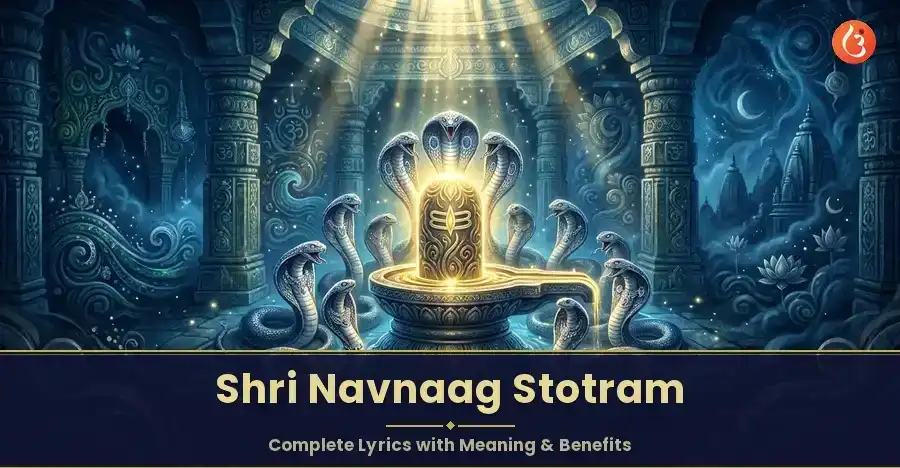
Table of Contents
- Navnaag Stotram — Complete Lyrics in English
- Navnaag Stotram — Verse-by-Verse Meaning
- Benefits of Reciting Navnaag Stotram
- How to Recite Navnaag Stotram: Complete Vidhi
- Best Days to Chant Navnaag Stotram in 2026
- Who Are the Navnaag (The Nine Serpent Deities)?
- Participate in Related Pujas on Utsav
- Sources & References
Navnaag Stotram — Complete Lyrics in English
Invocation of the Nine Nagas
Anantam Vasukim Shesham Padmanabham Cha Kambalam
Shankhapalam Dhartarashtram Takshakam Kaliyam TathaEtani Nava Namani Naganam Cha Mahatmanam
Sayamkale Pathennityam Pratahkale VisheshatahTasya Vishabhayam Nasti Sarvatra Vijayee Bhavet
Navnaag Stotram — Verse-by-Verse Meaning
Verses 1-2: Invoking the Nine Great Nagas
Line 1: Anantam Vasukim Shesham Padmanabham Cha Kambalam
Meaning: The stotram doesn't waste any time. It jumps straight into naming the first five of the nine great Nagas: Ananta, Vasuki, Shesha, Padmanabha, and Kambala. You're not just reciting names; you're invoking specific cosmic energies tied to each of these powerful beings. Each name carries a unique vibration and story, from Shesha who supports the universe to Vasuki who served as the rope in the churning of the cosmic ocean.
Line 2: Shankhapalam Dhartarashtram Takshakam Kaliyam Tatha
Meaning: This line finishes the roll call with the final four Nagas: Shankhapala, Dhritarashtra, Takshaka, and Kaliya. Together, these nine rulers of the Naga Loka are called upon for their blessings and protection. It's a complete shield, covering all directions and aspects of life governed by these divine serpents.
Verse 3: The Power Within the Names
Line 3: Etani Nava Namani Naganam Cha Mahatmanam
Meaning: "These nine names of the great-souled Nagas..." This isn't just filler. It's emphasizing that the names themselves hold immense power. In Vedic tradition, a name (nama) is not separate from the form (rupa). The act of speaking their names with devotion is a spiritual practice in itself, creating a direct connection to their divine consciousness.
Verse 4: The Right Time to Chant
Line 4: Sayamkale Pathennityam Pratahkale Visheshatah
Meaning: Here's the instruction manual. The text says you should recite this stotram daily in the evening, but it's especially powerful in the morning. Why? Morning, specifically the Brahma Muhurta, is when sattva guna (the quality of purity and harmony) is most dominant in the atmosphere. Your mind is clearest and most receptive, making your intention more potent.
Verse 5: The Primary Benefit (Phala Shruti)
Line 5: Tasya Vishabhayam Nasti Sarvatra Vijayee Bhavet
Meaning: This is the payoff, the core promise. "For one who recites this, there will be no fear of poison, and they will be victorious everywhere." Now, this isn't just about physical snakes. The "poison" (Visha) also refers to the toxic effects of astrological problems like Kaal Sarp Dosh, hidden enemies, and internal fears. It neutralizes psychological poisons like jealousy, self-doubt, and negativity that hinder your progress. Victory (Vijaya) is the guaranteed outcome in all endeavors.
Benefits of Reciting Navnaag Stotram
Astrological Benefits
- Primary Remedy for Kaal Sarp Dosh: This is the stotram's claim to fame, and for good reason. It directly works to mitigate the constant struggles, frustrating delays, and unending obstacles caused by the Kaal Sarp Dosh in a horoscope.
- Pacifies Rahu and Ketu: The Naga deities are intrinsically linked to the shadow planets Rahu (serpent's head) and Ketu (serpent's tail). Chanting this stotram is one of the best ways to balance their malefic effects, which helps reduce sudden misfortunes and mental fog.
- Reduces Naga Dosha: Beyond Kaal Sarp, it helps soothe other serpent-related curses or afflictions that might be present in a devotee's birth chart from past karmas.
- Unblocks Life Force: The Rahu-Ketu axis, when afflicted, is believed to block the smooth flow of prana (vital life-force energy) in a person's life, leading to stagnation. This stotram helps clear that blockage, restoring dynamism and forward momentum.
Spiritual & Practical Benefits
- Protection from Fear (Sarpa Bhaya Nivarana): On a literal level, the stotram grants protection from snakes and other venomous creatures. But more importantly, it works on your psyche, helping to remove deep-seated, irrational fears and anxieties that hold you back.
- Victory Over Enemies: Just as the Phala Shruti promises, chanting it regularly builds a spiritual shield. It ensures you overcome adversaries, both seen and unseen, and emerge victorious in personal and professional challenges.
- Attracts Wealth and Prosperity: Nagas are the traditional guardians of the earth's hidden treasures (nidhis). By pleasing them, a devotee can attract unexpected financial gains and secure their material well-being.
- Family Well-being: The blessings of the divine Nagas aren't just for you. They are believed to protect your entire family from harm, ensuring health, harmony, and prosperity.
How to Recite Navnaag Stotram: Complete Vidhi
Doing it right makes all the difference. Here’s the simple, correct procedure:
- Preparation: Start by taking a bath and wearing clean, fresh clothes. You're preparing your body and mind for a sacred act. Find a quiet, clean space for your puja.
- Direction: Sit on an asana (mat) facing East, the direction of new beginnings and divine energies.
- Setup: Place an image or idol of Lord Shiva (who is Nagendra, the lord of Nagas) or a Naga deity before you. Light a simple ghee or oil lamp. As an offering (naivedya), you can place a small, clean bowl of uncooked milk and some white flowers, like jasmine or white oleander. Milk is considered a cooling and pacifying offering, ideal for seeking the blessings of the Nagas.
- Invocation: Before you begin the main stotram, you must first connect with the supreme lord of the Nagas. Meditate on Lord Shiva and chant "Om Namah Shivaya" three times with focus.
- Recitation: Now, recite the Navnaag Stotram clearly and with devotion. The minimum recommended count is 9 times. If you're facing severe dosha effects, chanting it 27 or 108 times yields much stronger results. Pay attention to your pronunciation (uchharana), as the vibrational quality of the Sanskrit sounds is key to the mantra's effectiveness.
- Closing: After your recitations are complete, fold your hands and offer heartfelt prayers to the Naga deities. Ask them to remove your afflictions and grant their protection. You can conclude with a simple Shiva Aarti.
Best Days to Chant Navnaag Stotram in 2026
While daily chanting is best, the stotram's divine energy is massively amplified on these specific days. Mark your calendar.
| Date | Day | Event | Significance for Devotees |
|---|---|---|---|
| July 28, 2026 | Tuesday | Nag Panchami | This is the single most powerful day of the entire year to worship Naga deities. Chanting the stotram on this day provides immense relief from Kaal Sarp Dosh. |
| Every Month | - | Panchami Tithi | The fifth lunar day of both the waxing (Shukla) and waning (Krishna) phases of the moon is highly auspicious for Naga worship. It is a monthly window of opportunity. |
| Every Monday | Monday | Somvar | As Lord Shiva's chosen day, any spiritual practice related to the Nagas he wears as ornaments is incredibly effective. It's a perfect day for your weekly practice. |
Who Are the Navnaag (The Nine Serpent Deities)?
Let's be clear: the Navnaag aren't just ordinary serpents. They are divine, powerful beings mentioned throughout the Puranas who hold immense cosmic responsibilities. They are so significant that Lord Krishna says in the Bhagavad Gita (10.29), "Among the Nagas, I am Ananta." This tells you everything you need to know about their divine status.
They represent eternity, the cyclical nature of time, and the coiled kundalini energy within us. They are the fierce protectors of hidden treasures (both material and spiritual) and the keepers of profound esoteric knowledge. Each of the nine Nagas has a unique role and story:
- Ananta (Shesha): The king of all Nagas, he serves as the divine couch upon which Lord Vishnu rests in the cosmic ocean. He is said to hold all the planets of the universe on his hoods and represents the endless nature of time.
- Vasuki: Famously used as the churning rope during the Samudra Manthan (Churning of the Ocean), he is also the serpent who adorns Lord Shiva's neck, symbolizing control over cosmic energy and poison.
- Takshaka: A powerful Naga king mentioned in the Mahabharata, his story is linked with King Parikshit. Invoking him provides protection against treachery and sudden dangers.
- Kaliya: The fierce, multi-headed serpent who poisoned the Yamuna River before being gracefully subdued by a young Lord Krishna. His worship is sought for purification and overcoming powerful inner demons.
- Padmanabha, Kambala, Shankhapala, Dhritarashtra: These are other great Naga kings, each ruling a different subterranean realm and holding sway over specific natural and cosmic forces.
Worshipping them isn't just about fixing an astrological problem; it's about connecting with some of the most ancient and powerful forces in the cosmos. You can learn more about their lord by reading the Dwadash Jyotirlinga Stotram And Its Benefits.
Participate in Related Pujas on Utsav
While chanting the Navnaag Stotram is a powerful daily practice, performing a dedicated Nivaran Puja at a Siddha Sthal (a place of high spiritual energy) provides the strongest and most focused relief from Kaal Sarp Dosh.
Recommended Pujas:
- Somvar Vishesh Rin Mukteshwar Mahadev Weekly Daan Seva — Connect with Lord Shiva, the master of all Nagas, to get relief from karmic debts and obstacles. Dakshina from ₹251.
- Ghrishneshwar Jyotirlinga Panchamrit Abhishek Maha Puja — Participate in an abhishek at one of the sacred Jyotirlingas, like the Omkareshwar Temple, to receive profound blessings for all life problems. Dakshina from ₹851.
How to Participate:
1. Select your preferred puja and dakshina tier.
2. Fill out the Sankalp Form with your name, gotra, and specific wish.
3. Our verified pandits at the temple will perform the puja on your behalf.
4. You'll receive a personalized video of the puja and authentic prasad delivered right to your doorstep.
Scripture Composer/History
The Navnaag Stotram is a traditional hymn and does not have a single, attributed composer; it is considered an anonymous work that emerged from the Puranic tradition. The most commonly cited scriptural source for this specific nine-name formulation is the Bhavishya Purana, one of the eighteen Mahapuranas. Composed in classical Sanskrit, the stotram synthesizes a much older and widespread tradition of Naga worship found throughout Hindu scriptures, including the Mahabharata. It has been transmitted for centuries primarily through oral recitation within priestly (purohit) and astrological (Jyotisha) lineages. Its preservation is largely due to its vital role as a potent astrological remedy for afflictions like Kaal Sarp Dosh, making it a living part of Hindu devotional practice.
Sources & References
Scriptural Authority:
- Jyotisha Shastra (Vedic Astrology) — Prescribes the stotram as a primary and effective remedy for Kaal Sarp Dosh.
- Mahabharata & Puranas — Provide the essential context and powerful stories of the individual Naga deities like Vasuki, Shesha, and Takshaka.
Temple Verification:
- Trimbakeshwar Temple, Nashik — Ritual procedures for Kaal Sarp Dosh Nivaran are benchmarked against the traditions of this primary kshetra.
- Nagvasuki Temple, Prayagraj — Traditions for Naga worship and offerings are cross-referenced here.
Panchang & Dates:
- Drikpanchang.com (2026 calendar verification for Nag Panchami).