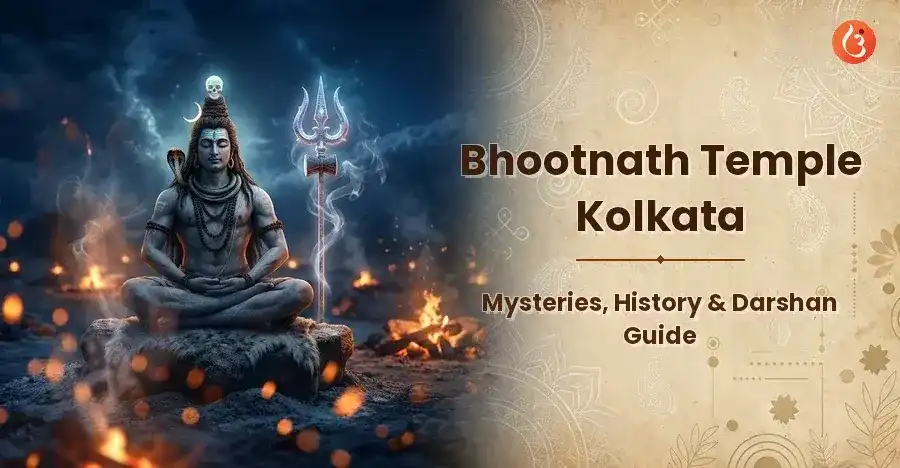
Bhootnath Temple Kolkata: The Definitive Guide to Its Mysteries
By Pandit Harish S., Expert in Shaiva Traditions & Temple History | Reviewed by Utsav editorial team
The secret of Kolkata's Bhootnath Temple is its direct, unflinching connection to the cycle of life and death, uniquely embodied in its Bhasma Aarti—a ritual using real ashes from the adjacent Nimtala burning ghat. This practice, established over 300 years ago, makes it one of India's most profound Shaiva sites. Here, devotees confront mortality to understand Shiva's eternal, formless nature. It’s an experience that changes you.
Quick Answer
- What: A powerful Shiva temple in Kolkata known for its Bhasma Aarti (भस्म आरती), where ashes from a cremation ground are used in worship.
- When: The temple is open daily, but the Bhasma Aarti happens in the early morning. Major festivals are Maha Shivaratri and the month of Shravan.
- Why: To worship Lord Shiva in his form as the master of life, death, and time (Mahakala), and to seek blessings for detachment and spiritual liberation.
- How to Participate: You can visit the temple for darshan or Participate in powerful Shiva pujas from home through Utsav, with Dakshina starting from ₹501.
Table of Contents
- History of Bhootnath Temple
- Why Bhootnath Temple Is Sacred
- Architecture of Bhootnath Temple
- Darshan at Bhootnath Temple: Timings, Rituals & Rules
- Major Festivals at Bhootnath Temple
- How to Reach Bhootnath Temple
- Can't Visit? Participate in Shiva Puja on Utsav
- Nearby Temples Worth Visiting
- Sources & References
History of Bhootnath Temple
The history of Bhootnath Temple is deeply tied to the Aghori tradition of Shaivism. Local history and temple records state it was established over three centuries ago by an Aghori ascetic right next to the Nimtala Mahashamshan (the great cremation ground). This wasn't a coincidence. The choice of location was deliberate, reflecting the Aghori belief that Shiva is most present where life and death intersect.
The legend is quite powerful. The ascetic, whose name is lost to time, wanted to create a space where devotees could worship Shiva not just as a benevolent god, but as Bhootnath—the Lord of all beings, including ghosts and spirits. The term 'Bhootnath' itself means 'Lord of Ghosts and Elemental Beings.' For the Aghori sect, this is not a fearsome title but an acknowledgement of Shiva's dominion over all forms of existence, seen and unseen, gross and subtle. He initiated the practice of using fresh ash (bhasma) from the funeral pyres for the daily aarti. This tradition, radical and profound, continues uninterrupted to this day, making the temple a living link to ancient, esoteric Shaiva practices. It's a constant reminder of the impermanence of the body and the eternal nature of the soul.
Why Bhootnath Temple Is Sacred
The sanctity of Bhootnath Temple comes from its raw, unfiltered expression of core Shaiva philosophy. According to the Mahanirvana Tantra, Shiva resides in the cremation ground, signifying his mastery over death and dissolution. The temple’s Bhasma Aarti is a direct, living enactment of this principle. It’s one thing to read about detachment; it’s another to witness an aarti performed with the final remains of a human body.
So why does this matter so much? Because it forces you to confront the ultimate truth of existence. The Vairagya Shatakam speaks of smearing the body with ashes from the cremation ground as the ultimate act of renunciation. The Bhasma Aarti is a symbolic participation in this ultimate vairagya (detachment). The ash, or vibhuti, is not just a remnant of death but is considered the seed of creation, representing the state from which all arises and to which all returns. For devotees, this isn't a morbid ritual but a deeply spiritual one. The bhasma symbolizes the final, purest state of being after the ego and worldly attachments are burnt away. Participating in this aarti is believed to grant Shiva's protection from fear, negative energies, and the cycle of rebirth. It’s a place where the lines between the material and spiritual worlds blur, offering a unique path to liberation.
Architecture of Bhootnath Temple
The architecture of Bhootnath Temple, as noted by local heritage observers, is simple and functional, designed to serve its spiritual purpose rather than for grandiosity. It’s not a sprawling complex but an intimate space that feels ancient and charged with energy. The style is typical of later Bengali temple architecture, with a central sanctum (garbhagriha) housing the Shiva Lingam.
What's most striking isn't ornate carving, but the atmosphere created by its location and function. The temple structure is modest, painted in traditional colours, with a small hall for devotees to gather. Constructed primarily from brick and plaster, its weathered facade speaks more of devotion over centuries than of royal patronage. The design intentionally minimizes external distractions. The low ceilings and narrow passageways amplify the sounds of bells and chants, creating a sensory environment that channels all focus towards the Shiva Lingam in the inner sanctum. The main focus is the sanctum, where the air is thick with the scent of incense, ghee lamps, and, uniquely, the sacred ash. The temple's design ensures that your attention is drawn inward—to the deity and the powerful rituals, rather than outward to architectural marvels. (This is key). It’s a space built for intense spiritual practice, not for casual tourism.
Darshan at Bhootnath Temple: Timings, Rituals & Rules
A visit to Bhootnath Temple is an intense experience, and knowing the routine is essential. According to temple trust information, the daily schedule is centered around key aartis, with the Bhasma Aarti being the most significant.
Darshan Timings
Ritual/Event | Time | Notes |
|---|---|---|
Temple Opening | 5:00 AM | The temple opens for early morning devotees. |
Bhasma Aarti | 5:30 AM - 6:00 AM | The most unique ritual. Not for the faint-hearted. |
Morning Darshan | 6:00 AM - 1:00 PM | General darshan and personal offerings. |
Temple Closing | 1:00 PM - 4:00 PM | The temple is closed in the afternoon. |
Evening Darshan | 4:00 PM - 9:00 PM | Evening darshan and rituals. |
Shayan Aarti | 8:30 PM | The final aarti before the temple closes. |
Key Rituals
The Bhasma Aarti is the main draw. Fresh ashes are brought from a still-warm pyre at the Nimtala ghat. During the ritual, the priest, chanting specific mantras from Shaiva texts, applies this sacred bhasma onto the Shiva Lingam. This is not merely a physical act; it symbolizes the adornment of the eternal divine with the essence of transient mortality. It is a powerful sight, a visceral reminder of the body's impermanence and the soul's journey. It’s an experience you won’t forget.
Rules & Dress Code
- Dress Modestly: Cover your shoulders and knees. This is a place of serious worship.
- No Photography: Photography inside the sanctum, especially during the aarti, is strictly prohibited.
- Maintain Silence: The atmosphere is intense and meditative. Respect the sanctity of the space.
- Offerings: While you can bring offerings like flowers and bilva leaves, it is best to follow the priest's guidance on how and when to offer them.
- Mental Preparation: Be prepared for the proximity to the cremation ground. It can be emotionally overwhelming for some.
Major Festivals at Bhootnath Temple
The temple celebrates all major Shaiva festivals, but two events see the largest gatherings of devotees, with dates based on the Hindu lunar calendar.
- Maha Shivaratri: Celebrated with immense devotion, the temple stays open all night. Thousands of devotees, according to local reports, throng the temple to offer milk, bilva leaves, and prayers. The temple is decorated with lights and flowers, and a jagran (all-night vigil) is observed, with continuous chanting of 'Om Namah Shivaya'. The energy during Maha Shivaratri 2026 will be especially powerful, with special pujas conducted through the four prahars of the night.
- Shravan Month: The entire holy month of Shravan (July-August) is a period of intense devotion. Special rituals are held every Monday (Shravan Somvar). Many devotees undertake the Kanwar Yatra and offer holy Ganga water to the Shiva Lingam here. The air is thick with devotion as devotees, often barefoot, carry water from the Hooghly (Ganga) to perform abhishekam. The temple becomes a hub of continuous prayer throughout this auspicious month.
How to Reach Bhootnath Temple
Reaching the temple is straightforward, given its location in North Kolkata. Based on city transport guides, here are the best options:
- By Air: The nearest airport is Netaji Subhash Chandra Bose International Airport (CCU), about 15 km away. You can take a taxi or a bus from there.
- By Train: The nearest major railway station is Howrah Junction (HWH), around 5 km away. The closest suburban station is Bagbazar on the Circular Railway line.
- By Road: The temple is located on Strand Bank Road, near Nimtala Ghat. It's well-connected by city buses, taxis, and auto-rickshaws.
The best time to visit is during the cooler months from October to March.
Can't Visit? Participate in Shiva Puja on Utsav
What if you feel a connection to Lord Shiva but can't travel to Kolkata? Don't worry. Vedic tradition holds that a puja performed with sincere devotion by verified pandits on your behalf carries immense spiritual merit. Your Sankalp (spiritual purpose) transcends physical distance.
Through Utsav, you can Participate in powerful Shiva pujas performed at authentic temples. Here’s how it works:
1. You select a puja, like the Bhadra Shivratri Special Tri Jyotirlinga Panchamrit Maha Rudra Abhishek Puja.
2. You provide your name and gotra in the Sankalp Form.
3. A verified pandit performs the puja, chanting your details.
4. You receive a video of the puja and blessed prasad delivered to your home.
Explore other powerful rituals like the Bhadra Shivratri Special Shiv Sahashranam Path & Nandi Seva to connect with the divine from anywhere.
Nearby Temples Worth Visiting
If you're making a pilgrimage to Bhootnath, North Kolkata is a treasure trove of sacred sites. Here are a few you shouldn't miss:
- Dakshineswar Kali Temple: One of the most famous Kali temples in India, located on the banks of the Hooghly River. It was founded by Rani Rashmoni and is famously associated with the mystic Sri Ramakrishna Paramahamsa.
- Kalighat Temple: Considered one of the 51 Shakti Peeths, this ancient temple is a major pilgrimage site for devotees of Goddess Kali. The current idol is unique, with large expressive eyes and a long protruding tongue made of gold.
- Thanthania Kalibari: Another historic Kali temple in North Kolkata, known for its powerful deity and traditional atmosphere. The deity here, Siddheshwari, is believed to have been self-manifested and is worshipped with great reverence by locals.
- Omkareshwar Temple: While in Kolkata, you can learn more about other significant Shiva shrines like the Omkareshwar Jyotirlinga to deepen your connection.
- The 12 Jyotirlingas: Bhootnath's unique traditions offer a different perspective on Shiva worship compared to the Twelve Jyotirlingas of Lord Shiva.
Sources & References
Scriptural Authority:
- Mahanirvana Tantra: Discusses Shiva's presence in cremation grounds (smashan) as a fundamental aspect of his divine nature.
- Shaiva Agamas: These texts detail the esoteric rituals and philosophical concepts that underpin practices like the Bhasma Aarti.
Temple Information (Verified Sep 2025):
- Location: Near Nimtala Ghat, Strand Bank Road, Kolkata, West Bengal 700006.
- Management: The temple is managed by a local trust comprising priests and community members.
- Last Verified: September 2025.
Historical/Architectural:
- Information is based on local historical accounts and travelogues documenting Kolkata's heritage sites.
Related Pujas on Utsav:
- Bhadra Shivratri Special Tri Jyotirlinga Panchamrit Maha Rudra Abhishek Puja: /puja/shiva/mahesh-navami-vishesh-char-jyotirlinga-mahapuja
- Bhadra Shivratri Special Shiv Sahashranam Path & Nandi Seva: /puja/shiva/ghrishneshwar-jyotirlinga-maharashtra-panchamrit-nandi-seva