Bhuvaneshwari Jayanti 2026: Date, Muhurat, Significance & Complete Puja Vidhi
By Pandit Pramod S., Vedic Scholar with 15+ years in Shakta traditions | Reviewed by Utsav editorial team
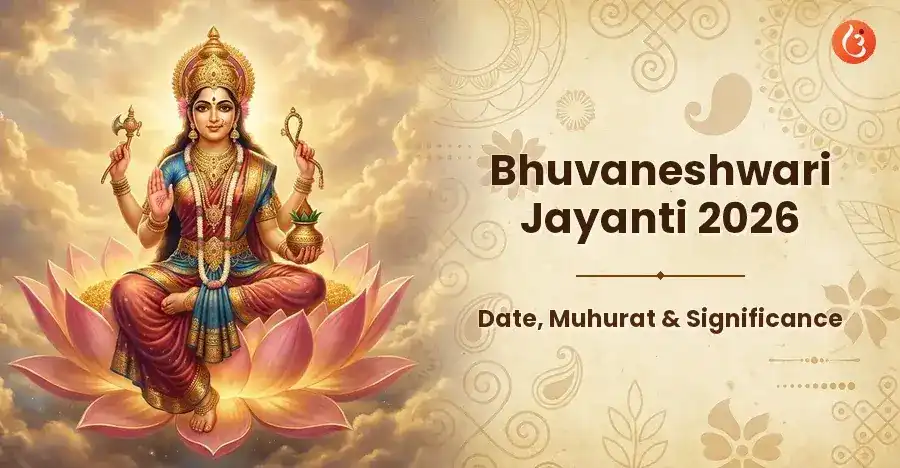
Bhuvaneshwari Jayanti celebrates the birth of the fourth Mahavidya, Goddess Bhuvaneshwari, the queen of the universe. According to the Devi Bhagavata Purana, she is the supreme Shakti who creates and sustains all of existence. This day is observed on the Shukla Paksha Dwadashi of the Bhadrapada month, a powerful time for devotees to seek her blessings for peace, prosperity, and spiritual liberation.
TL;DR: Bhuvaneshwari Jayanti 2026 falls on Wednesday, September 23. It marks the manifestation of Goddess Bhuvaneshwari, the ruler of the three worlds (Bhuvanas). The Devi Bhagavata Purana identifies her as the primordial energy. Devotees perform puja during the shubh muhurat to gain wisdom, attract abundance, and overcome worldly illusions.
Table of Contents
- Bhuvaneshwari Jayanti 2026: Date, Tithi & Shubh Muhurat
- Who is Goddess Bhuvaneshwari & Why is She Worshipped?
- The Cosmic Story of Goddess Bhuvaneshwari's Origin
- Bhuvaneshwari Puja Vidhi: A Step-by-Step Guide
- Bhuvaneshwari Puja Samagri Checklist
- Goddess Bhuvaneshwari Aarti
- The Key Mantra for Bhuvaneshwari Puja
- Fasting Rules for Bhuvaneshwari Jayanti
- Do's and Don'ts for Devotees
- Sources & References
Bhuvaneshwari Jayanti 2026: Date, Tithi & Shubh Muhurat
The date for Bhuvaneshwari Jayanti is determined by the Hindu lunar calendar, specifically the Dwadashi tithi. For 2026, the timings verified against the Utsav Panchang are absolutely critical for performing the puja correctly. You don't want to miss the window.
Bhuvaneshwari Jayanti falls on Wednesday, September 23, 2026.
- Dwadashi Tithi Begins: 09:43 PM on September 22, 2026
- Dwadashi Tithi Ends: 10:50 PM on September 23, 2026
Here’s a breakdown of the auspicious puja timings across major Indian cities.
City | Shubh Muhurat (IST) |
|---|---|
Delhi | 09:15 AM to 11:45 AM |
Mumbai | 09:30 AM to 12:05 PM |
Varanasi | 08:50 AM to 11:20 AM |
Chennai | 09:10 AM to 11:40 AM |
Kolkata | 08:35 AM to 11:05 AM |
Who is Goddess Bhuvaneshwari & Why is She Worshipped?
Goddess Bhuvaneshwari, whose name translates to "Queen (Ishvari) of the Universe (Bhuvana)," is one of the ten great wisdom goddesses, the Dasa Mahavidyas. The Srimad Devi Bhagavatam describes her as Adi Shakti, the original creative force from which everything manifests. She isn't just a part of the universe; the universe is her very body.
So, why does this matter to you? Worshipping her is believed to grant not just material wealth but also the immense power of influence and a captivating presence. Devotees turn to her to fulfill their deepest desires, as she governs the very space in which all experiences unfold. It's said that even the Navagrahas (nine planets) can't affect a person who has her blessings. (Yes, really). She holds a goad (to steer devotees to dharma) and a noose (to sever attachments), symbolizing her power to guide and liberate.
The Cosmic Story of Goddess Bhuvaneshwari's Origin
The origin of Bhuvaneshwari is a profound story rooted in the Devi Bhagavata Purana. In the beginning, there was nothing but a void. The Trimurti—Brahma, Vishnu, and Shiva—were perplexed about their purpose. They performed intense tapasya, and a divine chariot appeared, carrying them to Manidvipa, the celestial island of jewels.
There, they witnessed the magnificent Devi Bhuvaneshwari. She revealed that she was the Moolaprakriti (the root of all matter) and that they, the Trimurti, were born from her to carry out the functions of creation, preservation, and dissolution. She is the space from which the cosmos emerged and the consciousness that pervades it. This isn't just a story; it's a foundational concept in Shaktism, establishing her as the ultimate reality. She is the mother of all, including the gods themselves. Another Mahavidya with a powerful origin is Goddess Tara, whose story you can explore in our guide on Tara Jayanti.
Bhuvaneshwari Puja Vidhi: A Step-by-Step Guide
Performing the puja for Goddess Bhuvaneshwari requires a clean space and a devoted heart. As per traditional Shakta texts, the process is designed to invoke her divine presence into your home. Don't worry, it's more about intention than perfection.
Here’s how you can perform the puja step-by-step:
1. Purification (Shuddhi): Wake up before sunrise, take a bath, and wear clean red or yellow clothes. Sprinkle Gangajal (holy water) throughout your home and especially in the puja area to purify the space.
2. Establish the Altar: Place a clean cloth (preferably red) on a small table or platform (chauki). Install the idol or picture of Goddess Bhuvaneshwari. Place a kalash filled with water, a mango leaf, and a coconut on top.
3. Ganesh Puja: Begin by invoking Lord Ganesha, the remover of obstacles. Offer him flowers, durva grass, and a modak or other sweet. Chant "Om Gam Ganapataye Namah."
4. Sankalp (Intention): Take some water, flowers, and rice in your right hand and make a vow (Sankalp), stating your name, gotra, and the purpose of your puja. This is a crucial step.
5. Invocation of Bhuvaneshwari: Meditate on the Goddess and invite her to accept your worship. You can chant her dhyana mantra.
6. Panchopachar Puja (Five Offerings): Offer the five sacred items to the Goddess: Gandham (sandalwood paste), Pushpam (flowers, especially red hibiscus), Dhupam (incense), Deepam (ghee lamp), and Naivedyam (food offering).
7. Mantra Chanting: Chant the Bhuvaneshwari Beej Mantra (details below) 108 times using a rudraksha or crystal mala. This is the core of the puja.
8. Aarti: Conclude the puja by singing the Aarti of the Goddess while waving a lit camphor or ghee lamp in a circular motion.
9. Pushpanjali and Kshama Prarthana: Offer a handful of flowers at her feet (Pushpanjali) and ask for forgiveness (Kshama Prarthana) for any mistakes made during the ritual.
10. Prasad Distribution: Distribute the Naivedyam offering as Prasad to your family members.
Bhuvaneshwari Puja Samagri Checklist
Having all the necessary items ready before you start ensures a smooth and focused puja. According to the principles of Puja Vidhana, each item holds a specific symbolic meaning. Here's what you'll need.
Category | Item | Purpose |
|---|---|---|
Deity Setup | Idol or photo of Maa Bhuvaneshwari | The focal point of devotion |
Puja Items | Kumkum, Haldi, Chandan, Akshat (uncooked rice) | For tilak and sacred offerings |
Sacred Vessels | Kalash, small plate, water pot (lota) | To hold holy water and offerings |
Offerings | Red flowers (hibiscus), Bilva leaves, Garland | To adorn the Goddess and express devotion |
Lamps & Incense | Ghee diya, camphor (kapur), agarbatti | To invoke divine light and purify the air |
Naivedyam | Fruits, sweets (like kheer), coconut, panchamrit | Food offering to be consecrated as prasad |
Special Items | Red cloth, betel leaves (paan), supari | For the altar and as auspicious offerings |
Goddess Bhuvaneshwari Aarti
The Aarti is the climax of the puja, a moment of pure devotion expressed through song and light. While specific Bhuvaneshwari Aartis exist, the "Jai Ambe Gauri" aarti is widely sung for the Divine Mother in all her forms. It's a beautiful hymn that praises her as the dispeller of suffering.
जय अम्बे गौरी, मैया जय श्यामा गौरी ।
तुमको निशदिन ध्यावत, हरि ब्रह्मा शिवरी ॥
ॐ जय अम्बे गौरी ॥Jai Ambe Gauri, Maiya Jai Shyama Gauri,
Tumko nishdin dhyavat, Hari Brahma Shivji ॥
Om Jai Ambe Gauri ॥
Meaning: "Victory to you, O Mother Gauri, victory to you, Shyama Gauri. Brahma, Vishnu, and Shiva meditate on you day and night."
Recitation: This aarti should be sung once at the end of the puja, while offering the light from a ghee or camphor lamp to the deity.
The Key Mantra for Bhuvaneshwari Puja
Mantras are sound vibrations that connect the devotee's consciousness with the divine. The Beej (seed) mantra for Bhuvaneshwari is considered incredibly potent. As mentioned in various Tantric texts, this single mantra encapsulates her entire cosmic energy.
Bhuvaneshwari Beej Mantra
ॐ ह्रीं श्रीं क्लीं भुवनेश्वर्यै नमः
Om Hreem Shreem Kleem Bhuvaneshwaryai Namah
Meaning: This mantra combines several powerful Beej sounds. "Hreem" is the primary Shakti mantra, representing divine illusion and creative power. "Shreem" invokes abundance (like Lakshmi), and "Kleem" is for attraction. The mantra is a salutation to the Queen of the Universe.
Recitation Count: For best results, chant this mantra 108 times (one full mala) during the puja.
Best Day & Time: While Bhuvaneshwari Jayanti is the most powerful day, you can also chant this on any Friday during the shubh muhurat.
Fasting Rules for Bhuvaneshwari Jayanti
Fasting (Vrat) on Bhuvaneshwari Jayanti is a way to purify the body and mind, making them more receptive to the Goddess's grace. The rules are straightforward. The Dharmasindhu and other texts on Vrats provide clear guidelines for devotees.
- Type of Fast: Most devotees observe a Phalahar fast, consuming only fruits, milk, and certain root vegetables. Some observe a strict Nirjala fast without food or water, but this is only for those with the physical capacity.
- What to Eat: Sabudana, kuttu (buckwheat), nuts, milk products, and fruits are permitted.
- What to Avoid: All grains, lentils, non-vegetarian food, onion, garlic, alcohol, and tobacco are strictly forbidden. You should also avoid salt.
- When to Start & Break: The fast begins at sunrise on September 23, 2026 and is broken the next morning after offering prayers to the Goddess.
Do's and Don'ts for Devotees
Observing certain disciplines on Bhuvaneshwari Jayanti enhances the spiritual benefits of your worship. Think of it as aligning your entire day with the divine energy you're invoking. It's a simple yet powerful practice.
What You Should Do:
* Wake up during the Brahma Muhurta (before sunrise).
* Maintain celibacy (Brahmacharya) for the day.
* Read or listen to the Devi Mahatmya or Bhuvaneshwari Stotram.
* Donate food, clothes, or money to the needy, especially young girls.
* Maintain a calm and positive mindset throughout the day.
* Spend time in meditation and introspection.
What You Should Avoid:
* Consuming tamasic food (onion, garlic, meat) and alcohol.
* Getting into arguments or using harsh language.
* Cutting hair or nails on this day.
* Sleeping during the daytime.
* Speaking ill of others.
The energy of the divine feminine is also celebrated during events like Vindhyavasini Jayanti, which honors another powerful form of the Goddess.
Sources & References
Scriptural Authority:
* Srimad Devi Bhagavatam, Skandha 3 — Describes the manifestation of the Mahavidyas.
* Tripura Rahasya — Details the philosophical aspects of Goddess Bhuvaneshwari.
Panchang & Timing:
* Drikpanchang.com — Tithi/muhurat times verified for 2026.
* Utsav Panchang (https://utsavapp.in/panchang)
Vidhi / Grihya Sutras:
* Puja procedures are based on general principles found in texts like the Paraskara Grihya Sutra adapted for Shakta worship.