Champa Shashti 2025 Date, Significance, Rituals, Story & Benefits
Table of Contents
1. Champa Shashti 2025 Date and Tithi
2. Significance of Champa Shashti
3. Story of Malla and Mani and the Emergence of Khandoba
4. Importance of Khandoba Worship During Champa Shashti
5. Six-Day Champa Shashti Rituals
6. What Devotees Do on Champa Shashti
Champa Shashti 2025 Date and Tithi
The event takes place on Shashti Tithi (the sixth day) of the Shukla Paksha (the moon's waxing phase) in the month of Margashirsha. Champa Shashthi on Wednesday, November 26, 2025. Shashthi Tithi Begins at 10:56 PM on November 25, 2025. Shashthi Tithi Ends: 12:01 AM on November 27, 2025.
Significance of Champa Shashti
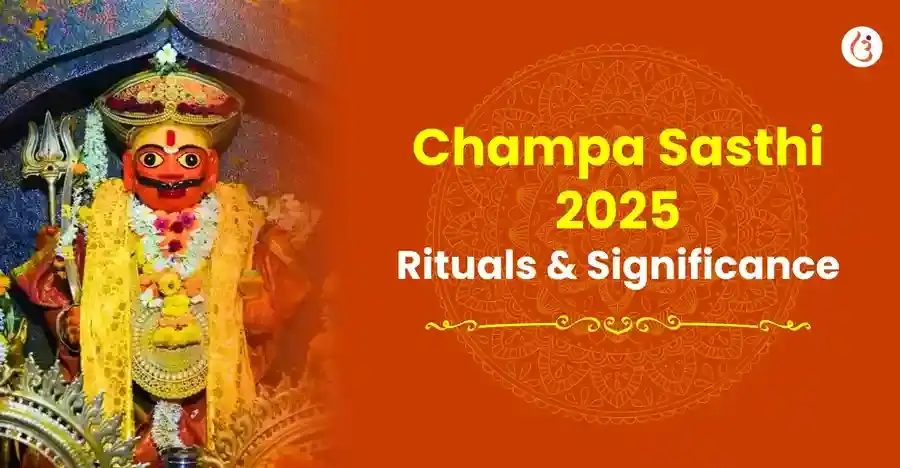
According to Hindu legend, after getting a blessing from Bhagawan Brahma, these two demons became invincible and wreaked havoc on Earth and in Deva Loka. In answer to the Devas' entreaties, Bhagawan Shiva took on the shape of Martanda Bhairava and battled the demons in a ferocious fight. The battle lasted six days and concluded on the Shashti Tithi of the Margashirsha month, with the two demons killed. Champa Shashti is therefore a day to commemorate Bhagawan Khandoba's triumph, who is highly adored in rural Maharashtra and Karnataka as the God of farmers, hunters, and warriors.
Story of Malla and Mani and the Emergence of Khandoba
According to legend, Bhagawan Shiva was impressed by the demon brothers Malla and Mani's austerities and bestowed upon them an invincible gift that transcended even the might of the Gods. Malla and Mani caused devastation over the three planets with their approval. They stormed and gained possession of Manikaran Mountain, a holy site devoted to Bhagawan Shiva and Goddess Parvati. The deities approached Bhagawan Shiva and shared their worries. Bhagawan Shiva, in his warrior Khandoba form, protected the universe from the demon brothers Malla and Mani. The epic struggle between the demon brothers and Khandoba lasted six days, with the demons defeated on the last day. In his last moments of life, Mani bequeathed his white horse on Khandoba, begging pardon and stating his wish to be there for all of Bhagawan Khandoba's shrines and temples. Mani, who is now considered a demigod, is adored in all Khandoba temples. Bhagawan Shiva is thought to live as the Swayambhu lingam at the Khandoba temple.
Importance of Khandoba Worship During Champa Shashti
Observing the Champa Shashti vrat is thought to benefit devotees in terms of happiness and prosperity. It is thought that the sins of previous lifetimes are washed away, and followers gain contentment and courage to face life's hardships. To reap the most advantages from Champa Shashti, do the following:
Nine oil diyas are burned to provide respite from bad planetary alignments.
Bringing blue clothes to Bhagawan Kartikeya at a Shiva temple is considered to boost your social position.
Donating brinjal and bajra to needy individuals might help avert public hostility.
Chant the Champa Shashti Mantra and repeat Om Srim Ardhanarisvaraya, Prematattvamurtaye Namah Sivaya Namah 108 times. Champa Shashti Puja Vidhi. Get up before sunrise in the morning, take a bath, and visit Bhagawan Shiva's temple.
The Shivling is worshipped with milk, flowers, bilva patra, and gangajal.
The puja includes use of ittar, abir, and other fragrant ingredients.
Khandoba is sometimes served with fruit and turmeric powder.
Arghya is served to the Bhagawan, which consists of ghee, water, and curd.
Shiv Chalisa is chanted, and aarti is done.
In the evening, light nine diyas (sesame oil lamps). Present brinjal and millet to Bholenath as offerings and distribute them to the people in need.
Six-Day Champa Shashti Rituals
Champa Shashti ceremonies take place for six days, beginning with Amavasya and ending with the festival. During Champa Shashti, Khandoba, Bhagawan Shiva's warrior form, is worshipped. He is also known as Martanda Bhairav, Malhar, or Malhari. It is thought that if the day corresponds with Shatabhisha Nakshatra and Vaidhriti Yoga on Sunday or Tuesday, it is exceedingly lucky.
Devotees traditionally spend six days at the Shiva temple, offering vegetables, fruits, apple leaves, and powdered turmeric to Bhagawan Shiva. On the last day, sweets produced from multi-grain flour and wheat base are presented to the goddess, along with turmeric powder.
What Devotees Do on Champa Shashti
People of faith walk without shoes to the shrine to seek Bhagawan Khandoba's graces on this holy day. During Champa Shashti puja, devotees attend the Khandoba temple early in the wee hours for all six days. On the day of Champa Shashti, gifts are presented to Bhagawan Khandoba, that consist of Bhandara (turmeric powder), Rodaga (a wheat-based dish), Thombara (multi-grain flour) and an exquisite dish cooked with onion, garlic, and brinjal. In Maharashtra, bhog of fresh brinjal bharta and grains chapattis millet is served to Bholenath. Nandadeep is illuminated everyday.