Janmashtami 2026: Date, Muhurat, Significance & Puja Vidhi
By Pandit Anand S., Vedic Scholar with 15+ years in Jyotish & temple traditions | Reviewed by Utsav editorial team
Krishna Janmashtami 2026 falls on Friday, September 4th. This sacred festival celebrates the birth of Lord Krishna, the eighth avatar of Vishnu, who descended to restore Dharma. The Bhagavata Purana (भागवत पुराण) describes his birth at midnight on the eighth day (Ashtami) of the dark fortnight in the month of Bhadrapada. It's a day of fasting, prayer, and joyous celebration marking the arrival of the divine. Over 5 Lakh+ Devotees participate in Krishna-related pujas on Utsav.
Quick Answer
- What: Krishna Janmashtami (कृष्ण जन्माष्टमी) celebrates the birth of Lord Krishna, the eighth avatar of Vishnu.
- When: Friday, September 4, 2026. The key midnight puja (Nishita Kaal) happens on the night of September 4th.
- Why: To honor Krishna's divine mission of eradicating evil, establishing righteousness (Dharma), and delivering the wisdom of the Bhagavad Gita.
- How to Participate: You can join special Janmashtami pujas like the Radha Damodar Mandir Masik Janmashtami Visesh through Utsav, with Dakshina starting from ₹51.
Table of Contents
- Janmashtami 2026: Date, Tithi & Shubh Muhurat
- Why We Celebrate Janmashtami: The Spiritual Significance
- The Story Behind Janmashtami: Krishna's Divine Birth
- Janmashtami Puja Vidhi: Step-by-Step
- Janmashtami Puja Samagri Checklist
- Krishna Aarti (Aarti Kunj Bihari Ki)
- Key Mantras for Janmashtami
- Janmashtami Fasting (Vrat) Rules
- Do's and Don'ts on Janmashtami
- How Janmashtami Is Celebrated Across India
- Participate in Janmashtami Pujas on Utsav
- Sources & References
Janmashtami 2026: Date, Tithi & Shubh Muhurat
The core of the Janmashtami celebration is timing. According to the Panchang, the festival is observed on the Ashtami tithi of Krishna Paksha in the Bhadrapada month. For 2026, these timings are absolutely critical for your puja and fasting.
- Ashtami Tithi Begins: 02:25 AM on Sep 04, 2026
- Ashtami Tithi Ends: 12:13 AM on Sep 05, 2026
- Nishita Kaal Puja Time (Midnight Muhurat): 11:57 PM (Sep 4) to 12:42 AM (Sep 5)
This Nishita Kaal is the most powerful window for prayers, as it's believed to be the exact time of Krishna's birth. But what about different cities? The timing varies slightly.
| City | Nishita Puja Muhurat (Sep 4-5, 2026) |
|---|---|
| Delhi | 11:57 PM - 12:42 AM |
| Mumbai | 12:12 AM - 12:58 AM |
| Varanasi | 11:43 PM - 12:29 AM |
| Chennai | 11:49 PM - 12:36 AM |
| Kolkata | 11:13 PM - 11:59 PM |
Why We Celebrate Janmashtami: The Spiritual Significance
Janmashtami isn't just a birthday celebration; it's a deeply spiritual event reminding us of divine purpose. The Bhagavata Purana (Canto 10) explains that Krishna's avatar had a three-fold objective: to protect the righteous, annihilate the wicked, and re-establish the principles of Dharma. Simple, right?
But it's more than that. For devotees, this day is a powerful opportunity for spiritual renewal. Fasting purifies the body and mind, while chanting and singing bhajans focus your consciousness on the divine. The celebration signifies the victory of good over evil, light over darkness, and the promise that divinity will always intervene to guide humanity. It’s a reminder that even in the darkest of times (like a prison cell in Mathura), a divine light can emerge. This is why his birth is called Janmotsav—a festival of birth.
The Story Behind Janmashtami: Krishna's Divine Birth
The story of Krishna's birth is a cornerstone of Hindu mythology, detailed vividly in the Srimad Bhagavatam (श्रीमद्भागवतम्). It begins with a prophecy that terrified the tyrannical King Kansa of Mathura: the eighth son of his sister, Devaki, would be his demise. Kansa's solution? Imprison Devaki and her husband Vasudeva, and kill every child they had. He was ruthless.
When the eighth child was due, the cosmos itself seemed to hold its breath. At midnight, as Devaki gave birth to a divine child, the prison guards fell into a deep sleep, and the cell doors miraculously opened. A divine voice instructed Vasudeva to take the infant across the raging Yamuna river to Gokul and exchange him with the newborn daughter of Nanda and Yashoda. Vasudeva did just that, carrying the baby in a basket, shielded from the storm by the serpent Shesha. This divine exchange ensured Krishna's safety, allowing him to grow up among the cowherds of Vrindavan, away from Kansa's murderous rage.
Janmashtami Puja Vidhi: Step-by-Step
Performing the Janmashtami puja at home connects you directly to the divine events of that holy night. Verified Vaidik pandits follow a specific sequence to invoke Lord Krishna's blessings. Here’s a simple, step-by-step guide you can follow.
- Purification (Shuddhi): Start by cleaning your home and puja altar. Take a bath and wear clean, festive clothes. This isn't just about physical cleanliness; it's about preparing a sacred space.
- Sankalp (Vow): Light a ghee lamp. Hold water, flowers, and a coin in your right hand and take a vow (Sankalp) to observe the fast and perform the puja with sincere devotion for the pleasure of Lord Krishna.
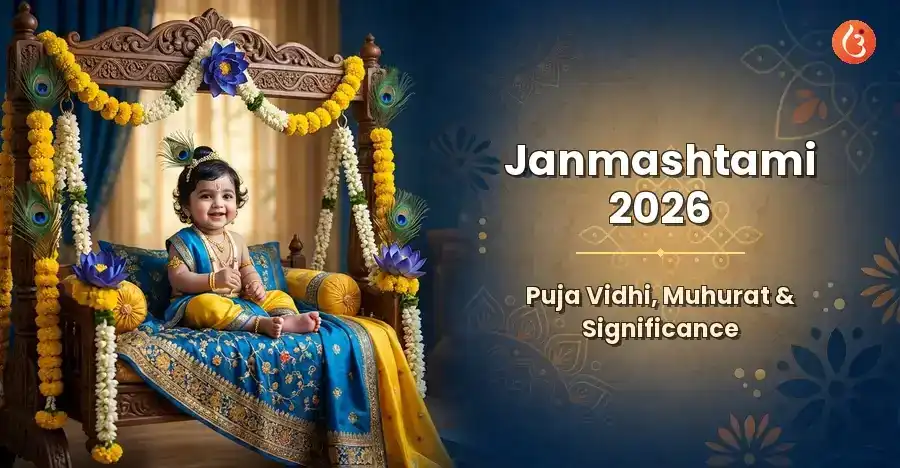
- Deity Installation: Place an idol or image of Bal Krishna (Krishna as a baby) in a cradle (jhula). You can also place idols of Devaki, Vasudeva, Nanda, and Yashoda.
- Abhishek (Sacred Bath): At midnight (during Nishita Kaal), perform the Abhishek. Bathe the Bal Krishna idol with Panchamrit (a mixture of milk, curd, ghee, honey, and sugar), followed by Ganga jal (holy water).
- Shringar (Adornment): After the bath, gently wipe the idol and adorn him with new clothes (vastra), jewellery, and a peacock feather on his crown. Apply chandan (sandalwood paste).
- Offerings (Naivedya): Offer flowers, tulsi leaves, fruits, and homemade sweets. The most important offerings are Makhan (white butter) and Mishri (rock sugar), Krishna's favorites.
- Archana & Chanting: Worship the Lord by chanting his names. You should recite the powerful Hare Krishna mantra.
- Aarti: Conclude the puja by singing the Krishna Aarti while waving a lit camphor or ghee lamp in a circular motion before the deity.
- Prasad Distribution: Distribute the offered naivedya as prasad to family and friends.
- Breaking the Fast (Parana): The fast is broken the next day after the Ashtami tithi and Rohini Nakshatra have ended. The Parana time for 2026 is after 12:13 AM on September 5th.
Janmashtami Puja Samagri Checklist
Having all the materials ready beforehand makes the puja a smooth and meditative experience. Here's a checklist of essential items, as used in traditional temple rituals.
| Category | Item | Purpose |
|---|---|---|
| Deity & Altar | Idol of Bal Krishna, a small cradle (jhula), clean cloth | For worship and decoration |
| Abhishek Items | Panchamrit (milk, curd, ghee, honey, sugar), Ganga jal | For the sacred bath |
| Adornments | New clothes for the idol, small jewellery, peacock feather | For Shringar (decoration) |
| Puja Items | Kumkum, chandan, akshat (rice), incense sticks (agarbatti) | For tilak and creating a sacred atmosphere |
| Offerings | Makhan (butter), Mishri (rock sugar), fruits, sweets, Tulsi leaves | Naivedya (food offerings) |
| Lamps | Ghee diya, camphor (kapur) | For Aarti and illumination |
Krishna Aarti (Aarti Kunj Bihari Ki)
The Aarti is the heart of the puja's conclusion. It's a beautiful expression of devotion sung with lamps, filling the space with light and love. The most popular Aarti for Krishna is "Aarti Kunj Bihari Ki."
आरती कुंजबिहारी की, श्री गिरिधर कृष्ण मुरारी की ॥
गले में बैजंती माला, बजावै मुरली मधुर बाला ।
श्रवण में कुण्डल झलकाला, नंद के आनंद नंदलाला ॥
Aarti Kunj Bihari ki, Shri Girdhar Krishna Murari ki,
Gale mein baijanti mala, bajavai murli madhur bala,
Shravan mein kundal jhalakala, Nand ke anand Nandlala.
Meaning: This Aarti praises Krishna, the one who wanders in the groves (Kunj Bihari), the lifter of Govardhan Hill (Giridhar). It describes his divine beauty—the Vaijanti garland on his neck, the sweet music of his flute, and the glittering earrings in his ears.
Recitation: Sing this once at the end of your midnight puja, while offering the light from a ghee lamp to the Lord.
Key Mantras for Janmashtami
Mantras are sacred sound vibrations that focus the mind and invoke divine energy. Chanting them during Janmashtami amplifies the spiritual benefits of your worship. The most essential mantra for this day is the Hare Krishna Mahamantra.
Hare Krishna Mahamantra (हरे कृष्ण महामंत्र)
हरे कृष्ण हरे कृष्ण, कृष्ण कृष्ण हरे हरे ।
हरे राम हरे राम, राम राम हरे हरे ॥
Hare Krishna, Hare Krishna, Krishna Krishna, Hare Hare
Hare Rama, Hare Rama, Rama Rama, Hare Hare
Meaning: This is the great mantra for deliverance. It is an appeal to the Lord and his divine energy. "Hare" refers to the energy of God, while "Krishna" and "Rama" refer to God himself, meaning "all-attractive" and "the source of all pleasure."
Recitation Count: You should chant this mantra 108 times (one full mala) during your puja. It can be chanted anytime, anywhere, but it's especially powerful on Janmashtami.
Janmashtami Fasting (Vrat) Rules
Fasting on Janmashtami is a core discipline, believed to absolve one of past sins and bring spiritual merit. As per temple traditions, the fast should be observed with clear rules. It isn't just about skipping food; it's about devotion.
The fast is typically a Nirjala Vrat (fasting without food or water), but many devotees observe a Phalahar Vrat, where they consume only fruits, milk, and specific fasting foods. The fast begins at sunrise on Janmashtami day (Sep 4, 2026) and ends the next day after the designated Parana time.
- What to eat (if not Nirjala): Sabudana, kuttu ka atta (buckwheat flour), singhare ka atta (water chestnut flour), fruits, milk products, and dry fruits.
- What to avoid: Grains (wheat, rice), lentils, onion, garlic, non-vegetarian food, and alcohol are strictly forbidden.
Do's and Don'ts on Janmashtami
Observing certain etiquette on Janmashtami enhances the spiritual experience. Here’s what you should focus on and what to avoid.
Do's:
- Wake up during the Brahma Muhurat (before sunrise).
- Maintain celibacy (Brahmacharya) for the day.
- Read stories of Krishna from the Bhagavata Purana or listen to the Gita Govinda Path.
- Chant "Om Namo Bhagavate Vasudevaya" throughout the day.
- Donate to the poor and feed cows if possible.
- Stay awake until midnight for the birth celebration.
Don'ts:
- Do not consume any grains, onion, or garlic.
- Avoid cutting hair or nails on this day.
- Do not disrespect elders, Brahmins, or any living creature.
- Avoid sleeping during the day.
- Do not pluck Tulsi leaves on Ashtami; collect them a day before.
How Janmashtami Is Celebrated Across India
While the devotion is universal, the celebrations have beautiful regional flavors. The core rituals are often supplemented by local traditions passed down through generations.
- Mathura & Vrindavan: This is the epicenter. Temples are decorated for weeks, and Raas Leela performances depict Krishna's life. The energy here is absolutely electric.
- Maharashtra: The festival is famous for the Dahi Handi celebration on the day after Janmashtami. Young men form human pyramids to break a high-hanging pot of curd, mimicking Krishna's childhood antics.
- Gujarat: In Dwarka (Krishna's kingdom), the celebration at the Dwarkadhish Temple is legendary, with devotees visiting for a special darshan.
- South India: Here, it's known as Gokulashtami. Devotees draw tiny footprints of Bal Krishna from the entrance of the house to the puja room, symbolizing the Lord's arrival.
- East India: In Odisha and West Bengal, people celebrate by reciting the Bhagavata Purana and observing a fast until midnight, similar to the traditions seen during the Jagannath Rath Yatra.
Participate in Janmashtami Pujas on Utsav
You don't have to be in Vrindavan to feel the divine connection. Utsav brings the most sacred Janmashtami rituals from verified temples directly to you.
- Radha Damodar Mandir Masik Janmashtami Visesh: Participate in a special monthly puja at one of Vrindavan's most revered temples. Dakshina starts from ₹51.
- Janmashtami Visesh at Sri Khatu Shyam Mandir, Ujjain: Join a beautiful offering of roses and perfume to the Lord, a deeply personal seva.
How to Participate:
1. Select your preferred puja and Dakshina.
2. Fill out the Sankalp Form with your name and Gotra.
3. A verified pandit will perform the puja on your behalf.
4. You'll receive a personalized puja video via WhatsApp within 3-5 days.
Sources & References
Scriptural Authority:
- Srimad Bhagavata Purana (Canto 10, Chapter 3): Provides the most detailed and authoritative account of Lord Krishna's birth and early life.
- Vishnu Purana: Contains supplementary narratives on Krishna's avatar and divine purpose.
Panchang & Timing:
- Drikpanchang.com: Tithi and muhurat timings for 2026 have been cross-verified for accuracy.
- Utsav Panchang: https://utsavapp.in/panchang
Related Pujas on Utsav:
- Radha Damodar Mandir Masik Janmashtami Visesh
- Janmashtami Visesh at Sri Khatu Shyam Mandir