Jitiya Vrat 2026: Date, Puja Vidhi & The Powerful Story of a Mother's Fast
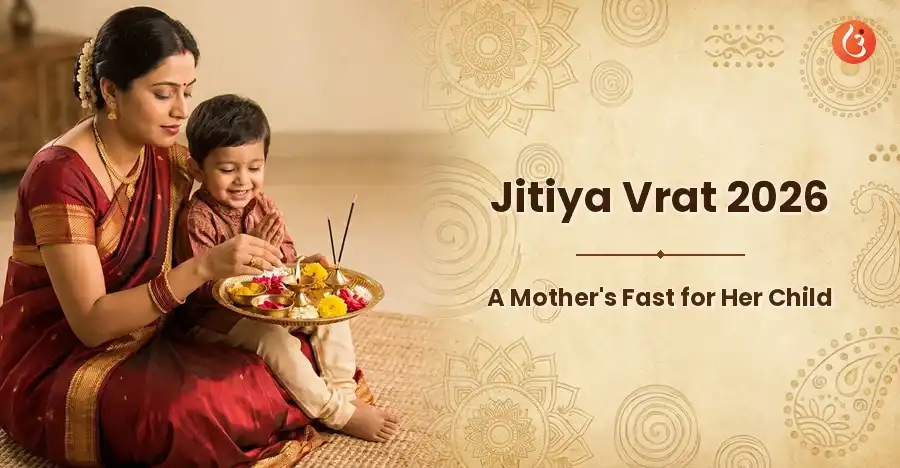
Jivitputrika Vrat, or Jitiya Vrat, is a profound three-day fast observed by mothers for the protection, longevity, and well-being of their children. According to the Mahabharata, this powerful vrat honours the selfless Gandharva prince, Jimutavahana. In 2026, this significant fast begins on Saturday, October 3rd, and involves a strict nirjala (waterless) observance.
Quick Answer
- What: Jitiya Vrat (जितिया व्रत) is a demanding 24-hour waterless fast kept by mothers for their children's health and long life.
- When: The main fast is on Saturday, October 3, 2026. The observance spans three days, including the day before and the day after.
- Why: It commemorates the sacrifice of Jimutavahana, a divine being who offered his own life to save the children of the Naga (serpent) race.
- How: Mothers perform puja, listen to the Vrat Katha, and observe a strict fast, breaking it only after sunrise on the following day.
Table of Contents
- Jitiya Vrat 2026: Date, Tithi & Shubh Muhurat
- Why is Jitiya Vrat So Significant?
- The Legend of Jimutavahana: The Story Behind the Vrat
- Jivitputrika Puja Vidhi: A Step-by-Step Guide
- Jitiya Vrat Samagri Checklist
- The Nirjala Vrat: Fasting Rules & Paran
- Do's and Don'ts During Jitiya Vrat
- Sources & References
Jitiya Vrat 2026: Date, Tithi & Shubh Muhurat
The timing of Jitiya Vrat is precise and based on the Vedic Panchang. For 2026, the fast will be observed on Saturday, October 3rd, during the Ashtami tithi of Krishna Paksha in the Ashwin month. This is the most important day.
The entire observance, however, is a three-day affair:
1. Nahay-Khay (Oct 2, 2026): The day of preparation with a holy bath and sattvic meal.
2. Khul Jitiya / The Fast (Oct 3, 2026): The 24-hour nirjala fast.
3. Parana / Breaking the Fast (Oct 4, 2026): Breaking the fast after sunrise.
Key Timings for 2026:
- Ashtami Tithi Begins: 07:59 AM on Oct 03, 2026
- Ashtami Tithi Ends: 05:51 AM on Oct 04, 2026
City | Sunrise (Oct 4) for Paran |
|---|---|
Delhi | Approx. 06:16 AM |
Mumbai | Approx. 06:35 AM |
Varanasi | Approx. 05:53 AM |
Kolkata | Approx. 05:39 AM |
Patna | Approx. 05:48 AM |
Why is Jitiya Vrat So Significant?
This isn't just any fast. The spiritual significance of Jitiya Vrat, as explained by Vedic scholars, is rooted in a mother's selfless love—a power considered one of the strongest forces in the cosmos. It's a testament to her willingness to endure extreme hardship for the sake of her children.
Why does this matter so much? The vrat is believed to create a spiritual shield (kavach) around the children, protecting them from harm, illness, and untimely death. It's a deeply personal and powerful act of devotion, primarily observed in Bihar, Jharkhand, Uttar Pradesh, and parts of Nepal, connecting mothers through a shared tradition of sacrifice and love. The tradition is often passed down from mother-in-law to daughter-in-law, making it a sacred thread that connects generations of women within a family, strengthening both familial and community bonds. It's a living tradition.
The Legend of Jimutavahana: The Story Behind the Vrat
The core of this vrat comes from a powerful story in the Mahabharata. It’s not just a tale; it’s the very reason for the ritual. The hero is Jimutavahana, a compassionate prince of the Gandharvas.
Here's the thing—he was a symbol of self-sacrifice. The story goes that the Nagas (serpents) had a pact with Garuda, the celestial eagle, to offer one of their young as food each day. One day, Jimutavahana saw a distraught mother serpent lamenting the impending death of her son, Shankhachuda. He couldn't bear her pain. In an incredible act of compassion, he offered himself to Garuda in place of the young serpent.
Garuda, upon discovering the truth, was so moved by Jimutavahana's selflessness that he not only spared him but also vowed to never harm the Nagas again, bringing all the consumed serpents back to life. This legend, about a hero protecting the young, is why mothers worship Jimutavahana. They pray for the same divine protection for their own children. This story is similar in spirit to other tales of heroism you might find in the Lesser Known Characters Of Ramayana.
Jivitputrika Puja Vidhi: A Step-by-Step Guide
Performing the puja correctly is essential for the vrat's fulfillment, as detailed in various Grihya Sutras. While regional variations exist, the core steps remain consistent. You don't need to be an expert, but you do need to be sincere.
- Nahay-Khay (Day 1): Begin by taking a holy bath in a river, if possible, before sunrise. You should eat only one sattvic meal, typically consisting of rice, dal, and a vegetable curry made without onion or garlic.
- Sankalp (Day 2 Morning): After your morning bath, take a formal vow (sankalp) to observe the fast with pure intentions for your children's well-being.
- Prepare the Altar: Create a sacred space using cow dung and place a small pot of water.
- Create the Idol: Make an image of Jimutavahana from Kusha grass. This is a key step.
- The Puja: Offer akshat (rice), flowers, incense, and a diya. The offerings are simple but must be made with devotion.
- Vrat Katha: The most important part. You must listen to or recite the Jitiya Vrat Katha, the story of Jimutavahana. This is the heart of the puja.
- The Fast Begins: The strict nirjala fast starts now and continues through the night.
- Paran (Day 3): After sunrise on the Navami tithi, break the fast with a simple meal of rice, spinach (saag), and other sattvic foods.
Jitiya Vrat Samagri Checklist
Having the right items ready makes the puja go smoothly. Here's a simple checklist of what you'll need.
Category | Item | Purpose |
|---|---|---|
Puja Items | Kusha Grass, Cow Dung | To make the idol of Jimutavahana and purify the space |
Offerings | Rice, Flowers, Fruits | For Naivedya and to offer to the deity |
Lamps | Ghee Diya, Incense Sticks | To invoke divine presence and create a sacred atmosphere |
Special Items | Mustard Oil, Khalli (mustard cake) | Traditional offerings made to eagles and jackals as part of the ritual |
For the devotee | Clean clothes, a pure heart | Essential for observing the fast with the right mindset |
The Nirjala Vrat: Fasting Rules & Paran
The Jitiya fast is one of the most difficult Hindu fasts. It is nirjala, meaning you abstain from both food and water for over 24 hours. This rule is non-negotiable. The austerity of a nirjala fast is believed to intensify the spiritual energy of the mother's prayer, demonstrating complete control over the senses (indriyas) and directing all her willpower towards her child's protection.
- What to avoid: Absolutely everything. No water, no food, no tea.
- When to start: The fast begins on the morning of Ashtami tithi and lasts until the sunrise of Navami tithi.
- Breaking the Fast (Paran): Paran is done only after sunrise on October 4, 2026. Breaking it before sunrise invalidates the fast. The first items consumed are usually simple, like soaked grams or a light meal.
This difficult observance mirrors the sacrifice of Jimutavahana and channels a mother's powerful intention. It's a profound spiritual practice, much like the devotion shown in the Story Of Goddess Bhramari.
Do's and Don'ts During Jitiya Vrat
To maintain the sanctity of the vrat, there are some simple rules to follow. Think of them as guidelines for keeping your focus pure.
Do's:
- Wake up before sunrise (Brahma Muhurat).
- Maintain a calm and prayerful state of mind.
- Wear clean, simple clothes.
- Listen to the Vrat Katha with full attention.
- Sleep on the floor if possible, as a sign of humility.
- Offer prayers to your ancestors (pitrs) as their blessings are also sought for the family's well-being.
Don'ts:
- Don't consume any food or water during the fasting period.
- Avoid any negative thoughts, anger, or arguments.
- Don't lie or use harsh words.
- Avoid cutting hair or nails on the day of the fast.
- Don't engage in any form of physical intimacy, as the day is meant for spiritual austerity and focus.
Tithi Aarti
While Jitiya Vrat is dedicated to Jimutavahana, the universal prayer "Om Jai Jagdish Hare" is often sung to invoke the blessings of Lord Vishnu, the supreme preserver, for the child's protection.
ॐ जय जगदीश हरे, स्वामी जय जगदीश हरे ।
भक्त जनों के संकट, दास जनों के संकट, क्षण में दूर करे ॥
ॐ जय जगदीश हरे...
Om Jai Jagdish Hare, Swami Jai Jagdish Hare,
Bhakt janon ke sankat, Daas janon ke sankat, kshan mein door kare.
Om Jai Jagdish Hare...
This timeless aarti glorifies the Lord of the Universe, acknowledging His power to instantly remove the troubles and sorrows of His devotees. It is a humble surrender, seeking divine grace and protection.
When to sing: This aarti is sung with deep devotion at the conclusion of the evening puja on the main fasting day. Mothers perform the aarti with a ghee lamp to seek divine blessings for their children's health and long life.
Tithi Mantras
While the primary worship is dedicated to Jimutavahana, invoking a powerful deity for protection is a key aspect of any vrat. For seeking divine protection and longevity for one's children, the Vishnu Dwadashakshari Mantra is highly recommended as it calls upon the preserver of the universe.
Vishnu Dwadashakshari Mantra
ॐ नमो भगवते वासुदेवाय
Om Namo Bhagavate Vasudevaya
This mantra translates to "I bow to the Supreme Lord, Vasudeva (an epithet for Vishnu/Krishna)." It is a powerful invocation for divine protection, peace, and liberation from worldly suffering, creating a spiritual shield around the devotee's loved ones. For maximum efficacy, it should be chanted 108 times using a tulsi mala. The most auspicious time to chant is during the main Jitiya Vrat puja on Ashwin Krishna Ashtami, either in the morning after bathing or during the evening rituals.
Sources & References
- Scriptural Authority: The story of Jimutavahana is primarily referenced in the Mahabharata.
- Vidhi / Grihya Sutras: The ritual procedures are aligned with practices described in texts like the Paraskara Grihya Sutra, which outlines domestic rites.
- Panchang & Timing: Tithi and muhurat timings are verified against the Drikpanchang for 2026 and can be cross-referenced with the Utsav Panchang.