Kajari Teej 2026: Date, Muhurat, Significance & Puja Vidhi
By Pandit Anand S., Vrat Vidhi Expert with 15+ years in temple traditions | Reviewed by Utsav editorial team
Kajari Teej in 2026 falls on Sunday, August 30th. This vital Hindu festival, celebrated on the third day of the dark fortnight (Krishna Paksha) in the Bhadrapada month, is dedicated to the divine union of Lord Shiva and Goddess Parvati. Married women observe a sacred fast for the longevity and prosperity of their husbands, making it a day of immense devotional power.
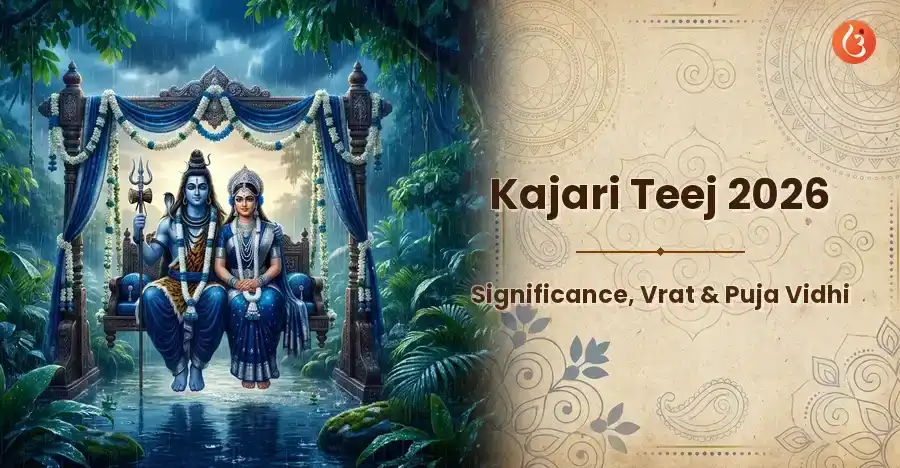
Table of Contents
- Kajari Teej 2026: Date, Tithi & Shubh Muhurat
- Why We Celebrate Kajari Teej
- The Story Behind Kajari Teej (Vrat Katha)
- Kajari Teej Puja Vidhi: Step-by-Step
- Kajari Teej Samagri Checklist
- Key Mantras for Kajari Teej
- Teej Mata Aarti: Om Jai Shiv Omkara
- Kajari Teej Fasting Rules (Vrat Vidhi)
- Do's and Don'ts for Kajari Teej
- How Kajari Teej Is Celebrated Across India
- Sources & References
Kajari Teej 2026: Date, Tithi & Shubh Muhurat
As per verified Panchang data, the timings for Kajari Teej 2026 are absolutely critical for observing the vrat correctly. This isn't just a date; it's a specific lunar window. You'll need to pay close attention to the tithi start and end times to ensure your fast and puja align with the cosmic energies of the day.
- Date: Sunday, August 30, 2026
- Tithi: Bhadrapada Krishna Paksha Tritiya
- Tritiya Tithi Begins: 09:36 AM on August 30, 2026
- Tritiya Tithi Ends: 08:50 AM on August 31, 2026
- Moonrise Time (for Arghya): Approximately 08:45 PM (Varies by location)
Here’s a breakdown of auspicious timings for major cities where the festival is prominent. Why does this matter? Because local sunrise and moonrise times can shift the muhurat slightly.
City | Puja Muhurat (Evening) |
|---|---|
Delhi | 07:15 PM to 08:45 PM |
Jaipur | 07:20 PM to 08:50 PM |
Varanasi | 06:55 PM to 08:25 PM |
Lucknow | 07:00 PM to 08:30 PM |
Why We Celebrate Kajari Teej
The spiritual core of this festival, as detailed in the Shiva Purana (शिव पुराण), is a celebration of unwavering devotion. It commemorates Goddess Parvati's intense penance (tapasya) to win Lord Shiva as her husband. So, when you observe this fast, you're tapping into that same divine feminine energy and determination. It's a powerful statement of love and commitment.
This day isn't just for married women praying for their husbands' long life. It's also incredibly significant for unmarried women, who pray for a devoted and worthy husband like Lord Shiva. The festival beautifully captures the essence of marital bliss, sacrifice, and the profound strength of faith. The monsoon backdrop, with its dark clouds (kajal), symbolizes the pain of separation that is overcome by the joy of reunion—mirroring the divine love story.
The Story Behind Kajari Teej (Vrat Katha)
The traditional vrat katha, often recited during the evening puja, tells a deeply moving story that illustrates the festival's values. It’s not just a tale; it’s a teaching. The story centers on a poor Brahmin couple in a village. The wife, a devout follower of Goddess Parvati, decided to observe the difficult Kajari Teej fast but had nothing to offer as naivedya.
Her husband, seeing her distress, went into the dark forest to find something. He ended up stealing a small packet of sattu (roasted gram flour) from a shopkeeper's bundle. As he was caught, he explained the reason for his action—his wife's unbroken fast. The shopkeeper, moved by his story and the wife's devotion, not only forgave him but also gifted him more items for the puja. This katha highlights that true devotion and sincere intention are what truly please the divine, more than any material wealth. It’s a beautiful reminder of faith's power.
Kajari Teej Puja Vidhi: Step-by-Step
As performed by traditional pandits, the puja vidhi for Kajari Teej is a heartfelt process that combines devotion with specific rituals. Following these steps helps you connect with the divine energies of Teej Mata (Goddess Parvati). Don't rush it; every step has its own meaning.
- Sankalp (The Vow): First thing in the morning, after a purifying bath, face east and take a vow (sankalp) to observe the fast with full devotion for the well-being of your husband and family. You'll hold water, flowers, and a coin in your hand while stating your name, gotra, and intention.
- Creating the Sacred Space: Prepare a clean altar. Create a small pond-like structure with mud and place a neem branch (symbolizing Teej Mata) beside it. This represents nature and fertility.
- Idol Worship: Place a small idol or picture of Lord Shiva and Goddess Parvati. If you don't have one, the neem branch itself is worshipped as the Goddess.
- Shringar Arpan (Offerings): This is essential. Offer the 16 items of bridal adornment (solah shringar) to Goddess Parvati. This includes bangles, sindoor, bindi, mehendi, and a red chunari.
- Naivedya: Offer sweets made from sattu, fruits, and other pure vegetarian food items.
- Katha Recitation: In the evening, gather with other women to light a lamp and listen to or recite the Kajari Teej vrat katha. This is the heart of the puja.
- Singing Kajris: Sing traditional folk songs known as kajris. These songs of love and longing enhance the devotional atmosphere.
- Moon Worship (Arghya): This is the climax. Once the moon is visible, offer arghya (a water offering mixed with milk, kumkum, and flowers) to it. You look at your husband's face through a sieve, and then at the moon.
- Breaking the Fast: After offering arghya to the moon, you can break your fast by drinking water from your husband's hands and eating the prasad.
Kajari Teej Samagri Checklist
Being prepared is key to a peaceful puja. Here’s a structured list of everything you'll need. Using a table makes it much easier to check things off.
Category | Item | Purpose |
|---|---|---|
Puja Items | Kumkum, Haldi, Chandan, Akshat | For tilak and offerings |
Deities & Symbols | Idol/photo of Shiva-Parvati, Neem branch | Main focus of worship |
Offerings | Sattu sweets, Fruits, Coconut, Ghee | Naivedya (food offering) |
Vrat Items | Solah Shringar items, Red Chunari | Adornment for the Goddess |
For the Ritual | Clay/mud, Diya, Incense, Sieve | To create the sacred space and for moon sighting |
For the Devotee | New traditional clothes (red/green) | Symbolizes auspiciousness and purity |
Key Mantras for Kajari Teej
This powerful mantra for Goddess Parvati should be the cornerstone of your chanting throughout the day. The sacred vibrations created by chanting are believed to purify the atmosphere and the devotee's consciousness. It's simple, direct, and carries the energy of the Divine Mother. Chanting it focuses your mind and deepens the spiritual impact of your fast.
Parvati Mool Mantra:
ॐ पार्वत्यै नमः
Om Parvatyai Namah
Meaning: "I bow to Goddess Parvati." This fundamental salutation invokes her divine energy, seeking her blessings for enduring marital harmony, inner strength, and unwavering devotion.
Since Kajari Teej celebrates the sacred union of Shiva and Parvati, honoring Lord Shiva is also essential.
Shiva Mool Mantra:
ॐ नमः शिवाय
Om Namah Shivaya
Meaning: "I bow to Lord Shiva." Chanting this mantra acknowledges the divine masculine energy and honors the cosmic partnership that this festival celebrates.
Recitation: Chant the Parvati mantra 108 times using a rudraksha or tulsi mala during your evening puja for the best results. This sacred number represents spiritual completion. Using a mala aids concentration, allowing you to immerse yourself fully in the meditative quality of the chant.
Teej Mata Aarti: Om Jai Shiv Omkara
The puja beautifully concludes with the soul-stirring 'Om Jai Shiv Omkara' aarti. Since Kajari Teej celebrates the divine couple, this aarti, which praises both Lord Shiva and Goddess Parvati, is the most fitting one to perform. It fills the home with divine vibrations.
Om Jai Shiv Omkara Aarti:
ॐ जय शिव ओंकारा, स्वामी जय शिव ओंकारा।
ब्रह्मा, विष्णु, सदाशिव, अर्द्धांगी धारा॥
Om Jai Shiv Omkara, Swami Jai Shiv Omkara,
Brahma, Vishnu, Sadashiv, Ardhangi Dhara.
Meaning: This aarti praises the glory of Lord Shiva, who is the one supreme being worshipped by Brahma and Vishnu. It also honors Goddess Parvati as his inseparable other half (ardhangi).
Recitation: Sing this aarti once with the entire family after the moon worship, just before breaking the fast.
Kajari Teej Fasting Rules (Vrat Vidhi)
The vrat vidhi for Kajari Teej is quite strict, which is why its spiritual rewards are considered immense. It’s a test of determination and faith. Most women observe a nirjala fast, meaning they abstain from both food and water throughout the day.
The fast begins at sunrise on August 30, 2026 and is only broken after sighting the moon and offering it arghya. What should you avoid? All grains, salt, onion, garlic, and any tamasic (non-sattvic) foods are strictly prohibited. The fast is broken with a sip of water and the sattu prasad offered during the puja. This discipline is what makes the vrat so powerful.
Do's and Don'ts for Kajari Teej
To maintain the sanctity of the fast and maximize its spiritual benefits, here are a few simple guidelines. Think of them not as restrictions, but as ways to keep your focus pure.
Do's:
- Wake up during the Brahma Muhurat (before sunrise).
- Wear new or clean clothes, preferably in auspicious colors like red, green, or yellow.
- Apply mehendi on your hands and feet.
- Spend the day singing bhajans, chanting mantras, and reading the vrat katha.
- Swing on a jhula (swing) if possible, as it's a cherished tradition.
- Maintain a calm and positive state of mind.
Don'ts:
- Avoid anger, arguments, or any negative speech.
- Do not consume any food or water if you are observing the nirjala fast.
- Avoid sleeping during the daytime.
- Don't wear black or white clothes.
- Avoid any kind of gossip or harsh language.
How Kajari Teej Is Celebrated Across India
While the core devotion to Shiva and Parvati is universal, regional traditions add beautiful, unique colors to Kajari Teej celebrations. It's a testament to India's incredible cultural diversity. This devotion to the divine feminine is a thread that connects devotees across the country, from the grand temples of Bengal like the famous Kalighat Kali Temple Kolkata Its Story From Past To Present to the hill shrines of Jammu.
- Rajasthan: Kajari Teej is especially famous in Bundi, where a grand procession of Teej Mata is carried through the city. The consumption of sweets made from sattu is a major highlight here.
- Uttar Pradesh & Bihar: Here, the festival is synonymous with women gathering to sing kajris—melodious folk songs of love and the monsoon season. Swinging on beautifully decorated jhulas is an indispensable part of the celebration.
- Madhya Pradesh: In central India, the festival is celebrated with similar rituals, including the fast and evening puja. Local fairs and community gatherings are also common.
Sources & References
Scriptural Authority:
- Shiva Purana — Provides the foundational story of Goddess Parvati's penance and devotion to Lord Shiva, which is the spiritual basis for all Teej festivals.
Vidhi / Grihya Sutras:
- Paraskara Grihya Sutra — Contains guidelines for domestic Hindu rituals (Grihya) that form the basis of household puja vidhis like the one for Kajari Teej.
Panchang & Timing:
- Drikpanchang.com — Tithi and muhurat timings for 2026 have been verified for accuracy.
- Utsav Panchang (https://utsavapp.in/panchang) — For real-time tithi and muhurat calculations.