Koushiki Amavasya 2026: Date, Tithi, & The Potent New Moon for Kali Sadhana
By Pandit Harish Joshi, Vedic Scholar & Shakti Upasaka | Reviewed by Utsav editorial team
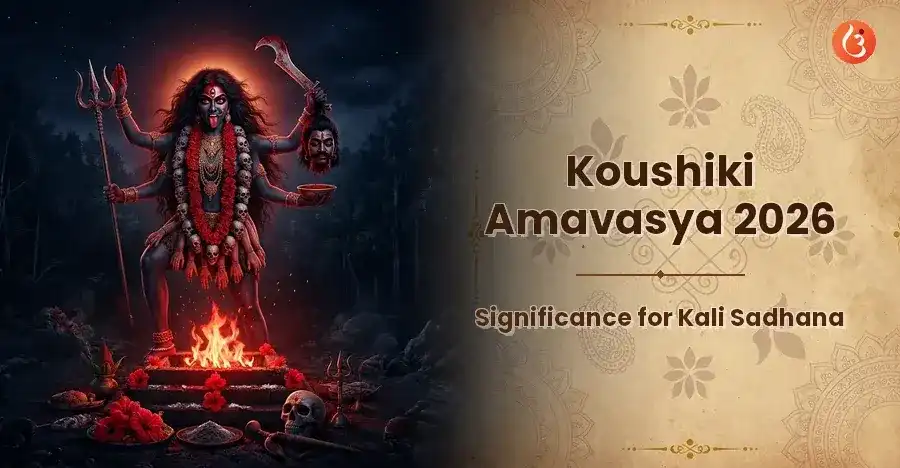
Koushiki Amavasya, falling on Thursday, 10th September 2026, is the profoundly powerful new moon in the Bhadrapada month. It's not just any Amavasya. According to the Devi Mahatmyam, this is the tithi when Goddess Koushiki emerged from the divine sheath of Parvati to annihilate the demons Shumbha and Nishumbha, making it an epicentre of Shakti sadhana. The energy of this night is particularly conducive for breaking through spiritual obstacles and seeking divine protection.
Quick Answer: Koushiki Amavasya 2026
- What: The new moon (Amavasya) in the Hindu month of Bhadrapada, marking the manifestation of Goddess Koushiki (a form of Mahakali).
- When: Thursday, 10th September 2026. Tithi begins at 10:33 AM and ends at 08:56 AM on Sep 11.
- Why: It's considered one of the most potent nights for Tantric rituals, Kali and Tara sadhana, and for performing Pitri Tarpan (ancestral rites).
- How to Participate: Devotees can participate in powerful Shaktipeeth pujas like the Shravan Amavasya Kaam Kaameshwari Puja through Utsav.
Table of Contents
- Koushiki Amavasya 2026: Date, Tithi & Shubh Muhurat
- What is the True Significance of Koushiki Amavasya?
- The Legend of Goddess Koushiki's Emergence
- How is Koushiki Amavasya Celebrated at Tarapith?
- Key Rituals for Devotees at Home
- Do's and Don'ts on Koushiki Amavasya
- Participate in Amavasya Pujas on Utsav
- Sources & References
Koushiki Amavasya 2026: Date, Tithi & Shubh Muhurat
The timings for this potent day are critical for any sadhana. According to the Drik Panchang, the tithi timings for Koushiki Amavasya 2026 are precise. Don't miss this window.
- Date: Thursday, 10th September 2026
- Amavasya Tithi Begins: 10:33 AM on Sep 10, 2026
- Amavasya Tithi Ends: 08:56 AM on Sep 11, 2026
The most powerful period for puja and mantra chanting is during the Nishita Kaal (midnight). Here are the estimated puja windows for major cities.
City | Nishita Kaal Puja Time (Approx.) |
|---|---|
Delhi | 11:58 PM (Sep 10) to 12:44 AM (Sep 11) |
Mumbai | 12:14 AM to 01:02 AM (Sep 11) |
Varanasi | 11:44 PM (Sep 10) to 12:31 AM (Sep 11) |
Kolkata | 11:15 PM to 12:02 AM (Sep 11) |
Chennai | 11:50 PM (Sep 10) to 12:38 AM (Sep 11) |
What is the True Significance of Koushiki Amavasya?
So why does this Amavasya get so much attention? The answer lies in its scriptural roots within the Markandeya Purana. This isn't just a regular new moon; it's an anniversary of divine intervention. It's the day the cosmos witnessed the birth of a warrior goddess specifically created to restore dharma.
This day is considered exceptionally powerful for three key reasons:
1. Tantric Sadhana: The veil between the spiritual and material worlds is believed to be thinnest on this night, making it perfect for Tantric rituals and mantra siddhi, especially for Goddess Kali and Tara. The cosmic alignment on this night is said to open subtle energy channels (nadis), allowing practitioners to access higher states of consciousness with less effort.
2. Protection from Evil: Since Goddess Koushiki manifested to destroy evil, praying to her on this day is believed to grant immense protection from negative energies, black magic, and hidden enemies. Her worship acts as a divine shield (kavach) for the devotee.
3. Pitri Tarpan: Like Mahalaya Amavasya, Koushiki Amavasya is a vital day for performing Tarpan, offering water and sesame seeds to ancestors, which helps liberate them and secure their blessings. This is because the new moon is a time when the gateway to the Pitru Loka (ancestral realm) is considered most accessible, making the offerings highly effective.
The Legend of Goddess Koushiki's Emergence
The story is one of the most dramatic episodes in the Devi Mahatmyam (दुर्गा सप्तशती). The demon kings Shumbha and Nishumbha had received a boon from Brahma that they could not be killed by any man, god, or beast, which made them arrogant and tyrannical. They conquered the three worlds and usurped the positions of the Devas. The gods, tormented and defeated, pleaded with Goddess Parvati for help. It's a powerful moment.
Hearing their pleas, a magnificent, fierce goddess emerged from the kosha (divine sheath or cells) of Parvati's own body. Because she came from the kosha, she was named Koushiki. As she emerged, Parvati's own skin turned dark, and she became known as Kalika. Koushiki's divine radiance illuminated the heavens. When the demons' spies, Chanda and Munda, saw her, they rushed to their masters to report on her unparalleled beauty, urging them to possess her. This vanity was the seed of their destruction. The demons, captivated by her beauty, sought to capture her, triggering a cataclysmic battle. Koushiki, along with Kali (who emerged from her forehead), ultimately vanquished the entire demon army, restoring balance to the universe. This day celebrates that very emergence.
How is Koushiki Amavasya Celebrated at Tarapith?
Nowhere is Koushiki Amavasya more significant than at the Tarapith Temple in West Bengal, a major Shakti Peeth. The temple's chief deity is Maa Tara, a formidable form of the goddess. On this day, the temple becomes a focal point for thousands of Tantrics, saints, and devotees. The temple's association with the legendary Tantric saint Bamakhepa, who is said to have had a direct vision of Maa Tara here, further sanctifies the site. His spiritual energy is believed to pervade Tarapith, especially on Koushiki Amavasya, drawing sadhaks from across the country.
The atmosphere is electric. Special pujas are conducted through the night, and the air is thick with the sound of mantras and dhols. It's an intense experience. One of the unique traditions here is the animal sacrifice, performed as a part of the Tantric rituals to appease the fierce goddess. For devotees, a visit to Tarapith on this night is considered a life-changing spiritual event. You can feel the raw power.
Key Rituals for Devotees at Home
You don't have to be at Tarapith to observe this powerful day. Verified Vaidik pandits confirm that sincere devotion at home yields immense benefits. Here’s what you can do.
- Purify the Space: Before starting the puja, cleanse your home and the puja area. Sprinkling Ganga jal while chanting a simple mantra like "Om" can purify the environment and create a sacred atmosphere.
- Evening Puja: After sunset, take a bath and set up a small altar with an image of Goddess Kali or Durga. Light a ghee or mustard oil lamp.
- Offerings: Offer red flowers (like hibiscus), sweets, and fruits.
- Mantra Chanting: This is the most important part. Chant the mantra of Goddess Kali to invoke her protective energies.
Dakshina Kali Mantra (दक्षिण काली मंत्र):
ॐ क्रीं कालिकायै नमः
Om Kreem Kalikayai Namah
Meaning: "I bow to the supreme Goddess Kali." This mantra is a powerhouse of divine energy.
Recitation Count: Chant at least 108 times (one full mala).
Best Time: After 10 PM, especially during the Nishita Kaal.
- Pitri Tarpan: In the morning, offer water mixed with black sesame seeds facing the south direction, remembering your ancestors and praying for their peace. You can find more details in our guide to Mauni Amavasya, which also covers ancestral rites.
Do's and Don'ts on Koushiki Amavasya
To make the most of this day, there are a few things you should and shouldn't do. It's about maintaining a state of purity and receptivity.
Do's:
* Maintain a fast if your health permits.
* Chant the Kali or Durga mantras throughout the day.
* Read or listen to the Devi Mahatmyam, especially the chapters detailing Koushiki's emergence.
* Donate food or clothes to the needy.
* Perform Tarpan for your ancestors.
* Stay awake past midnight and meditate.
Don'ts:
* Avoid starting any new auspicious work or business deals.
* Don't consume non-vegetarian food, alcohol, onion, or garlic.
* Avoid getting into arguments or using harsh language.
* Avoid cutting hair or nails on this day, as it is considered inauspicious.
* It's advised not to travel to lonely or desolate places at night.
Participate in Amavasya Pujas on Utsav
Connecting with the divine energy of Shakti on Koushiki Amavasya is essential. If you can't perform the rituals yourself, you can still receive the blessings by having a puja performed in your name by verified pandits at powerful Shaktipeeths.
- Shravan Amavasya Kaam Kaameshwari Puja: Participate in this potent puja at a revered Shaktipeeth to seek blessings for wish-fulfillment and removal of obstacles. The Dakshina starts from ₹851.
- Shukravar Visesh Maa Kamakhya Puja: Connect with the divine mother at another powerful center of Shakti worship for blessings of wealth and prosperity.
When you Participate, you simply provide your name and gotra in the Sankalp form. The pandit performs the entire ritual on your behalf, and you receive a video of the puja and blessed prasad delivered to your home.
Tithi Aarti
The primary deity for Koushiki Amavasya is a fierce form of the Divine Mother, making the "Jai Ambe Gauri" aarti the most fitting devotional song to conclude the puja. It honors all forms of the Goddess, from the benevolent Gauri to the powerful Kali.
जय अम्बे गौरी, मैया जय श्यामा गौरी।
तुमको निशिदिन ध्यावत,
हरि ब्रह्मा शिवरी॥
ॐ जय अम्बे गौरी॥
Jai Ambe Gauri, Maiya, Jai Shyama Gauri.
Tumko nishidin dhyavat, Hari Brahma Shivri.
Om Jai Ambe Gauri.
Meaning: This opening verse is a song of victory to the Divine Mother, hailing her as both the fair Gauri and the dark Shyama (Kali). It proclaims that even the highest trinity of gods—Vishnu (Hari), Brahma, and Shiva—meditate upon you day and night.
When to sing: This aarti should be sung at the culmination of your Koushiki Amavasya puja rituals, especially during the midnight Nishita Kaal. Perform the aarti by circulating a lit ghee or camphor lamp in front of the deity's image while singing, concluding your worship with deep reverence.
Sources & References
Scriptural Authority:
* Markandeya Purana, Devi Mahatmyam (Chapters 5-10) — Details the emergence of Goddess Koushiki and the battle against Shumbha-Nishumbha.
Panchang & Timing:
* Timings and tithi details are verified against Drikpanchang.com for 2026.
* Utsav Panchang (https://utsavapp.in/panchang)
Related Pujas on Utsav:
* Shravan Amavasya Kaam Kaameshwari Puja
* Shukravar Visesh Maa Kamakhya Puja