Mahalaxmi Vrat 2026: Dates, 16-Day Puja Vidhi & Significance
Mahalaxmi Vrat is a sacred 16-day observance dedicated to the Goddess of wealth and prosperity. The vrat in 2026 begins on Saturday, September 19, 2026, starting on the Ashtami tithi of Bhadrapada Shukla Paksha. As described in the Bhavishya Purana, devotees undertake this fast to seek Goddess Lakshmi's blessings, ensuring financial stability, success, and abundance for their families. It's a powerful period for devotion.
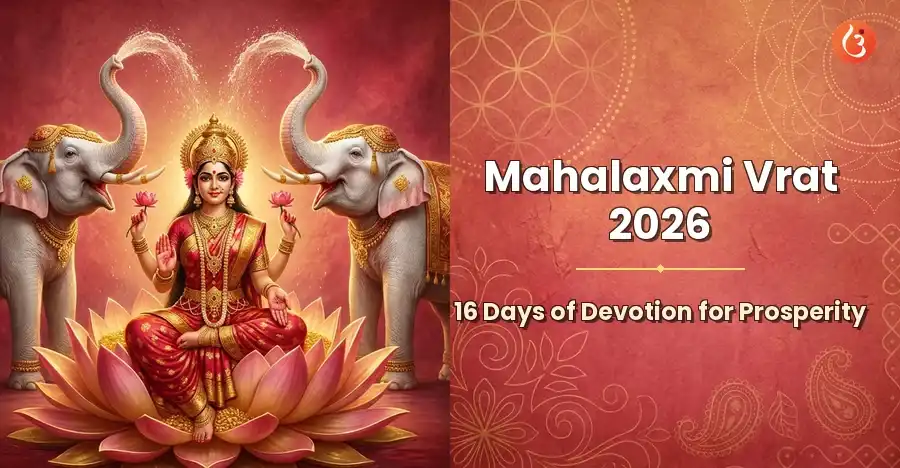
Table of Contents
- Why We Celebrate Mahalaxmi Vrat
- Mahalaxmi Vrat 2026: Date, Tithi & Shubh Muhurat
- Mahalaxmi Vrat Puja Vidhi: A 16-Day Guide
- Mahalaxmi Vrat Samagri Checklist
- Mahalaxmi Aarti
- Key Mantras for Wealth
- Observing the 16-Day Vrat: A Timeline
- Do's and Don'ts During the 16-Day Vrat
- Related Gyan Articles
- Sources & References
Why We Celebrate Mahalaxmi Vrat
So, what's the real story behind this 16-day commitment? The significance of Mahalaxmi Vrat is deeply rooted in the Bhavishya Purana, which isn't just a collection of prophecies but a guide to dharmik living. According to this sacred text, the vrat is the single most powerful observance for anyone seeking Akshaya Dhan—inexhaustible wealth and prosperity. It’s not just about money; it’s about holistic abundance, success in endeavors, and lasting happiness in the family. This is your chance to directly connect with the divine mother of fortune.
The origin story is truly powerful. The Bhavishya Purana narrates how Lord Krishna himself advised King Yudhishthira of the Pandavas to observe this very vrat. Having lost his kingdom, wealth, and honor in a game of dice, Yudhishthira was desperate. Krishna explained that by performing the Mahalaxmi Vrat with unwavering devotion for 16 days, he could regain everything he had lost and more. This isn't just a mythological tale; it’s a testament to the vrat's power to restore fortune and righteousness, even in the most dire circumstances.
Mahalaxmi Vrat 2026: Date, Tithi & Shubh Muhurat
Timing is everything in Vedic rituals. For Mahalaxmi Vrat 2026, the key dates are anchored in the Bhadrapada month's lunar cycle, as verified by Utsav Panchang. The 16-day observance begins on the eighth day of the waxing moon (Shukla Paksha Ashtami). You'll want to mark your calendar carefully.
- Vrat Begins: Saturday, September 19, 2026
- Ashtami Tithi Begins: 1:00 PM on Friday, September 18, 2026
- Ashtami Tithi Ends: 3:26 PM on Saturday, September 19, 2026
To help you perform the puja during the most auspicious windows, here are the Shubh Muhurat timings for major Indian cities. Remember, performing rituals during these times enhances their spiritual efficacy.
City | Muhurat Start | Muhurat End |
|---|---|---|
Delhi | 06:08 AM | 07:39 AM |
Mumbai | 06:23 AM | 07:53 AM |
Varanasi | 05:46 AM | 07:17 AM |
Chennai | 06:01 AM | 07:30 AM |
Kolkata | 05:21 AM | 06:52 AM |
Mahalaxmi Vrat Puja Vidhi: A 16-Day Guide
The daily puja vidhi, as performed by verified Vaidik pandits, is the heart of this 16-day observance. It's a disciplined yet beautiful routine that aligns your energy with Goddess Lakshmi. Don't worry, it's something you can definitely do at home with pure intention. The key is consistency.
Here’s a step-by-step guide for your daily practice:
1. Brahma Muhurat: Wake up before sunrise, take a bath, and wear clean, fresh clothes. Yellow or red attire is considered highly auspicious.
2. Clean the Space: Thoroughly clean your home and the puja altar (mandir). Sprinkle Gangajal to purify the surroundings.
3. Establish the Kalash: Place a Kalash (pot) filled with water, a coin, betel nut, and mango leaves. Place a coconut on top. This represents abundance.
4. Invoke the Goddess: Light a ghee lamp and incense sticks. Meditate on Goddess Lakshmi and invite her into your home. You can place an idol or picture of her.
5. Worship Gajalakshmi: A unique aspect of this vrat is the worship of an elephant, symbolizing Gajalakshmi. You can make a small elephant from clay (mitti) or turmeric paste, or use an image. Offer it flowers and prayers.
6. The Sacred Thread: Prepare a sacred thread (dora) with 16 knots. Apply turmeric and kumkum to it, worship it daily, and wear it on your left wrist on the first day.
7. Offerings (Naivedya): Offer fresh fruits, sweets (especially kheer), and milk to the Goddess.
8. Read the Katha: Recite or listen to the Mahalaxmi Vrat Katha every day. This is absolutely essential.
9. Chant Mantras: Chant the key Lakshmi mantras (mentioned below) 108 times using a lotus seed (kamal gatta) or crystal mala.
10. Aarti: Conclude the puja by singing the Mahalaxmi Aarti with deep devotion.
11. Distribute Prasad: Share the blessed offerings with your family members.
12. Udyapan (Conclusion): On the 16th day, perform a concluding ceremony, offer the sacred thread back to the Goddess, and make a donation (daan) to a Brahmin or someone in need.
Mahalaxmi Vrat Samagri Checklist
Preparation is key to a peaceful and focused puja. You don't want to be scrambling for items mid-ritual. Based on traditional puja manuals, here is a complete checklist of materials (samagri) you'll need. Gather these items beforehand to ensure your 16-day observance goes smoothly.
Category | Item | Purpose |
|---|---|---|
Puja Items | Idol/Photo of Goddess Lakshmi, Kumkum, Haldi, Chandan | Deity focus and sacred adornments |
Sacred Vessels | Kalash (pot), Coconut, Mango Leaves | Symbol of Purnakama (complete fulfillment) |
Lamps & Incense | Ghee Diya, Agarbatti, Camphor (Kapur) | Invocation of light and purification of air |
Offerings | Fruits, Sweets (Kheer/Peda), Betel Nuts, Paan Leaves | Naivedya (food offering to the deity) |
Special Items | Sacred Thread (Dora) with 16 knots, Clay Elephant | Vrat essential and symbol of Gajalakshmi |
Flowers & Leaves | Lotus flowers, Red Hibiscus, Bilva Leaves | Adornment and symbolic offerings |
Mahalaxmi Aarti
The Aarti is the climax of your daily puja. It’s when you pour out your heart in a song of praise, and the vibrations purify your home. The "Om Jai Lakshmi Mata" aarti is the most cherished hymn for this purpose. Singing it with your family creates a powerful, devotional atmosphere.
Om Jai Lakshmi Mata Aarti
ॐ जय लक्ष्मी माता, मैया जय लक्ष्मी माता।
तुमको निसदिन सेवत, हर विष्णु विधाता॥
ॐ जय लक्ष्मी माता...
Om Jai Lakshmi Mata, Maiya Jai Lakshmi Mata,
Tumko nisdin sevat, Har Vishnu Vidhata.
Om Jai Lakshmi Mata...
Meaning: This aarti praises Goddess Lakshmi as the divine mother, served daily by even Lord Vishnu. It acknowledges her as the ultimate bestower of wealth, fortune, and spiritual liberation.
Recitation: You should sing this aarti once every evening after completing the main puja rituals, just before distributing the prasad.
Key Mantras for Wealth
Mantras are not just chants; they are cosmic sound formulas that unlock divine energy. For Mahalaxmi Vrat, the primary goal is to attract the energy of abundance. According to Vaidik tradition, the Lakshmi Beej Mantra is one of the most direct and potent ways to invoke her grace.
Lakshmi Beej Mantra
ॐ श्रीं महालक्ष्म्यै नमः
Om Shreem Mahalakshmyai Namah
Meaning: "I bow to the great Goddess Lakshmi, the embodiment of abundance (Shreem)." The sound Shreem is the seed (beej) sound for the principle of wealth and prosperity.
Recitation Count: For maximum benefit, chant this mantra 108 times each day during the 16-day vrat, preferably using a lotus-seed (kamal gatta) mala.
Best Day & Time: While you'll chant it daily during the vrat, Friday evenings are especially powerful for Lakshmi mantras.
Observing the 16-Day Vrat: A Timeline
This 16-day journey has a clear beginning, a consistent middle, and a fulfilling end. Understanding the timeline helps you mentally prepare for the commitment. The Sankalp, as per Vaidik tradition, is the most critical part of the first day.
- Day 1 (The Beginning): This is the day you take the Sankalp (a sacred vow). Hold water in your palm and state your name, gotra, and your wish to observe the 16-day Mahalaxmi Vrat sincerely. Worship the 16-knot sacred thread and tie it to your wrist. This marks the official start.
- Daily Ritual (Days 2-15): The core of the vrat. Consistency is everything. Your daily routine should include the morning and evening puja, offering fresh naivedya, chanting the Lakshmi Beej Mantra 108 times, and—most importantly—reading or listening to the Mahalaxmi Vrat Katha.
- Day 16 (The Conclusion): This is the day of Udyapan (concluding ceremony). Perform the final puja with extra devotion. Offer the sacred thread back to the Goddess by placing it at her feet on the altar. Distribute prasad generously and give daan (charity) to a pandit or those in need to complete the cycle of giving and receiving.
Do's and Don'ts During the 16-Day Vrat
Observing a vrat is as much about what you don't do as what you do. Traditional texts on dharma outline these key observances to maintain the sanctity of the fast and maximize its spiritual benefits. Think of it as creating a pure vessel for the Goddess's blessings.
Do's (What to Practice):
* Maintain complete cleanliness in your home and person.
* Observe celibacy (Brahmacharya) to conserve spiritual energy.
* Read the Mahalaxmi Vrat Katha every single day without fail.
* Donate food, clothes, or money, especially on the final day.
* Maintain a calm and positive mindset. Speak respectfully to everyone.
* On the final day, it is auspicious to offer Arghya (water offering) to the moon.
Don'ts (What to Avoid):
* Absolutely avoid consuming tamasic foods like onion, garlic, meat, and eggs.
* Do not consume alcohol or any other intoxicants.
* Avoid cutting your hair or nails during the 16-day period.
* Refrain from using harsh language, getting into arguments, or speaking ill of others.
* Try not to sleep during the daytime.
Related Gyan Articles
To deepen your understanding of Goddess Lakshmi and her worship, you can explore these related articles on Utsav Gyan:
- Learn more about the grand celebrations at one of her most famous abodes in our guide to the Mahalakshmi Temple in Kolhapur.
- Discover another important fast dedicated to her in our article on Varalakshmi Vrat.
- Understand the most popular Lakshmi worship during the festival of lights with the Diwali 2026 Lakshmi Puja Guide.
Sources & References
Scriptural Authority:
- Bhavishya Purana: This text contains the primary Vrat Katha and details the significance of the 16-day observance as advised by Lord Krishna to Yudhishthira.
Vidhi / Grihya Sutras:
- The puja vidhi is based on practices codified in traditional Hindu puja manuals and Grihya Sutras that detail the worship of Devi, particularly in her form as Lakshmi.
Panchang & Timing:
- Drikpanchang.com: All tithi and muhurat timings for 2026 have been verified for accuracy.
- Utsav Panchang: (https://utsavapp.in/panchang)
Related Pujas on Utsav:
- While specific Mahalaxmi Vrat pujas are seasonal, devotees can explore various Lakshmi-centric rituals on the Utsav platform throughout the year to maintain their connection with the Goddess of wealth.