Raksha Bandhan 2026: Date, Shubh Muhurat & Complete Rakhi Vidhi
By Pandit Vikram S., Vedic Ritual Specialist with 15+ years of experience | Reviewed by Utsav editorial team
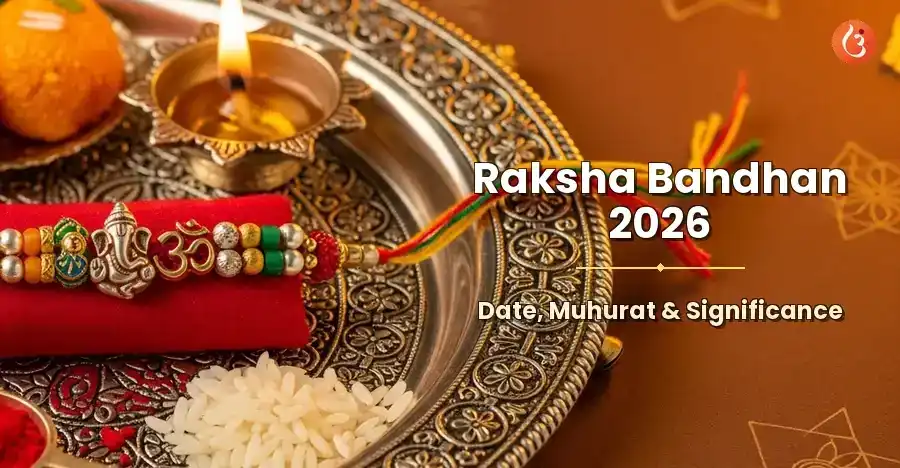
Raksha Bandhan 2026 falls on Friday, August 28th, celebrating the sacred bond between siblings on the Purnima (full moon) of the Shravan month. According to the Bhavishya Purana, this day is dedicated to the Raksha Sutra (sacred thread), a powerful symbol of protection and sibling love. It's a promise of lifelong support, and it's absolutely beautiful.
Quick Answer
- What: Raksha Bandhan (रक्षा बन्धन) is a festival celebrating the protective bond between siblings, where a sister ties a sacred thread (Rakhi) on her brother's wrist.
- When: Friday, August 28, 2026. The Shubh Muhurat to tie the Rakhi is from 09:25 AM to 09:38 PM.
- Why: The Rakhi thread isn't just a thread. It's a sister's prayer for her brother's long life and his solemn vow to protect her from all harm.
- How to Participate: While the Rakhi ceremony is personal, the day is auspicious for Purnima pujas. You can participate in a Weekly Raksha Sutra Seva to invoke divine protection.
Table of Contents
- When is Raksha Bandhan in 2026?
- What is the Real Significance of Raksha Bandhan?
- What is the Story Behind Raksha Bandhan?
- How Do You Perform the Rakhi Tying Vidhi?
- What Do You Need for the Rakhi Ceremony?
- Which Mantra Should You Chant While Tying Rakhi?
- What Should You Do and Avoid on Rakhi?
- How Can You Participate in Rakhi Pujas on Utsav?
When is Raksha Bandhan in 2026?
According to the Drik Panchang, Raksha Bandhan is celebrated on the Purnima (full moon day) of the Shravan month. In 2026, this sacred day falls on a Friday, making it a long weekend for many. It's essential to tie the Rakhi during the Aparahna or Pradosh time, avoiding the Bhadra period, which is considered inauspicious.
The timings are everything. Here are the key details for August 28, 2026:
- Purnima Tithi Begins: 11:50 PM on Aug 27, 2026
- Purnima Tithi Ends: 09:38 PM on Aug 28, 2026
- Raksha Bandhan Shubh Muhurat: 09:25 AM to 09:38 PM (Duration: 12 hours 13 minutes)
- Bhadra Kaal Ends: 09:25 AM on Aug 28, 2026
Here’s a quick look at the muhurat timings across major Indian cities:
| City | Muhurat Start | Muhurat End |
|---|---|---|
| Delhi | 09:25 AM | 09:38 PM |
| Mumbai | 09:42 AM | 09:55 PM |
| Varanasi | 09:10 AM | 09:20 PM |
| Chennai | 09:28 AM | 09:40 PM |
| Kolkata | 08:55 AM | 09:05 PM |
What is the Real Significance of Raksha Bandhan?
The Bhavishya Purana describes the "Raksha Sutra" not just as a sibling custom but as a powerful protective talisman. So, what's the real meaning? It's a symbol of a bond that transcends blood relations. The thread signifies a connection of love, mutual respect, and a promise of spiritual and physical protection. It's a reminder that we are all bound by a thread of humanity.
This day isn't limited to brothers and sisters either. Devotees tie Rakhis to deities like Krishna and Ganesha, and sisters tie them to each other. The core idea is simple but powerful: to pray for the well-being and protection of someone you love. It’s a beautiful, selfless expression of care.
What is the Story Behind Raksha Bandhan?
One of the most profound stories comes directly from the Mahabharata, involving Lord Krishna and Draupadi. It's a tale that perfectly captures the essence of Raksha Bandhan. During the Rajasuya Yagna, Krishna injured his finger, which started bleeding. Seeing this, Draupadi immediately tore a piece of her sari and tied it around his finger to stop the bleeding.
Touched by her selfless act, Krishna promised to protect her whenever she was in need. He fulfilled this promise years later during the infamous "Cheer Haran" (disrobing) incident in the Kaurava court, where he miraculously extended her sari to an infinite length, saving her honor. This story shows that a Rakhi is a bond of protection that even the divine acknowledges and reciprocates. It's not just a ritual; it's a divine promise.
How Do You Perform the Rakhi Tying Vidhi?
As performed by verified Vaidik pandits, the Rakhi ceremony is simple yet deeply meaningful. You don't need elaborate setups, just a clean space and a pure heart. It's all about the intention.
Here’s a step-by-step guide to follow:
1. Prepare the Puja Thali: Arrange the Rakhi, diya (lamp), roli (kumkum), akshat (uncooked rice), and sweets on a thali.
2. Seat Your Brother: Have your brother sit on a clean mat or stool, facing east. It's important for him to cover his head with a clean cloth or handkerchief as a sign of respect.
3. Apply the Tilak: First, apply the roli tilak on your brother's forehead. Then, apply a few grains of akshat over the tilak.
4. Perform Aarti: Light the diya and perform aarti for your brother, circling the thali in a clockwise direction. Pray for his health, happiness, and long life.
5. Tie the Rakhi: Now, tie the sacred Rakhi thread on your brother’s right wrist while chanting the Raksha mantra (mentioned below).
6. Offer Sweets: After tying the Rakhi, offer him sweets. This sweetens the bond and marks a joyous celebration.
7. Exchange Gifts: The brother, in turn, gives his sister a gift as a token of his love and promise of protection.
8. Seek Blessings: Finally, the sister touches her brother's feet for blessings (if he is older), and the brother blesses her.
What Do You Need for the Rakhi Ceremony?
The beauty of this ritual is in its simplicity. You don't need a long list of items. As per traditional vidhi, the essentials are what truly matter. Here’s a checklist to help you prepare the perfect Rakhi thali.
| Category | Item | Purpose |
|---|---|---|
| Puja Items | Roli (Kumkum) & Akshat (Rice) | For applying the auspicious tilak, a symbol of honor. |
| Lamps | Ghee Diya | To perform aarti and invoke divine blessings and positivity. |
| Sacred Thread | Rakhi | The central element, symbolizing the bond of protection. |
| Offerings | Sweets (Mithai) | To sweeten the relationship and celebrate the occasion. |
| Other Items | Coconut & Kalash (optional) | Often used to make the puja more traditional and complete. |
Which Mantra Should You Chant While Tying Rakhi?
The mantra chanted while tying the Rakhi is not just a collection of words; it’s a powerful invocation that energizes the thread with protective vibrations. The most traditional mantra, sourced from ancient texts, connects the ritual to King Bali.
Raksha Mantra (रक्षा मंत्र):
येन बद्धो बली राजा दानवेन्द्रो महाबलः।
तेन त्वामभिबध्नामि रक्षे मा चल मा चल॥
Yena Baddho Bali Raja Danavendro Mahabalah,
Tena Tvam Abhibadhnami Rakshe Ma Chala Ma Chala.
Meaning: "I tie upon you (the Rakhi) with which the most powerful and generous King Bali himself was bound. O Raksha, do not waver, do not waver."
Recitation: Chant this mantra once with pure intention as you tie the Rakhi on your brother's right wrist. It transforms the thread into a kavach (shield) of protection.
What Should You Do and Avoid on Rakhi?
To maintain the sanctity of Raksha Bandhan, there are a few simple guidelines that our pandits recommend following. Think of them less as rules and more as ways to enhance the spiritual energy of the day.
Do's:
- Wake up early, take a bath, and wear clean, traditional clothes.
- Ensure the Rakhi is tied during the Shubh Muhurat, avoiding Bhadra Kaal.
- Maintain a positive and loving atmosphere at home.
- Respect elders and seek their blessings.
- Prepare sattvic (pure vegetarian) food for the family meal.
Don'ts:
- Don't tie the Rakhi without applying a tilak first.
- Avoid any arguments or negative conversations.
- Don't consume non-vegetarian food or alcohol on this sacred day.
- Make sure the Rakhi thread is not broken or damaged.
How Can You Participate in Rakhi Pujas on Utsav?
While the Rakhi ceremony is a cherished family ritual, the day itself—Shravan Purnima—is incredibly auspicious for other spiritual practices. You can amplify the day's protective energies by participating in pujas performed by verified pandits.
Don't just observe the day; immerse yourself in its divine energy. Here's how you can participate:
- Weekly Raksha Sutra Seva: Participate in a Raksha Sutra (sacred thread) offering to Lord Ganesha to seek protection and blessings for your entire family. Dakshina starts from ₹151.
- Shravan Somvar Vishesh Abhishek: Since Rakhi falls in the holy month of Shravan, performing a Rudra Abhishek for Lord Shiva can bring immense peace and protection.
How it Works:
1. Select the puja and provide your details in the Sankalp Form.
2. Pandits at the temple will perform the puja, chanting your name and gotra.
3. You'll receive a video of the puja via WhatsApp within a few days.
4. Authentic prasad from the temple will be delivered to your doorstep.
Tithi Aarti
ॐ जय लक्ष्मी माता, मैया जय लक्ष्मी माता ।
तुमको निशदिन सेवत, हर विष्णु विधाता ॥
उमा, रमा, ब्रह्माणी, तुम ही जग-माता ।
सूर्य-चन्द्रमा ध्यावत, नारद ऋषि गाता ॥
ॐ जय लक्ष्मी माता...
Om jai Lakshmi Mata, Maiya jai Lakshmi Mata.
Tumko nishdin sevat, Hari Vishnu Vidhata.
Uma, Rama, Brahmani, tum hi jag-mata.
Surya Chandrama dhyavat, Narad rishi gata.
Om jai Lakshmi Mata...
This timeless aarti praises Goddess Lakshmi, the universal mother, who is served day and night by the divine trinity. It acknowledges her as the ultimate matriarch, meditated upon by celestial beings like the Sun, Moon, and the sage Narada, invoking her blessings for prosperity and well-being.
When to sing: This aarti should be sung after the Rakhi tying ceremony is complete, as the sister performs the arti for her brother to invoke divine blessings for his long life and success.
Sources & References
Scriptural Authority:
- Bhavishya Purana: Describes the significance of the "Raksha Sutra" as a protective amulet.
- Mahabharata: Contains the story of Lord Krishna and Draupadi, establishing the divine promise of protection.
Panchang & Timing:
- Drikpanchang.com — Tithi/muhurat times verified for 2026.
- Utsav Panchang (https://utsavapp.in/panchang)
Related Pujas on Utsav:
- Weekly Raksha Sutra Seva at Siddhivinayak Temple
- Shravan Somvar Vishesh Rakt Abhishek