Snana Yatra 2026: Date, Muhurat & The Divine Bath of Lord Jagannath
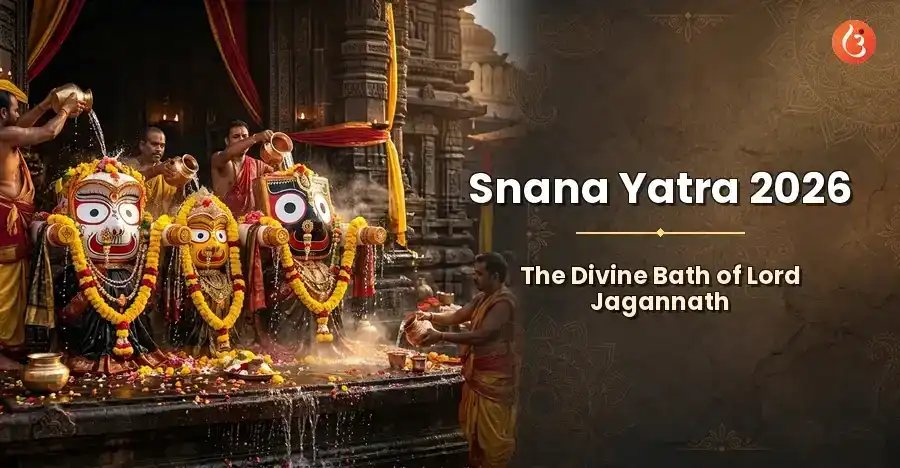
Snana Yatra (स्नान यात्रा), the sacred bathing festival of Lord Jagannath, is on Monday, June 29, 2026. This powerful event, also called Deva Snana Purnima, occurs on the full moon of the Jyeshtha month. According to the Skanda Purana, witnessing this divine bath is believed to cleanse a devotee of all sins. It's a beautiful spectacle of pure devotion.
Quick Answer
- What: Snana Yatra (स्नान यात्रा) is the ceremonial bathing festival for Lord Jagannath, his brother Balabhadra, and sister Subhadra.
- When: June 29, 2026 (Monday), on the Jyeshtha Purnima tithi. The Purnima tithi begins at 03:06 AM on June 29 and ends at 05:26 AM on June 30.
- Why: It's considered the birthday of Lord Jagannath. The ritual bath purifies the deities and prepares them for the upcoming Rath Yatra.
- How to Participate: While the main ritual is in Puri, you can honor Lord Vishnu's divine forms by participating in special pujas online. You can participate in a Venkateshwar Balaji Lotus Arpan Seva through Utsav.
Table of Contents
- Snana Yatra 2026: Date, Tithi & Shubh Muhurat
- What Is the Divine Significance of Snana Yatra?
- What Is the Story Behind Snana Yatra?
- How Is the Snana Yatra Ritual Performed?
- What Happens After the Divine Bath?
- How Can You Participate in Pujas During This Time?
- Sources & References
Snana Yatra 2026: Date, Tithi & Shubh Muhurat
Mark your calendars. The primary date for Snana Yatra is Monday, June 29, 2026. This is one of the most anticipated days for millions of devotees worldwide. The timings are incredibly precise and are based on the lunar calendar.
- Date: Monday, June 29, 2026
- Tithi: Jyeshtha Purnima
- Purnima Tithi Begins: 03:06 AM on Jun 29, 2026
- Purnima Tithi Ends: 05:26 AM on Jun 30, 2026
The most auspicious time for darshan (viewing) is during the morning hours when the bathing ritual takes place at the Snana Bedi in Puri. You can check the exact timings for your city on the Utsav Panchang for June 29, 2026.
What Is the Divine Significance of Snana Yatra?
So, why does this one day hold such immense spiritual weight? Snana Yatra isn't just a ritual; it's considered the earthly birthday of Lord Jagannath. It’s a profoundly personal event for the deities. This is the first time in the year that the public, including non-Hindus, can get a close-up view of the Lords outside the main temple sanctum.
The core belief is that witnessing this event cleanses the soul. The water, sanctified with 108 herbs and fragrances, isn't just for the deities—its blessings extend to every single devotee watching. You're not just a spectator; you're a participant in a cosmic event. This day represents a powerful renewal, washing away negativity and preparing everyone for the grand Rath Yatra that follows. It's truly a life-changing experience.
What Is the Story Behind Snana Yatra?
Every great ritual has a powerful story, and this one is no different. The origin of Snana Yatra is documented in the Skanda Purana. The story goes that King Indradyumna, who first established the Jagannath temple, arranged this grand bathing ceremony as per a divine directive he received. He made it happen.
The legend says that he saw the gods themselves performing this ritual in a vision, setting a precedent for all time. Another belief is that a tribal devotee named Ganapati Bhatta once wished to see the Lord's Gajanana (elephant-headed) form. To fulfill his devotee's wish, Lord Jagannath manifested this unique form, known as the Hati Besha, right after the bath. This tradition continues today, making it an essential part of the celebration.
How Is the Snana Yatra Ritual Performed?
The ritual is a beautiful and intricate process. It's not just a simple bath. The day begins before dawn, with the deities being brought out from the temple's inner sanctum (Garbhagriha) to the Snana Bedi, or bathing platform, in a grand procession called Pahandi.
Here's a step-by-step look at what happens:
1. Jala Bije: 108 golden and copper pots are filled with purified, aromatic water drawn from a sacred well inside the temple.
2. Pahandi Procession: The deities of Jagannath, Balabhadra, and Subhadra are ceremoniously carried to the Snana Bedi. It's a sight to behold.
3. The Divine Bath: The priests, chanting Vedic mantras, pour the 108 pots of sanctified water over the deities. This is the main event.
4. Hati Besha: After the bath, the deities are dressed in the magnificent Hati Besha (or Gaja Besha), appearing like elephants to the devotees. This fulfills the ancient wish of Ganapati Bhatta.
This entire sequence is filled with deep meaning, connecting devotees to Lord Jagannath's brother, Lord Balaram, whose story you can explore in our guide to Balaram Jayanti.
What Happens After the Divine Bath?
Here's something many people don't know. After the extensive bathing ritual, the deities are believed to catch a cold and fall ill. Sounds human, right? This period is known as Anasar or Anavasara.
Following the Snana Yatra, the Lords are moved to a private chamber called the Anasar Ghar for a 14-day quarantine. During this time, they are hidden from public view. They don't receive regular food offerings (bhog) but are instead given special herbal medicines and root-based foods by the Daitapati priests. It's a period of rest and recovery. Devotees, in their absence, worship a traditional Patachitra painting of the Trinity. This seclusion builds immense anticipation for their reappearance, which happens just before the Rath Yatra.
How Can You Participate in Pujas During This Time?
While being in Puri for Snana Yatra is a dream for many, not everyone can make it. But that doesn't mean you can't connect with the divine energy of Lord Vishnu on this auspicious day. You can honor the Lord and his divine siblings from your own home.
Utsav offers a way for devotees to participate in sacred rituals performed at verified temples. You can seek the blessings of Lord Vishnu's divine forms, like Lord Venkateshwar, who is revered as a manifestation of Vishnu.
- Purushottam Maas Visesh Venkateshwar Balaji Weekly Lotus Arpan Seva: Participate in this beautiful weekly seva to offer lotuses, a flower beloved by Vishnu. The Dakshina starts from a humble amount.
- Guruvar Visesh Venkateshwar Balaji Monthly Lotus Arpan Seva: Engage in a monthly seva dedicated to Lord Balaji, perfect for seeking sustained blessings.
When you participate, you'll fill out a Sankalp Form with your name and gotra. A pandit performs the puja on your behalf, and you receive a video of the ritual directly. It’s a seamless way to maintain your devotional practice.
Sources & References
Scriptural Authority:
- Skanda Purana, Vaishnava Khanda — Describes the origin and significance of the Snana Yatra ritual as established by King Indradyumna.
- Niladri Mahodaya — A text specific to the Jagannath tradition that details the rituals of the temple, including the Anasar period.
Panchang & Timing:
- Utsav Panchang (https://utsavapp.in/panchang) — Tithi and muhurat timings verified for 2026.