
ఈ వ్యాసం ఇంకా ఈ భాషలో అందుబాటులో లేదు, అందుకే ఆంగ్లంలో చూపిస్తున్నాం.
Famous Gurus in Hinduism: A Journey Through Spiritual Wisdom
Hinduism, one of the world’s oldest religions, has been enriched by numerous great gurus who have guided people toward enlightenment and self-realization. These spiritual teachers have played a crucial role in shaping philosophy, meditation, and devotion across generations. Their teachings continue to inspire millions, offering wisdom on life, dharma, and the path to liberation.
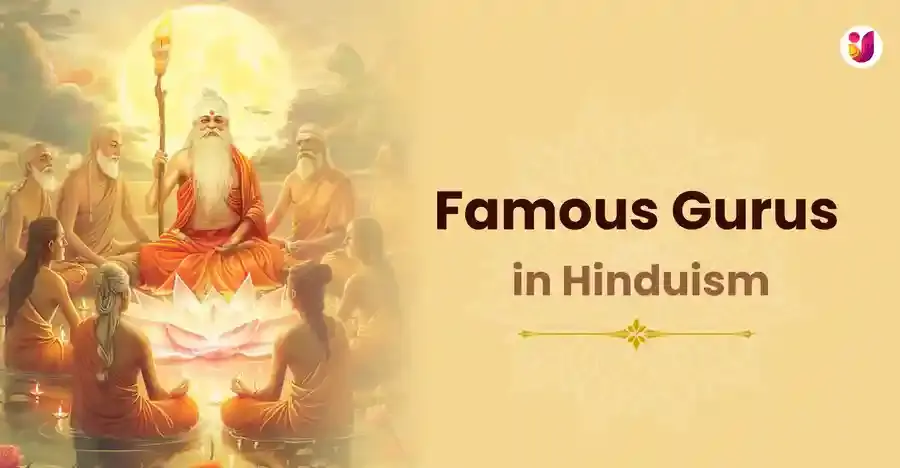
Table of Contents
Adi Shankaracharya
Ramanujacharya
Swami Vivekananda
Sri Ramakrishna Paramahamsa
Guru Nanak Dev
Sant Kabir
Maharishi Valmiki
Ved Vyasa
Swami Dayananda Saraswati
Sri Aurobindo
In this blog, we will explore some of the most famous gurus in Hinduism, their contributions, and their impact on spiritual and religious thought.
Adi Shankaracharya
Adi Shankaracharya (788–820 CE) was a great Hindu philosopher and a proponent of Advaita Vedanta, which teaches the non-dual nature of existence. He revived Vedic wisdom at a time when various sects and rituals were overshadowing pure spirituality.
His key contributions include:
Establishing four mathas (spiritual centers) in India – Dwarka, Puri, Sringeri, and Jyotirmath.
Writing profound commentaries on the Bhagavad Gita, Upanishads, and Brahma Sutras.
Spreading the concept of "Aham Brahmasmi" (I am Brahman), emphasizing the unity of the soul with the Supreme Being.
Shankaracharya’s teachings continue to influence Hindu spirituality, philosophy, and monastic traditions.
Ramanujacharya
Ramanujacharya (1017–1137 CE) was a great saint and philosopher who founded the Vishishtadvaita (qualified non-dualism) school of thought. He emphasized bhakti (devotion) over mere intellectual knowledge.
His contributions include:
Writing the Sri Bhashya, an important commentary on the Brahma Sutras.
Popularizing worship of Lord Vishnu and devotional surrender to God.
Promoting social inclusivity, advocating that all people, regardless of caste, could attain spiritual enlightenment.
Ramanujacharya’s legacy continues through Vaishnavism and temple traditions in South India.
Swami Vivekananda
Swami Vivekananda (1863–1902) was a modern Hindu saint who introduced Hindu spirituality to the West. A disciple of Sri Ramakrishna, he founded the Ramakrishna Mission to promote service, education, and spiritual upliftment.
His achievements include:
Representing Hinduism at the 1893 Parliament of the World’s Religions in Chicago, where he gave his famous speech beginning with "Sisters and Brothers of America".
Reviving India’s cultural and spiritual heritage, emphasizing self-confidence, strength, and service to humanity.
Teaching the unity of Karma Yoga, Bhakti Yoga, Jnana Yoga, and Raja Yoga.
Vivekananda’s message of spiritual awakening and national pride continues to inspire millions worldwide.
Sri Ramakrishna Paramahamsa
Sri Ramakrishna (1836–1886) was a mystic and devotee of Goddess Kali who believed in the unity of all religions. He practiced Hinduism, Islam, and Christianity, experiencing divine realizations in each path.
His core teachings include:
"As many faiths, so many paths", emphasizing that all religions lead to the same divine truth.
Encouraging pure devotion and surrender to God.
Influencing his disciple, Swami Vivekananda, who later spread his message worldwide.
Sri Ramakrishna’s teachings remain relevant for spiritual seekers across different faiths.
Guru Nanak Dev
Guru Nanak (1469–1539) was the founder of Sikhism but is also respected in Hinduism as a great spiritual leader. He emphasized one God, equality, and selfless service.
His teachings include:
"Ik Onkar" (One God), rejecting caste and ritualism.
Encouraging Naam Japna (chanting God’s name), Kirat Karni (honest work), and Vand Chakna (sharing with others).
Promoting harmony between Hindus and Muslims.
Guru Nanak’s spiritual wisdom continues to guide millions worldwide.
Sant Kabir
Sant Kabir (1440–1518) was a poet-saint and reformer who challenged ritualism, caste discrimination, and religious hypocrisy. His dohaas (couplets) convey deep spiritual truths.
His teachings focus on:
Direct devotion to God without intermediaries.
The idea that "God is within you" and can be realized through inner awakening.
Unity of Hindu and Islamic spiritual traditions.
Kabir’s poems, compiled in the Guru Granth Sahib and other scriptures, remain a source of wisdom and devotion.
Maharishi Valmiki
Maharishi Valmiki, originally a hunter, later became a sage and the author of the Ramayana. His transformation signifies the power of devotion and self-realization.
His contributions include:
Writing the Ramayana, one of Hinduism’s most sacred texts.
Spreading the values of dharma, truth, and righteousness through Lord Rama’s story.
Advocating the idea of redemption and inner transformation.
Valmiki’s teachings remain an integral part of Hindu culture and ethics.
Ved Vyasa
Ved Vyasa is credited with compiling the Vedas, writing the Mahabharata, and composing the Bhagavad Gita. He is regarded as a divine sage and one of the greatest gurus.
His major contributions include:
Writing the Mahabharata, which contains the Bhagavad Gita, a guiding scripture of Hinduism.
Classifying the four Vedas (Rig, Yajur, Sama, and Atharva).
Spreading the knowledge of karma, dharma, and devotion.
Vyasa’s wisdom continues to guide seekers on the path of righteousness.
Swami Dayananda Saraswati
Swami Dayananda Saraswati (1824–1883) was a social reformer and the founder of the Arya Samaj. He emphasized the purity of the Vedas and rejected idol worship.
His contributions include:
Advocating "Back to the Vedas" to restore Hinduism’s spiritual essence.
Promoting education, gender equality, and social reform.
Opposing superstition and caste-based discrimination.
Dayananda’s teachings laid the foundation for modern Hindu reform movements.
Sri Aurobindo
Sri Aurobindo (1872–1950) was a philosopher, yogi, and freedom fighter. He introduced the concept of Integral Yoga, which combines spiritual awakening with world transformation.
His key ideas include:
The evolution of human consciousness toward divine realization.
The integration of spirituality with science, politics, and daily life.
Establishing the Sri Aurobindo Ashram in Pondicherry, a center for spiritual growth.
His teachings continue to inspire those seeking self-transformation and inner peace.
Conclusion
The great Hindu gurus have left a profound impact on spirituality, philosophy, and human values. Their wisdom continues to guide seekers toward enlightenment, self-discovery, and devotion.
By learning from these spiritual masters, we can walk the path of truth, compassion, and self-realization, leading to a more enlightened and peaceful life.
పవిత్ర దేవాలయాలలో పూజ సమర్పించండి
🪔

మీ కోసం భేట్
🪔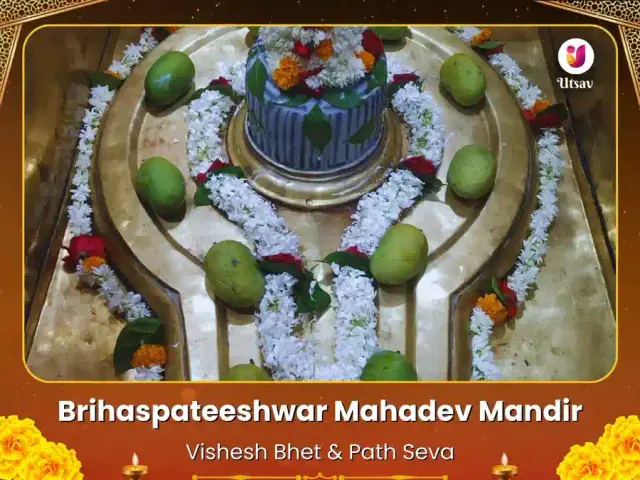
Brihaspateeshwar Temple Kashi Puja Visesh Daan Seva
Offer Bhet for Wealth, Wisdom & Luck

బృహస్పతీశ్వర్ ఆలయం, వారణాసి
26 - నవంబర్ 2026, గురువారం - గురువార విశేషం