Hanuman Aarti (Aarti Kije Hanuman Lala Ki): Lyrics, Meaning & Benefits
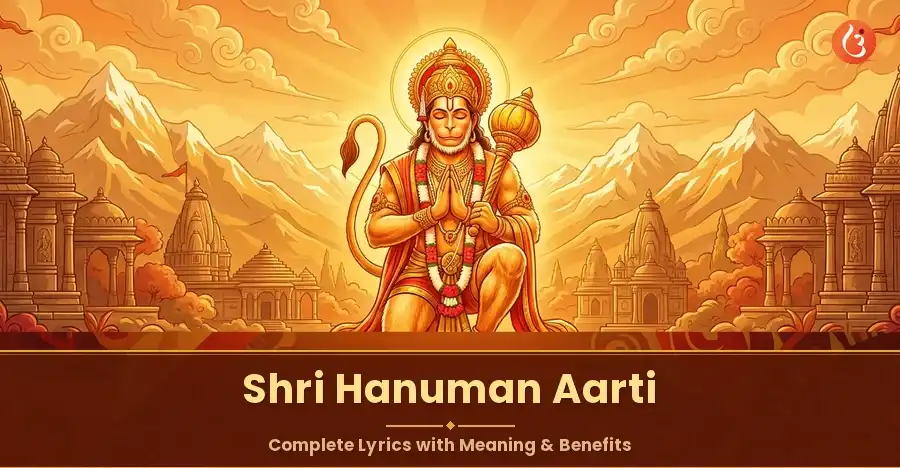
The Hanuman Aarti, famously known as "Aarti Kije Hanuman Lala Ki" (आरती कीजै हनुमान लला की), is a powerful devotional hymn sung to honor Lord Hanuman. It's a cornerstone of Hindu worship, praising his boundless strength, unwavering devotion to Lord Ram, and his power to remove suffering. This traditional (paramparik) Aarti, from the Ramanandi Sampradaya, is chanted to seek his divine protection and blessings.
Quick Answer: Hanuman Aarti Essentials
- What: A traditional Hindu devotional hymn (Aarti) praising Lord Hanuman's strength, devotion, and protective powers.
- Why: To invoke Hanuman's blessings, overcome obstacles, gain courage, and express devotional gratitude.
- When: Best recited on Tuesdays, Saturdays, and during Hanuman Jayanti. The evening time (sandhya kaal) is considered most auspicious.
- How to Participate: You can Participate in a Weekly Hanuman Chalisa Paath at Hanuman Garhi, Ayodhya through Utsav for a Dakshina of ₹51.
Table of Contents
- Aarti Kije Hanuman Lala Ki — Complete Lyrics in English
- Verse-by-Verse Meaning of Hanuman Aarti
- The History & Tradition of Hanuman Aarti
- What Are the Benefits of Chanting Hanuman Aarti?
- How to Perform Hanuman Aarti: The Complete Vidhi
- When Should You Recite the Aarti? (Best Days in 2026)
- Participate in Hanuman Pujas on Utsav
- Sources & References
Aarti Kije Hanuman Lala Ki — Complete Lyrics in English
This is the complete and uninterrupted text of the traditional Hanuman Aarti, perfect for recitation.
Aarti kije Hanuman lala ki,
Dusht dalan Raghunath kala ki.Jake bal se girivar kaanpe,
Rog dosh jake nikat na jhaanke.Anjani putra maha baldayi,
Santan ke prabhu sada sahayi.De beera Raghunath pathaye,
Lanka jaari Siya sudhi laye.Lanka so kot samudra si khaayi,
Jaat pawansut baar na laayi.Lanka jaari asur sanghare,
Siyaramji ke kaaj sanvare.Lakshman murchit pade sakaare,
Aani sanjeevan praan ubaare.Paithi pataal tori jam-kaare,
Ahiravan ke bhuja ukhaare.Baayein bhuja asur dal maare,
Dahine bhuja sant jan taare.Sur nar muni aarti utaare,
Jai jai jai Hanuman uchaare.Kanchan thaar kapoor lau chhaayi,
Aarti karat Anjana maayi.Jo Hanuman ji ki aarti gaave,
Basi Baikunth param pad paave.Lank vidhvans kiye Raghurai,
Tulsidas prabhu keerti gaayi.Aarti kije Hanuman lala ki,
Dusht dalan Raghunath kala ki.
Verse-by-Verse Meaning of Hanuman Aarti
Understanding the meaning deepens your connection. Here’s what each verse of this powerful Aarti signifies. It's a beautiful expression of devotion.
Verse 1: Aarti kije Hanuman lala ki...
We perform the Aarti of our beloved Hanuman. The term "Lala" affectionately refers to him as a cherished child of Mata Anjana. He is also "Raghunath kala ki," a divine part or manifestation of Lord Ram's own power, and the ultimate destroyer of evil forces.
Verse 2: Jake bal se girivar kaanpe...
By his immense power, even the mountains tremble. Sickness and defects don't dare to come near his devotees.
Verse 3: Anjani putra maha baldayi...
The son of Anjani is the giver of great strength. He is always the helper and protector of saints and devotees.
Verse 4: De beera Raghunath pathaye...
Lord Ram entrusted him with the task (finding Sita). He went to Lanka, burned it, and brought back news of Sita.
Verse 5: Lanka so kot samudra si khaayi...
He crossed the vast ocean to the fortress of Lanka. The son of the Wind God (Pavansut) did it without any delay.
Verse 6: Lanka jaari asur sanghare...
He burned Lanka and destroyed the demons. This way, he accomplished the work of Sita and Ram.
Verse 7: Lakshman murchit pade sakaare...
When Lakshman fell unconscious from the blow of Indrajit's Shakti weapon, Hanuman was tasked with bringing the life-saving Sanjeevani herb from the Himalayas before sunrise. Unable to identify the specific herb, he lifted the entire Dronagiri mountain and brought it to the battlefield, saving Lakshman's life.
Verse 8: Paithi pataal tori jam-kaare...
He entered the netherworld (Patal), broke through Yama's gates, and defeated Ahiravan by tearing off his arms.
Verse 9: Baayein bhuja asur dal maare...
With his left arm, he destroys hordes of demons. And with his right arm, he protects and saves the saints.
Verse 10: Sur nar muni aarti utaare...
Gods, humans, and sages all perform his Aarti. They all chant "Victory, Victory, Victory to Hanuman!"
Verse 11: Kanchan thaar kapoor lau chhaayi...
In a golden plate with the light of camphor, Mother Anjana performs his Aarti.
Verse 12: Jo Hanuman ji ki aarti gaave...
Whoever sings this Aarti of Hanuman Ji will attain the highest state and reside in Vaikuntha (the divine abode).
Verse 13: Lank vidhvans kiye Raghurai...
This final verse, often attributed to Tulsidas, praises Hanuman for destroying Lanka for Lord Ram, and Tulsidas sings of his প্রভু's glory.
The History & Tradition of Hanuman Aarti
The "Aarti Kije Hanuman Lala Ki" doesn't have a single attributed composer like Goswami Tulsidas for the Hanuman Chalisa. Instead, according to the Ramanandi Sampradaya tradition, it is a paramparik (traditional) bhajan that evolved through oral traditions over centuries. Its composition in Awadhi, the common tongue of the people in the heartland of the Ram bhakti movement, ensured it wasn't confined to scholars. This accessibility is a key reason for its enduring popularity.
What makes it so special? It beautifully captures the essence of Hanuman's bhakti (devotion) and shakti (power). Unlike complex Sanskrit stotras, its simple verses allow every devotee, regardless of background, to connect directly with Hanuman's divine attributes. This isn't just a song; it's a living tradition passed down through generations, sung in countless temples and homes every single day. You're participating in a timeless ritual.
What Are the Benefits of Chanting Hanuman Aarti?
Chanting the Hanuman Aarti with devotion offers profound benefits that touch every aspect of a devotee's life. The Aarti's own verses promise protection and liberation, as seen in the line "Sankat hare mite sab peera" (He removes all suffering and pain).
Spiritual & Astrological Benefits
- Overcomes Obstacles: The Aarti is a powerful tool to remove financial, personal, and spiritual blockages.
- Protection from Negativity: It creates a spiritual shield against negative energies, fears, and evil spirits.
- Mitigates Shani & Mangal Dosha: Worshipping Hanuman is one of the most effective remedies for the malefic effects of Saturn (Shani) and Mars (Mangal) in one's horoscope. According to Puranic lore, Hanuman rescued Shani Dev from Ravana's imprisonment. In gratitude, Shani promised that he would never trouble Hanuman's devotees, making his worship a powerful antidote to Saturn-related hardships.
- Enhances Devotion: Regular chanting deepens your connection to Lord Ram and the path of selfless service.
Practical Benefits
- Instills Courage: It fills the heart with courage and confidence, helping you face life's challenges. You'll feel stronger.
- Promotes Inner Peace: The vibrations of the Aarti calm the mind and reduce anxiety, bringing a sense of profound peace.
- Improves Discipline: Committing to a daily or weekly practice builds focus and spiritual discipline. It’s a small act with big rewards.
For deeper protection, many devotees also recite the Sankat Mochan Hanuman Ashtak.
How to Perform Hanuman Aarti: The Complete Vidhi
Performing the Hanuman Aarti correctly amplifies its spiritual benefits. The process is simple and can be done at home. Here’s the step-by-step vidhi recommended by temple pandits.
- Preparation (Shuddhi): Take a bath and wear clean clothes, preferably red or orange. These colors are dear to Hanuman. Clean the puja space, ensuring it is tidy and faces east if possible.
- Setup: Place an idol or picture of Lord Hanuman on a clean cloth. Light a ghee or sesame oil lamp (diya) and incense sticks (agarbatti). The light symbolizes the dispelling of darkness and ignorance.
- Offerings: Offer fresh flowers (like marigolds), fruits (especially bananas), and a simple prasad like jaggery and gram (gud-chana). This offering symbolizes humility and sweetness in devotion.
- Invocation: Begin by meditating on Lord Ram and then Lord Hanuman. You can chant "Om Shri Ramaya Namah" followed by "Om Shri Hanumate Namah". This acknowledges Hanuman's own devotion to Ram.
- Recitation: Sing the Aarti with a clear voice and heartfelt devotion while waving the lit lamp in a clockwise circular motion before the deity. You can ring a small bell with your other hand. The sound of the bell helps to focus the mind and ward off distracting energies.
- Closing: After the Aarti, cup your hands over the flame and gently touch your eyes and head to receive the blessings. Distribute the prasad among family members. Consuming the prasad is considered accepting the deity's divine grace.
When Should You Recite the Aarti? (Best Days in 2026)
While any day is good to remember Hanuman, certain days and times are considered especially auspicious, maximizing the divine impact of the Aarti. As per temple traditions, Tuesday and Saturday are Hanuman's special days.
Day / Festival | Date in 2026 | Significance for Devotees |
|---|---|---|
Tuesday (Mangalvar) | Every Week | This is Lord Hanuman's primary day. Performing Aarti on Tuesdays is believed to remove obstacles and mitigate Mars-related issues. |
Saturday (Shanivar) | Every Week | Worshipping Hanuman on Saturdays provides relief from the malefic effects of Shani (Saturn). |
Hanuman Jayanti | This marks the birth of Lord Hanuman. Chanting the Aarti on this day is exceptionally powerful and fulfilling. | |
Full Moon (Purnima) | Monthly | The full moon night is an auspicious time for all spiritual practices. Check the Utsav Panchang for exact dates. |
For more details on Hanuman's worship, you can read about famous temples like Salasar Balaji Dham.
Participate in Hanuman Pujas on Utsav
Connecting with Hanuman's energy through authentic rituals is a deeply rewarding experience. Utsav brings you opportunities to participate in pujas performed at verified temples by experienced pandits.
Recommended Pujas for Hanuman Devotees:
* Weekly Hanuman Chalisa Paath at Hanuman Garhi, Ayodhya: Participate in a weekly chanting of the Hanuman Chalisa at one of the most sacred Hanuman temples. Dakshina starts from ₹51.
* Panchmukhi Hanuman Kavach Mantra Jaap: A powerful ritual involving the protective Kavach mantra for overcoming severe difficulties.
* Mangalvar Vishesh Sindur & Coconut Daan: Make special offerings on Tuesdays at a Panchmukhi Hanuman temple to seek blessings and protection.
How to Participate:
1. Choose the puja you wish to perform.
2. Fill out the Sankalp Form with your Name and Gotra.
3. Utsav's pandits will perform the puja on your behalf.
4. You'll receive a personalized video of the puja and authentic prasad delivered to your home.
Sources & References
Scriptural Authority:
- Ramcharitmanas: The devotional context and Hanuman's character are primarily drawn from this epic by Goswami Tulsidas.
- Traditional (Paramparik) Bhajan: The Aarti's lyrics are part of the oral tradition within the Ramanandi Sampradaya.
Temple Verification:
- The recitation vidhi and auspicious timings are verified by pandits associated with Hanuman Garhi, Ayodhya, and other prominent Hanuman temples.
Related Pujas on Utsav:
- Weekly Hanuman Chalisa Paath
- Panchmukhi Hanuman Kavach Mantra Jaap