ગુ
ગુ
આ લેખ હજી આ ભાષામાં ઉપલબ્ધ નથી, તેથી અંગ્રેજીમાં બતાવ્યો છે.
Offering prasad to Lord Hanuman is a powerful way to seek his blessings for strength, courage, and protection. The five most sacred offerings, deeply rooted in scripture, are Sindoor (vermilion), Tulsi (holy basil), Laddoos (especially Besan or Boondi), Jasmine Oil (Chameli ka Tel), and Betel Leaves (Paan). Each one carries a profound spiritual meaning that connects the devotee directly to Hanuman's unwavering devotion to Lord Rama.
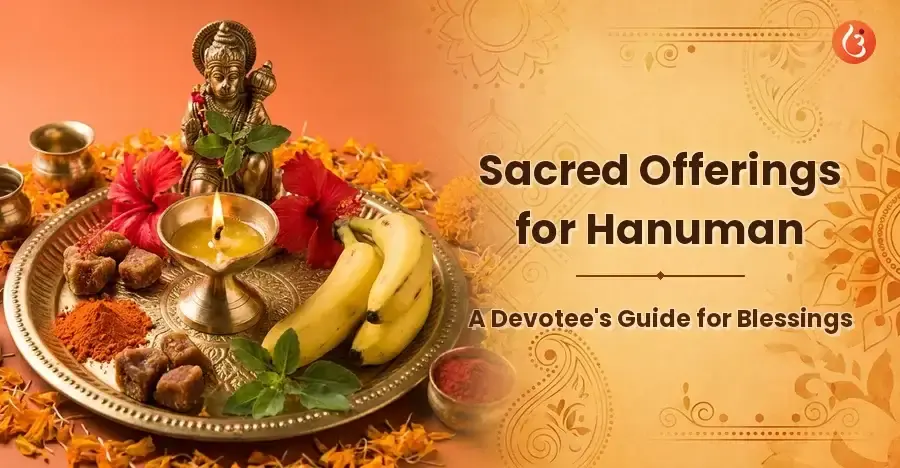
Making an offering, or naivedyam, is a core part of Hindu worship that establishes a connection between the devotee and the divine. For Lord Hanuman, these offerings aren't just symbolic gestures; they are expressions of love and gratitude. According to various Puranic traditions, presenting something dear to a deity activates their grace. It's a way for you to say, "I honor your qualities and seek your protection."
Hanuman is known as Sankat Mochan (the remover of troubles). The things he loves most are tied directly to his defining quality: his absolute, selfless devotion to Lord Rama. So, when you offer these items, you're not just performing a ritual. You're aligning your own devotion with his, asking for a fraction of his strength and loyalty in your own life.
This is, without a doubt, the most significant offering to Hanuman. The reason comes from a beautiful story in the Ramayana. The Valmiki Ramayana describes Hanuman's deep devotion in the Sundara Kanda. He once saw Mata Sita applying sindoor in her hair parting and asked her why. She explained that it was for the long life and well-being of her husband, Lord Rama.
That's all Hanuman needed to hear.
In an act of pure, innocent devotion, he covered his entire body with sindoor to ensure Lord Rama's immortality. When Lord Rama saw him, he was deeply moved and granted a boon: anyone who offers sindoor to Hanuman will have their path cleared of all obstacles. This is why you'll see many Hanuman murtis completely covered in a saffron-colored paste. It's not just paint; it's a testament to his love.
Tulsi is eternally dear to Lord Vishnu, and by extension, to his avatar, Lord Rama. So, why offer it to Hanuman? The logic is simple and beautiful. Nothing makes Hanuman happier than seeing Lord Rama pleased. Verified pandits at temples like the famous Salasar Balaji Dham often explain that offering a Tulsi Maala (garland) to Hanuman is an indirect offering to Rama himself.
By presenting Tulsi, you acknowledge Hanuman's role as the ideal devotee (parama bhakta). You're not just worshipping him; you're celebrating his relationship with his Lord. It's an offering of pure bhakti that resonates deeply with Hanuman's own heart. You can't go wrong with this one.
Sweets are a universal prasad, but for Hanuman, laddoos made from gram flour (Besan) are particularly special. Temple traditions across India confirm this preference. This isn't just a random choice; it's symbolic. These sweets are dense with energy, representing the immense strength (bala) and power that Hanuman commands.
Think about it. Offering these energy-packed sweets is a way of honoring his physical power and the spiritual energy he provides to his devotees. It also represents the sweet results that come from sincere devotion. When you offer laddoos, you're asking for both worldly strength to overcome challenges and the sweet taste of spiritual fulfillment. It’s a powerful two-in-one.
Jasmine oil is essential in Hanuman worship, often mixed with sindoor to create the sacred paste known as Chola. Devotees apply this Chola to the Hanuman murti, especially on Tuesdays. The fragrance of jasmine is considered highly sattvic and pure, believed to attract divine vibrations and create a spiritually charged atmosphere.
According to temple priests, the act of anointing the deity with this fragrant oil is a form of seva (selfless service). It's a humble, physical act of devotion that pleases Hanuman immensely. It signifies the purification of one's own ego and the desire to serve God without expectation. What's more, it's a simple act that anyone can perform to feel instantly connected.
Offering a betel leaf, or paan, is a traditional sign of respect and honor in Hindu culture. In the context of Hanuman worship, it holds a special significance. After the victory in Lanka, it's believed that a celebratory paan was offered to Hanuman to honor his immense contribution. Thus, offering a paan symbolizes the successful completion of a task and victory over adversity.
A beeda (a specially prepared paan) offered to Hanuman is a prayer for success in your endeavors. It’s a way of saying, "Just as you ensured Lord Rama's victory, please ensure my success in overcoming my struggles." It's a beautiful, respectful gesture that completes the set of offerings.
For devotees who can't visit a temple, Utsav offers a way to make these sacred offerings. It's a simple and transparent process.
It’s a powerful way to connect with Hanuman's grace, no matter where you are. You can also deepen your devotion by learning and reciting prayers like the Sankat Mochan Hanuman Ashtak.
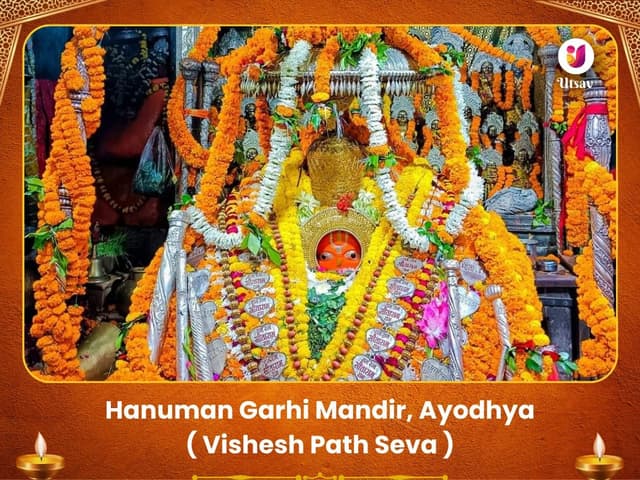

હનુમાનગઢી મંદિર, અયોધ્યા
મંગળવાર - 01 ડિસેમ્બર, 2026 - Mangalvar Visesh