ગુ
ગુ
આ લેખ હજી આ ભાષામાં ઉપલબ્ધ નથી, તેથી અંગ્રેજીમાં બતાવ્યો છે.
The Lakshmi Narayan Stotram (लक्ष्मी नारायण स्तोत्रम्) is a powerful devotional hymn that invokes the combined blessings of Goddess Lakshmi and Lord Vishnu (Narayana). This stotram is a cornerstone of the Vaishnava tradition, celebrated for its ability to bestow wealth, prosperity, and spiritual liberation upon the devotee. It is a profound prayer of sharanagati, or complete surrender to the divine will. According to the Skanda Purana, worshipping this divine couple together is essential for holistic well-being, as they represent the inseparable forces of preservation and prosperity. Over 5 Lakh+ devotees have participated in related pujas on Utsav seeking their grace.
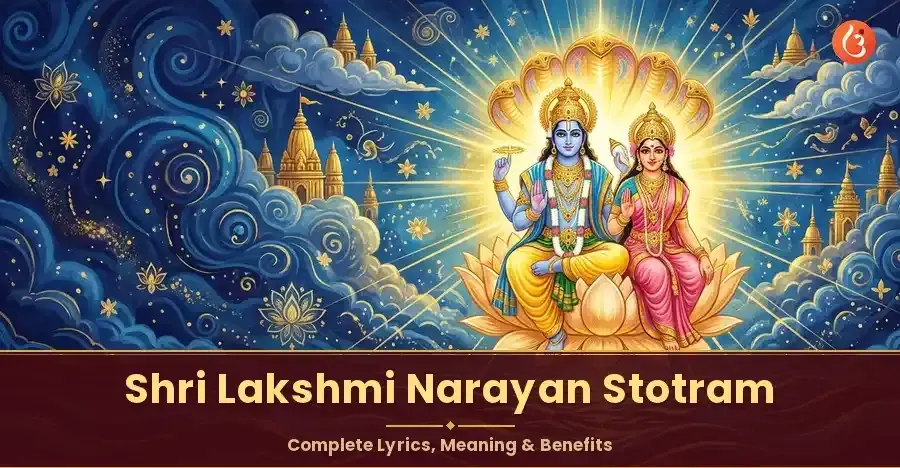
This stotram’s roots are deeply embedded in the Vaishnava and Pancharatra traditions, which emphasize the inseparable nature of Vishnu and his consort, Lakshmi. The Pancharatra Agamas are a collection of Vaishnava texts that detail temple rituals and theology, establishing Lakshmi not merely as a consort but as the very Shakti (creative energy) of Narayana, the Shaktiman (possessor of energy). While many variations exist, the core philosophy is consistent. The Skanda Purana explains that Narayana is the protector and sustainer, while Lakshmi is the energy of prosperity and fortune. You can't truly have one without the other.
The Narada Pancharatra states: “Just as radiance is inseparable from the sun, so is Lakshmi inseparable from Vishnu.” This highlights their eternal and indivisible unity.
Worshipping them together harmonizes the spiritual and material aspects of life. It’s not just about asking for wealth; it's about asking for righteous, sustainable prosperity that supports a dharmic life. Think of it this way: Narayana provides the path, and Lakshmi provides the resources to walk it. This beautiful synergy is what makes their joint worship so powerful. Their union is the source of all creation, sustenance, and cosmic order.
Shrinivasa jagannatha shrihare bhaktavatsala |
Lakshmipate namastubhyam trahi mam bhavasagarat ||1||Radharamana govinda bhaktakamaprapuraka |
Narayana namastubhyam trahi mam bhavasagarat ||2||Damodara mahodara sarvapattinnivarana |
Hrishikesha namastubhyam trahi mam bhavasagarat ||3||Garudadhvaja vaikunthanivasinkeshavachyuta |
Janardana namastubhyam trahi mam bhavasagarat ||4||Shankhachakragadapadmadhara shrivatsalanchchana |
Meghashyama namastubhyam trahi mam bhavasagarat ||5||Tvam mata tvam pita bandhu: sadgurustvam dayanidhi: |
Tvatto’s nyo na paro devastrahi mam bhavasagarat ||6||Na jane danadharamadi yogam yagam tapo japam |
Tvam kevalam kuru dayam trahi mam bhavasagarat ||7||Na matsamo yadyapi papakarta na tvatsamo’thapi hi papaharta |
Vijnapitam tvetadashesasakshina mamuddharartam patitam tavagre ||8||
Here’s what each verse of this profound stotram means. It’s a prayer of complete surrender.
Verse 1:
"O Abode of Lakshmi (Shrinivasa), Lord of the Universe (Jagannath), Shri Hari, who is ever-so-kind to Your devotees! O husband of Lakshmi, I bow to You. Please protect me from the ocean of worldly existence (Bhavasagar)."
Verse 2:
"O beloved of Radha (Radharamana), Govinda, the one who fulfills the desires of devotees! O Narayana, I bow to You. Please protect me from this ocean of worldly existence."
Verse 3:
"O Damodara, the one with a generous heart, the remover of all calamities! O Hrishikesha (master of the senses), I bow to You. Please protect me from this ocean of worldly existence."
The name Damodara refers to the childhood lila of Lord Krishna when Mother Yashoda tied him to a grinding mortar with a rope (dama) around his belly (udara), signifying that the Lord allows Himself to be bound by the love of His devotees.
Verse 4:
"O Lord with Garuda on your flag, resident of Vaikuntha, Keshava, the infallible one (Achyuta)! O Janardana, I bow to You. Please protect me from this ocean of worldly existence."
Verse 5:
"O holder of the conch, discus, mace, and lotus, marked by the Shrivatsa symbol! O Lord with a complexion like a dark cloud (Meghashyama), I bow to You. Please protect me from this ocean of worldly existence."
The Shrivatsa is a special curl of white hair on Lord Vishnu's chest, symbolizing the eternal presence of Goddess Lakshmi.
Verse 6:
"You are my mother, my father, my relative, my true guru, and the ocean of compassion. There is no other God superior to You. Please protect me from this ocean of worldly existence."
Verse 7:
"I do not know charity, dharma, yoga, sacrifice, austerity, or chanting. You alone, please show me mercy. Protect me from this ocean of worldly existence."
Verse 8:
"Although there is no sinner equal to me, there is no destroyer of sin equal to You. Understanding this, O witness of all, I, a fallen soul, have come before You to be saved."
According to Vaidik pandits, the regular recitation of this stotram brings a multitude of blessings. It’s not a magic wand, but a tool for aligning your consciousness with divine grace.
To get the maximum benefit, verified pandits recommend a simple yet disciplined approach. It’s all about creating a sacred space and a focused mind.
While you can chant this stotram daily, certain days are considered especially potent for connecting with Lakshmi and Narayana. As per Vaidik traditions, these days amplify the power of your prayers because the cosmic energies are more conducive to spiritual activities.
For exact dates and timings in 2026, you should always refer to the Utsav Panchang.
You can deepen your connection by participating in authentic rituals performed by verified pandits at sacred temples. Utsav makes this possible for every devotee.
Recommended Pujas:
When you participate, pandits chant your name and gotra (ancestral lineage) during the Sankalp, ensuring the blessings are directed specifically to you and your family. You receive a video of the puja along with blessed prasad delivered to your home.
The Lakshmi Narayan Stotram is a traditional hymn whose authorship is not attributed to a single, named sage. It is considered a part of the vast devotional literature that emerged from the Puranic and Agamic traditions, particularly within Vaishnavism. Composed in classical Sanskrit, its style and theological focus place its origins within the post-Gupta Puranic era (c. 6th-10th century CE). While the principles of Lakshmi-Narayana worship are detailed in scriptures like the Skanda Purana and the Pancharatra Samhitas, this specific stotram has been primarily transmitted through oral tradition. It was preserved by priests and devotees and later included in various prayer anthologies (stotra sangrahas), becoming a staple in daily household and temple worship.
Scriptural Authority:
Temple & Ritual Verification:
Related Pujas on Utsav:


લક્ષ્મીનારાયણ મંદિર, ઝાંસી
ગુરુવાર - 03 ડિસેમ્બર, 2026 - Guruvar Visesh