Definitive Guide to Mahadev Aarti Lyrics, Meaning & Benefits
The Mahadev Aarti, famously known as 'Om Jai Shiv Omkara' (ॐ जय शिव ओंकारा), is a powerful devotional hymn recited to invoke Lord Shiva's blessings and connect with his divine energy. According to historical records, it was composed by Pandit Shraddha Ram Phillauri in the 1870s. This aarti encapsulates Shiva's core attributes, dissolving ego and promoting inner peace.
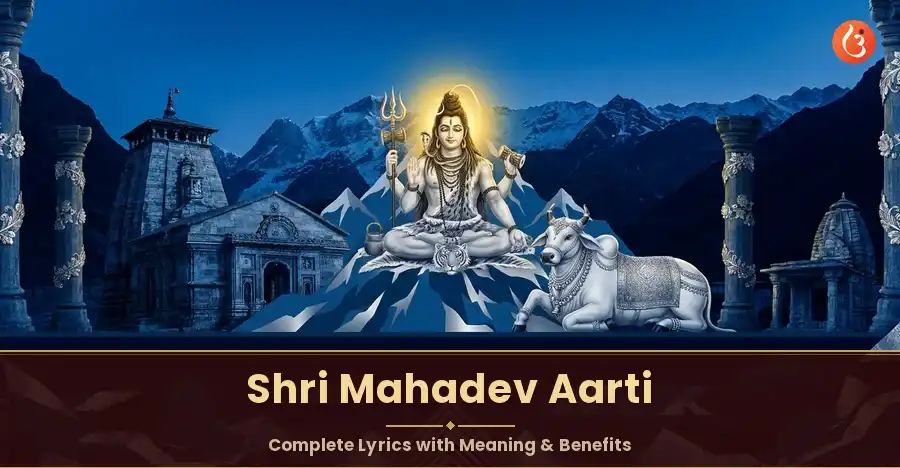
Quick Answer: Mahadev Aarti Essentials
- What: A devotional hymn praising Lord Shiva's attributes, known as 'Om Jai Shiv Omkara' (ॐ जय शिव ओंकारा).
- When: Recited during daily morning/evening pujas, every Monday (Somvar), Pradosh Kaal, and major festivals like Maha Shivaratri and throughout Shravan month.
- Why: To seek protection, remove obstacles, dissolve ego, and attain spiritual clarity by honoring the Supreme Being.
- How to Participate: You can complement your recitation by participating in pujas like the Somvar Vishesh Rin Mukteshwar Mahadev Weekly Daan Seva at verified temples.
Table of Contents
- Who Composed the 'Om Jai Shiv Omkara' Aarti?
- 'Om Jai Shiv Omkara' — Complete Lyrics in English
- Verse-by-Verse Meaning of the Mahadev Aarti
- What Are the Spiritual Benefits of Chanting This Aarti?
- How and When Should You Recite the Mahadev Aarti?
- Participate in Shiva Pujas Through Utsav
- Sources & References
Who Composed the 'Om Jai Shiv Omkara' Aarti?
While many assume the aarti is an ancient, anonymous work, historical evidence points to a specific author. According to scholars of Bhakti literature, the 'Om Jai Shiv Omkara' aarti was composed by Pandit Shraddha Ram Phillauri around the 1870s. He was a prominent theologian, writer, and social reformer from Punjab, also credited with composing the widely popular 'Om Jai Jagdish Hare' aarti.
This isn't just trivia. Knowing the composer adds a layer of historical context to your practice. It connects your personal devotion to a specific lineage of the Bhakti movement that aimed to make profound Vedic concepts accessible to every devotee through simple, heartfelt hymns. Pandit Phillauri's work was revolutionary because it broke down complex scriptural ideas into a language that resonated with the common person, fostering a more direct and emotional connection to the divine. The aarti isn't just words; it's a living tradition.
'Om Jai Shiv Omkara' — Complete Lyrics in English
This is the full, uninterrupted text of the Mahadev Aarti for your recitation.
ॐ जय शिव ओंकारा, स्वामी जय शिव ओंकारा ।
ब्रह्मा, विष्णु, सदाशिव, अर्द्धांगी धारा ॥
॥ ॐ जय शिव ओंकारा ॥
Om Jai Shiva Omkara, Swami Jai Shiva Omkara,
Brahma, Vishnu, Sadashiva, Ardhangi Dhara.
॥ Om Jai Shiva Omkara ॥
Ekanana, Chaturannana, Panchanana Raje,
Hansasana, Garudasana, Vrishavahana Saje.
॥ Om Jai Shiva Omkara ॥
Do Bhuja, Chara Chaturbhuja, Dasha Bhuja Ati Sohe,
Triguna Rupa Nirakhate, Tribhuvana Jana Mohe.
॥ Om Jai Shiva Omkara ॥
Akshamala, Vanamala, Mundamala Dhari,
Chandana, Mrigamada Sohai, Bhale Shashidhara Kari.
॥ Om Jai Shiva Omkara ॥
Shvetambara, Pitambara, Bagambara Ange,
Sanakadika, Brahmadika, Bhutadika Sange.
॥ Om Jai Shiva Omkara ॥
Kara Ke Madhya Kamandalu, Chakra, Trishuladharta,
Jagakarrta, Jagaharrta, Jagapalankarta.
॥ Om Jai Shiva Omkara ॥
Brahma Vishnu Sadashiva, Janata Aviveka,
Pranavakshara Ke Madhye, Yeh Tino Eka.
॥ Om Jai Shiva Omkara ॥
Triguna Svami Ki Aarti, Jo Koi Nara Gave,
Kahata Shivananda Svami, Mana Vanchhita Phala Pave.
॥ Om Jai Shiva Omkara ॥
Verse-by-Verse Meaning of the Mahadev Aarti
Understanding the meaning deepens your connection during the aarti. Here’s what each verse signifies, drawing from descriptions found in texts like the Shiva Purana.
Verse 1: "Victory to you, Lord Shiva Omkara. You are the one in whom Brahma, Vishnu, and Sadashiva reside, and who holds the consort (Parvati) as half of your body (Ardhanarishvara)." This verse honors Shiva's supreme nature as the source of the Trimurti. The Ardhanarishvara form symbolizes the synthesis of masculine and feminine energies of the universe, representing that Purusha (consciousness) and Prakriti (matter) are inseparable.
Verse 2: "You appear with one, four, and five faces. While Brahma is seated on a swan and Vishnu on Garuda, you are gracefully mounted on your bull, Nandi." This highlights Shiva's unique iconography. His five faces (Panchamukha) represent the five elements (earth, water, fire, air, ether) and his five aspects: Sadyojata, Vamadeva, Aghora, Tatpurusha, and Ishana.
Verse 3: "You are resplendent with two, four, and ten arms. The beings of the three worlds are captivated seeing your form, which embodies the three Gunas (Sattva, Rajas, Tamas)." This verse describes his cosmic form. While his two-armed form is the gentle ascetic, his multi-armed forms, like the ten-armed one seen in his Tandava dance, represent his immense power to create and destroy universes.
Verse 4: "You wear a garland of Rudraksha beads, forest flowers, and skulls. Your forehead is adorned with sandalwood paste, musk, and the crescent moon." These are powerful symbols of Shiva's ascetic and cosmic nature. The garland of skulls (Mundamala) signifies his mastery over time and death, while the crescent moon (Chandra) on his head represents control over the mind and the cycles of time, as detailed in the sacred stories of the Twelve Jyotirlingas.
Verse 5: "You are adorned with white and yellow garments, and also the skin of a tiger. You are always accompanied by sages like Sanaka, divine beings like Brahma, and celestial beings (ghosts and ganas)." The tiger skin symbolizes his victory over Shakti (power) and his mastery over the primal, animalistic nature.
Verse 6: "You hold a Kamandalu (water pot), a Chakra (discus), and a Trishula (trident). You are the creator, the destroyer, and the preserver of the universe." The Trishula represents his power over the three Gunas, the three states of consciousness (waking, dreaming, deep sleep), and the three realms (Bhu, Bhuva, Swaha).
Verse 7: "The ignorant see Brahma, Vishnu, and Sadashiva as different. But within the sacred syllable 'Om' (Pranava), these three are one and the same." This verse points to the non-dual (Advaita) reality of the divine. It teaches that the different forms of God are merely manifestations of the single, formless Brahman, represented by the primordial sound Om.
Verse 8: "Whoever sings this aarti of the Lord of the three Gunas, says Shivananda Swami, will have all their desires fulfilled." This is the Phala Shruti, or the verse stating the fruits of recitation, assuring devotees that their heartfelt prayers will be answered.
What Are the Spiritual Benefits of Chanting This Aarti?
Reciting the Mahadev Aarti is more than just a ritual; it's a powerful spiritual practice. The Shiva Purana emphasizes that devotional acts like singing aarti are a direct path to the deity's grace. It's a way to quiet the mind and open the heart.
So, what can you expect?
- Inner Peace and Clarity: The vibrations of the aarti help calm mental chatter and reduce anxiety. This practice is a form of Nada Yoga (Yoga of Sound), where the sacred sound currents harmonize the chakras and bring the mind to a state of stillness. It centers your focus on the divine, providing a deep sense of tranquility.
- Removal of Obstacles: As the ultimate remover of obstacles (Vighnaharta), Shiva's worship is believed to clear the path of challenges, both material and spiritual. Chanting his name invokes the energy that can dissolve difficulties.
- Dissolution of Ego: The lyrics constantly remind the devotee of Shiva's supreme, all-encompassing nature. This helps dissolve the ego (ahamkara) and fosters humility. You're connecting to something much larger than yourself, which naturally lessens the grip of personal pride and desire.
- Protection from Negative Energies: Lord Shiva, in his fierce form as Bhairava, is the ultimate protector. The energy generated by the aarti creates a spiritual shield (kavach) around the devotee, warding off negative influences and instilling a sense of fearlessness.
- Karmic Cleansing: Devotional singing is considered a form of penance (prayaschitta) that helps purify past negative karmas. It’s a profound act of surrender, where you offer your actions and their fruits to the divine, seeking forgiveness and grace.
- Strengthened Devotion (Bhakti): Regular recitation builds a powerful, personal connection with Lord Shiva, strengthening your faith and spiritual resolve. It’s an essential practice for anyone exploring the path of Bhakti Yoga.
How and When Should You Recite the Mahadev Aarti?
To get the most benefit, temple traditions suggest a simple yet specific procedure (vidhi). It's not about being rigid; it's about creating a sacred atmosphere that enhances your focus and devotion. Think of it as setting the stage for a divine connection.
Best Times to Recite:
- Daily Puja: Ideally performed twice daily, during sunrise and sunset (Sandhya Kaal). These junctures are considered spiritually potent.
- Mondays (Somvar): Monday is Lord Shiva's dedicated day. Performing the aarti on this day is especially auspicious.
- Pradosh Kaal: The 1.5 hours before and after sunset on the Trayodashi tithi (13th day of the lunar fortnight) is considered a highly powerful time for Shiva worship, as it is believed he is in a blissful mood.
- Festivals: It's a central part of Maha Shivaratri, Masik Shivaratri, and the entire holy month of Shravan. Other important days include Kartika Purnima, celebrating his victory over the demon Tripurasura, and Ardra Darshanam in South India.
The Simple Vidhi:
1. Purify Yourself: Take a bath and wear clean, fresh clothes. Physical cleanliness aids mental purity.
2. Prepare the Altar: Light a ghee or camphor lamp and an incense stick before an image or idol of Lord Shiva. The lamp symbolizes the light of knowledge dispelling the darkness of ignorance.
3. Offerings: Offer fresh flowers (especially white ones), Bel leaves (Bilva patra), water, and a simple prasad like fruits or sweets.
4. Recite with Devotion: Stand with folded hands, facing North or East, and sing the aarti. You can ring a small bell for a more immersive experience. Focus on the meaning of the words and cultivate a feeling of surrender (bhav), not just mechanical recitation.
5. Conclude: After the aarti, perform Karpur Gauram Karunavtaram mantra while circling the camphor flame. Then, bow down and seek blessings. Distribute the prasad among family members.
Participate in Shiva Pujas Through Utsav
While personal recitation of the aarti is powerful, you can deepen your connection by participating in formal pujas conducted by verified pandits at sacred temples. This allows you to be part of a larger, ancient tradition of worship.
Utsav offers a way for devotees to connect with these powerful rituals.
- Somvar Vishesh Rin Mukteshwar Mahadev Weekly Daan Seva: Participate in this special Monday Daan Seva to seek blessings for freedom from debts and life's burdens.
- Shukravar Visesh Shukreshwar Mahadev Weekly Khatta Dahi Abhishek: Engage in this weekly Abhishek to honor Mahadev and seek blessings for planetary harmony.
When you participate, pandits perform the rituals chanting your name and gotra, and you receive authentic prasad delivered to your home.
Sources & References
Scriptural Authority:
- Shiva Purana (specifically the descriptions of Shiva's iconography and attributes praised in the aarti).
- Skanda Purana (for details on auspicious timings like Pradosh Kaal).
Historical Attribution:
- Research on the Bhakti movement attributes the composition to Pandit Shraddha Ram Phillauri (c. 1870s).
Related Gyan on Utsav:
- Learn more about the Twelve Jyotirlingas of Lord Shiva.
- Explore the powerful Dwadash Jyotirlinga Stotram.
- Discover the story of the Neelkanth Mahadev Temple.