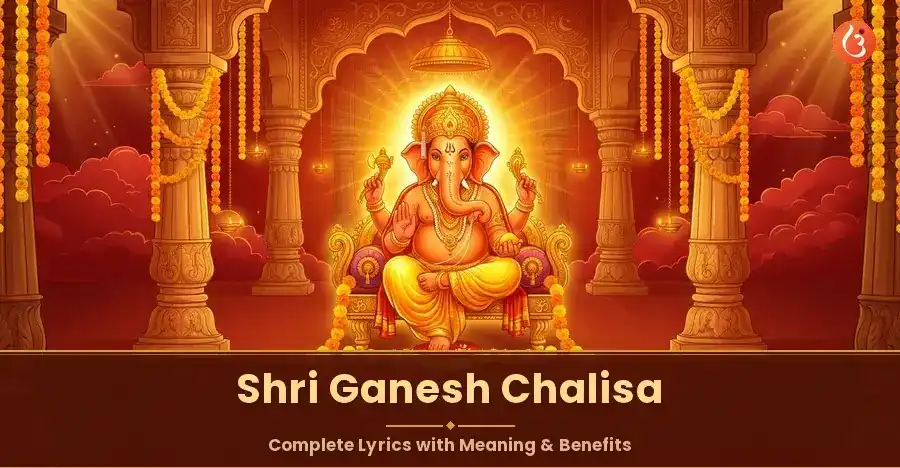
"Ganesh Chalisa: Complete Lyrics in English, Devanagari with Meaning & Benefits "
The Ganesh Chalisa is a 40-verse devotional hymn that invokes Lord Ganesha's power to remove obstacles, grant wisdom, and ensure success in all endeavors. Attributed to the 17th-century poet Sant Sundardas, it's a powerful tool for devotees seeking blessings for new beginnings. Over 5 Lakh+ Devotees have honored Lord Ganesha through Utsav's verified temple pujas.
Quick Answer
- What: A 40-verse hymn (Ganesh Chalisa - गणेश चालीसा) praising Lord Ganesha.
- Why: To remove obstacles (Vighnaharta), gain knowledge (Buddhi), and achieve success (Siddhi).
- Who: Composed by Sant Sundardas, a revered 17th-century saint.
- How to Participate: Participate in Chintamani Ganesh Visesh Puja for focused blessings with a Dakshina of ₹501.
Table of Contents
- What is the Ganesh Chalisa & Why is it So Powerful?
- The Complete Ganesh Chalisa Lyrics (With Meaning)
- What Are the Benefits of Chanting the Ganesh Chalisa?
- How Should You Recite the Ganesh Chalisa for Maximum Benefit?
- When is the Best Time to Chant?
- Participate in Ganesh Puja for Deeper Blessings
What is the Ganesh Chalisa & Why is it So Powerful?
The Ganesh Chalisa isn't just a collection of words. It’s a beautifully structured hymn of 40 chaupais (verses) that systematically praises the form, wisdom, and power of Lord Ganesha. You'll find it opens and closes with a 'doha' (couplet), which sets the intention and summarizes the prayer. Think of it as a direct line to the energy of Vighnaharta, the remover of all obstacles.
But why does it resonate so deeply with millions? The power lies in its simplicity and devotion. Unlike complex Vedic mantras that require precise pronunciation (which can be intimidating), the Chalisa is accessible to everyone. Its verses, composed by Sant Sundardas, narrate Ganesha's divine attributes in a way that’s easy to understand and feel. It’s a personal conversation with the deity, and that’s what makes it an essential daily practice for so many devotees seeking clarity and a smooth path forward.
The Complete Ganesh Chalisa Lyrics (With Meaning)
Here are the complete lyrics for the Shri Ganesh Chalisa, presented with the original Devanagari script, an easy-to-read English transliteration, and a clear English translation for each verse.
Doha (Opening Couplet)
Devanagari:
जय गणेश गिरिजा सुवन, मंगल मूल सुजान।
कहत अयोध्यादास तुम, देहु अभय वरदान॥
English Transliteration:
Jaya Ganesha Girija Suvana, Mangala Mula Sujana।
Kahata Ayodhyadasa Tuma, Dehu Abhaya Varadana॥
Meaning:
Victory to you, Lord Ganesha, son of Girija (Parvati), the root of all auspiciousness and wisdom. Ayodhyadas (the poet) prays to you, please grant me the boon of fearlessness.
Chaupai (40 Verses)
- जय गणपति सदगुण सदन, कविवर बदन कृपाल। विघ्न हरण मंगल करण, जय जय गिरिजालाल॥
Jaya Ganapati Sadaguna Sadana, Kavivara Badana Kripala। Vighna Harana Mangala Karana, Jaya Jaya Girijalala॥
Meaning: Victory to you, Lord Ganapati, the abode of all virtues, the compassionate one with the face of a poet. You are the remover of obstacles and the harbinger of auspiciousness. Victory, victory to the beloved son of Girija! - जय जय जय गणपति गणराजू। मंगल भरण करण शुभ काजू॥
Jaya Jaya Jaya Ganapati Ganaraju। Mangala Bharana Karana Shubha Kaju॥
Meaning: Victory, victory, victory to you, Ganapati, the king of all ganas (celestial hosts). You are the one who fills our lives with auspiciousness and makes all our tasks successful. - जय गजबदन सदन सुखदाता। विश्व विनायक बुद्धि विधाता॥
Jaya Gajabadana Sadana Sukhadata। Vishva Vinayaka Buddhi Vidhata॥
Meaning: Victory to the one with an elephant face, the giver of happiness. You are the remover of obstacles for the entire universe and the bestower of intelligence. - वक्र तुण्ड शुचि शुण्ड सुहावन। तिलक त्रिपुण्ड भाल मन भावन॥
Vakra Tunda Shuchi Shunda Suhavana। Tilaka Tripunda Bhala Mana Bhavana॥
Meaning: Your curved trunk is pure and charming. The three-lined tilak on your forehead is captivating to the mind. - राजत मणि मुक्तन उर माला। स्वर्ण मुकुट शिर नयन विशाला॥
Rajata Mani Muktana Ura Mala। Svarna Mukuta Shira Nayana Vishala॥
Meaning: A necklace of gems and pearls adorns your chest. You wear a golden crown on your head and have large, beautiful eyes. - पुस्तक पाणि कुठार त्रिशूलं। मोदक भोग सुगन्धित फूलं॥
Pustaka Pani Kuthara Trishulam। Modaka Bhoga Sugandhita Phulam॥
Meaning: You hold a book, an axe, and a trident in your hands. You enjoy offerings of modak (sweet dumplings) and fragrant flowers. - सुन्दर पीताम्बर तन साजित। चरण पादुका मुनि मन राजित॥
Sundara Pitambara Tana Sajita। Charana Paduka Muni Mana Rajita॥
Meaning: Your body is adorned with a beautiful yellow silk cloth. Your divine footwear captivates the minds of the sages. - धनि शिव सुवन षडानन भ्राता। गौरी ललन विश्व-विख्याता॥
Dhani Shiva Suvana Shadanana Bhrata। Gauri Lalana Vishva-Viditata॥
Meaning: Blessed are you, the son of Shiva and the brother of the six-headed Kartikeya. As the beloved son of Gauri (Parvati), you are famous throughout the universe. - ऋद्धि-सिद्धि तव चँवर सुधारे। मूषक वाहन सोहत द्वारे॥
Riddhi-Siddhi Tava Chanvara Sudhare। Mushaka Vahana Sohata Dvare॥
Meaning: Riddhi (prosperity) and Siddhi (spiritual power) are your attendants. Your vehicle, the mouse, looks splendid at your door. - कहौ जन्म शुभ कथा तुम्हारी। अति शुचि पावन मंगलकारी॥
Kahau Janma Shubha Katha Tumhari। Ati Shuchi Pavana Mangalakari॥
Meaning: Telling the auspicious story of your birth is an extremely pure, holy, and beneficial act. - एक समय गिरिराज कुमारी। पुत्र हेतु तप कीन्हा भारी॥
Eka Samaya Giriraja Kumari। Putra Hetu Tapa Kinha Bhari॥
Meaning: Once upon a time, the daughter of the mountain king (Parvati) performed great penance to have a son. - भयो यज्ञ जब पूर्ण अनूपा। तब पहुंच्यो तुम धरि द्विज रूपा॥
Bhayo Yagya Jaba Purna Anupa। Taba Pahunchyo Tuma Dhari Dvija Rupa॥
Meaning: When the unique yagna (fire ritual) was completed, you arrived there in the form of a Brahmin. - अतिथि जानि कै गौरि सुखारी। बहुविधि सेवा करी तुम्हारी॥
Atithi Jani Kai Gauri Sukhari। Bahuvidhi Seva Kari Tumhari॥
Meaning: Considering you a guest, Gauri was overjoyed and served you in many ways. - अति प्रसन्न ह्वै तुम वर दीन्हा। मातु पुत्र हित जो तप कीन्हा॥
Ati Prasanna Hvai Tuma Vara Dinha। Matu Putra Hita Jo Tapa Kinha॥
Meaning: Being very pleased, you gave her a boon for the son she had performed penance for. - मिलहि पुत्र तुहि, बुद्धि विशाला। बिना गर्भ धारण, यहि काला॥
Milahi Putra Tuhi, Buddhi Vishala। Bina Garbha Dharana, Yahi Kala॥
Meaning: "You will get a son of great intellect, without having to conceive, right at this time." - गणनायक, गुण ज्ञान निधाना। पूजित प्रथम, रूप भगवाना॥
Gananayaka, Guna Gyana Nidhana। Pujita Prathama, Rupa Bhagavana॥
Meaning: "He will be the leader of the ganas, a treasure house of virtue and knowledge, and will be worshipped first, the very form of God." - अस कहि अन्तर्धान रूप ह्वै। पलना पर बालक स्वरूप ह्वै॥
Asa Kahi Antardhana Rupa Hvai। Palana Para Balaka Svarupa Hvai॥
Meaning: Having said this, you disappeared and appeared as a child in the cradle. - बनि शिशु, रुदन जबहिं तुम ठाना। लखि मुख सुख नहिं गौरि समाना॥
Bani Shishu, Rudana Jabahim Tuma Thana। Lakhi Mukha Sukha Nahin Gauri Samana॥
Meaning: When you started crying like an infant, seeing your face, Gauri's happiness knew no bounds. - सकल मगन, सुखमंगल गावहिं। नभ ते सुरन, सुमन वर्षावहिं॥
Sakala Magana, Sukhamangala Gavahim। Nabha Te Surana, Sumana Varshavahim॥
Meaning: Everyone was engrossed in joy, singing auspicious songs. From the sky, the gods showered flowers. - शम्भु, उमा, बहु दान लुटावहिं। सुर मुनिजन, सुत देखन आवहिं॥
Shambhu, Uma, Bahu Dana Lutavahim। Sura Munijana, Suta Dekhana Avahim॥
Meaning: Shiva and Uma (Parvati) distributed many gifts. Gods and sages came to see their son. - लखि अति आनन्द मंगल साजा। देखन भी आये शनि राजा॥
Lakhi Ati Ananda Mangala Saja। Dekhana Bhi Aye Shani Raja॥
Meaning: Seeing this joyous and auspicious occasion, King Shani (Saturn) also came to visit. - निज अवगुण गुनि शनि मन माहीं। बालक, देखन चाहत नाहीं॥
Nija Avaguna Guni Shani Mana Mahin। Balaka, Dekhana Chahata Nahin॥
Meaning: Aware of his own flaw (his gaze being destructive), Shani did not want to look at the child. - गिरजा कछु मन भेद बढ़ायो। उत्सव मोर, न शनि तुहि भायो॥
Giraja Kachu Mana Bheda Badhayo। Utsava Mora, Na Shani Tuhi Bhayo॥
Meaning: Girija, feeling a bit offended, said, "You don't seem to like my celebration, Shani." - कहन लगे शनि, मन सकुचाई। का करिहौ, शिशु मोहि दिखाई॥
Kahana Lage Shani, Mana Sakuchai। Ka Karihau, Shishu Mohi Dikhai॥
Meaning: Shani began to say hesitantly, "What can I do? If I look at the child..." - नहिं विश्वास, उमा उर भयऊ। शनि सों, बालक देखन कह्यऊ॥
Nahin Vishvasa, Uma Ura Bhayau। Shani Son, Balaka Dekhana Kahyau॥
Meaning: Uma did not believe him and insisted that Shani look at the child. - पडतहिं, शनि दृग कोण प्रकाशा। बालक सिर उड़ि गयो अकाशा॥
Padatahin, Shani Driga Kona Prakasha। Balaka Sira Udi Gayo Akasha॥
Meaning: As soon as Shani's gaze fell upon him, the child's head flew off into the sky. - गिरजा गिरीं विकल ह्वै धरणी। सो दुख दशा गयो नहीं वरणी॥
Giraja Girin Vikala Hvai Dharani। So Dukha Dasha Gayo Nahin Varani॥
Meaning: Girija fell to the ground, distraught. Her state of sorrow cannot be described. - हाहाकार मच्यो कैलाशा। शनि कीन्हों लखि सुत को नाशा॥
Hahakara Machyo Kailasha। Shani Kinho Lakhi Suta Ko Nasha॥
Meaning: An outcry erupted on Kailash. "Shani has destroyed the son by looking at him!" - तुरत गरुड़ चढ़ि विष्णु सिधाये। काटि चक्र सो गज शिर लाये॥
Turata Garuda Chadhi Vishnu Sidhaye। Kati Chakra So Gaja Shira Laye॥
Meaning: Immediately, Vishnu mounted Garuda and flew off. He cut off the head of an elephant with his discus and brought it back. - बालक के धड़ ऊपर धारयो। प्राण, मन्त्र पढ़ि शंकर डारयो॥
Balaka Ke Dhada Upara Dharayo। Prana, Mantra Padhi Shankara Darayo॥
Meaning: He placed it upon the child's body. Lord Shiva then infused it with life by chanting mantras. - नाम ‘गणेश’ शम्भु तब कीन्हे। प्रथम पूज्य बुद्धि निधि, वर दीन्हे॥
Nama ‘Ganesha’ Shambhu Taba Kinhe। Prathama Pujya Buddhi Nidhi, Vara Dinhe॥
Meaning: Shiva then named him 'Ganesha' and gave him the boon of being worshipped first and being a treasure of intellect. - बुद्धि परीक्षा जब शिव कीन्हा। पृथ्वी की प्रदक्षिणा लीन्हा॥
Buddhi Pariksha Jaba Shiva Kinha। Prithvi Ki Pradakshina Linha॥
Meaning: When Shiva held a test of intelligence, he asked for a circumambulation of the Earth. - चले षडानन, भरमि भुलाई। रचि बैठ तुम बुद्धि उपाई॥
Chale Shadanana, Bharami Bhulai। Rachi Baitha Tuma Buddhi Upai॥
Meaning: Shadanana (Kartikeya) set off to circle the globe, but you devised a clever plan. - चरण मातु-पितु के धर लीन्हें। तिनके सात प्रदक्षिण कीन्हें॥
Charana Matu-Pitu Ke Dhara Linhen। Tinake Sata Pradakshina Kinhen॥
Meaning: You held the feet of your mother and father and circumambulated them seven times. - धनि गणेश, कहि शिव हिय हरषे। नभ ते सुरन, सुमन बहु बरसे॥
Dhani Ganesha, Kahi Shiva Hiya Harashe। Nabha Te Surana, Sumana Bahu Barase॥
Meaning: "Blessed are you, Ganesha!" said Shiva, his heart filled with joy. From the sky, the gods showered many flowers. - तुम्हरी महिमा बुद्धि बड़ाई। शेष सहसमुख सकै न गाई॥
Tumhari Mahima Buddhi Badai। Shesha Sahasamukha Sakai Na Gai॥
Meaning: Your glory and great intelligence cannot be fully sung even by the thousand-mouthed serpent, Shesha. - मैं मतिहीन मलीन दुखारी। करहुँ कौन विधि विनय तुम्हारी॥
Main Mati-hina Malina Dukhari। Karahun Kauna Vidhi Vinaya Tumhari॥
Meaning: I am foolish, impure, and sorrowful. In what way can I offer my prayers to you? - भजत ‘रामसुन्दर’ प्रभुदासा। जग प्रयाग, ककरा, दुर्वासा॥
Bhajata ‘Ramasundara’ Prabhudasa। Jaga Prayaga, Kakara, Durvasa॥
Meaning: Your servant 'Ramasundara' worships you, Lord, in the holy places of Prayag, Kakara, and Durvasa. - अब प्रभु दया दीन पर कीजै। अपनी शक्ति भक्ति कुछ दीजै॥
Aba Prabhu Daya Dina Para Kijai। Apani Shakti Bhakti Kucha Dijai॥
Meaning: Now, Lord, please show mercy on this humble one. Grant me some of your power and devotion. - श्री गणेश यह चालीसा। पाठ करै कर ध्यान॥ नित नव मंगल गृह बसै। लहे जगत सन्मान॥
Shri Ganesha Yaha Chalisa। Patha Karai Kara Dhyana॥ Nita Nava Mangala Griha Basai। Lahe Jagata Sanmana॥
Meaning: Whoever reads this Ganesh Chalisa with concentration will have ever-new auspiciousness dwell in their home and will gain respect in the world.
Doha (Closing Couplet)
Devanagari:
दोहा॥ सम्वत अपन सहस्र दश, जब गणेश चालीस।
पूर्ण चालीसा भयो, मंगल मूर्ति गणेश॥
English Transliteration:
Doha॥ Samvata Apana Sahasra Dasha, Jaba Ganesha Chalisa।
Purna Chalisa Bhayo, Mangala Murati Ganesha॥
Meaning:
In the Samvat year 10,000, this Ganesh Chalisa was completed for the auspicious form of Lord Ganesha.
What Are the Benefits of Chanting the Ganesh Chalisa?
Chanting the Ganesh Chalisa is a deeply powerful practice, and it's not just about tradition. Devotees who recite it regularly report tangible changes in their lives. Why? Because each verse is designed to align your consciousness with the divine qualities of Lord Ganesha. It’s an essential spiritual tool.
Here are the core benefits you can invite into your life:
* Removal of Obstacles: This is the big one. Ganesha is the Vighnaharta. Chanting the Chalisa helps clear your path, whether the obstacles are in your career, relationships, or spiritual growth. It really works.
* Enhanced Intellect and Wisdom: As the Buddhi Vidhata, Ganesha governs the intellect. Regular recitation can bring clarity of thought, improve decision-making, and help you find creative solutions to complex problems. You'll simply feel sharper.
* Attainment of Success and Prosperity: The Chalisa invokes the energies of Riddhi (prosperity) and Siddhi (achievement). It helps align your efforts with divine grace, making success in your endeavors more attainable.
* Spiritual Growth and Inner Peace: Beyond material gains, the Chalisa is a beautiful form of meditation. It calms the mind, reduces anxiety, and fosters a deep sense of connection with the divine, leading to profound inner peace.
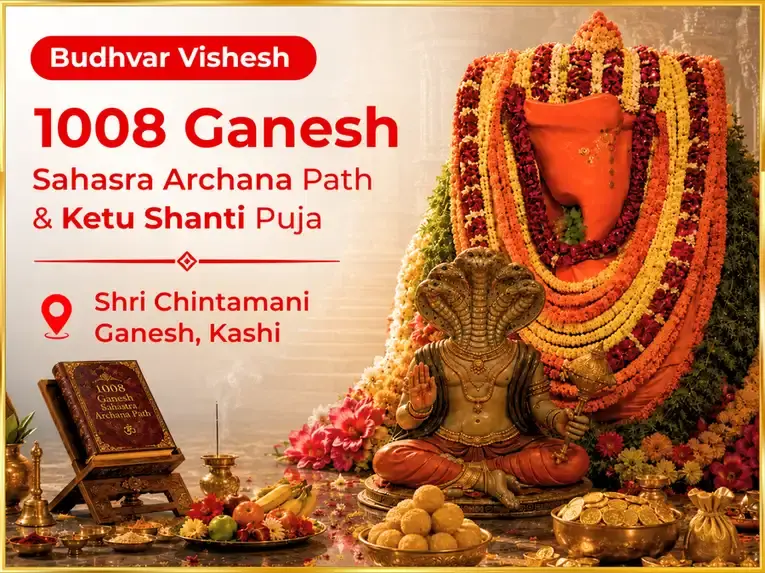
For those seeking to amplify these benefits, chanting can be complemented by a formal puja. You can participate in the Chintamani Ganesh 1008 Sahasra Archana Path for a truly immersive experience.
How Should You Recite the Ganesh Chalisa for Maximum Benefit?
While the Chalisa's power is inherent, your intention and preparation can significantly amplify its effects. It's not complicated, and you don't need to be an expert. Following a simple routine creates a sacred space for your practice. It’s a beautiful way to show respect.
Here’s a simple guide to get you started:
1. Purify Yourself: Begin by taking a bath and wearing clean, fresh clothes. This isn't just about physical cleanliness; it's a symbolic act of purifying your mind and body to receive divine energy.
2. Create a Sacred Space: Find a quiet, clean corner in your home. If you have a murti (idol) or picture of Lord Ganesha, sit before it. Light a diya (lamp) and some incense to create a serene atmosphere.
3. Make an Offering: A simple offering of a flower, some fruits, or Ganesha's favorite sweet, modak, is a wonderful gesture of devotion. It’s the feeling behind it that counts.
4. Recite with Devotion: Read or chant the Chalisa with a clear and focused mind. Don't rush through it. Try to feel the meaning of the words and let the devotion fill your heart. Consistency is more important than speed.
5. Conclude with Aarti: If you can, finish your recitation by performing the Ganesh Aarti. This concludes your worship on a high note of reverence.
When is the Best Time to Chant?
Consistency is the real key to unlocking the Chalisa's benefits. A daily practice, even a short one, is far more effective than sporadic chanting. But are there specific times when the energy is more potent? Absolutely.
The most auspicious time is during the Brahma Muhurta, the period roughly 90 minutes before sunrise. The world is quiet, and your mind is clear, making it perfect for spiritual practices. If that's not possible, chanting in the morning after your bath or in the evening after work are also excellent times.
Beyond the daily routine, certain days hold special significance for Lord Ganesha. Wednesday (Budhvar) is considered his day, so chanting the Chalisa then is particularly powerful. Major festivals like Ganesh Chaturthi and Sankashti Chaturthi are also prime opportunities to deepen your connection. You can check the Panchang to find these auspicious tithis.
Participate in Ganesh Puja for Deeper Blessings
While chanting the Ganesh Chalisa is a personal and powerful practice, participating in a formal puja conducted by a verified pandit can elevate your devotion to another level. A puja involves specific rituals, mantras, and offerings that are designed to invoke the deity's blessings in a structured, potent way. It’s a perfect complement to your daily chanting.
At Utsav, we connect you with verified temples like the Chintamani Ganesh Mandir in Kashi, where experienced pandits perform pujas on your behalf. When you participate, the pandit includes your name and gotra in the Sankalp (vow), directing the divine energy of the ritual specifically to you and your family.
Here's how you can deepen your connection:
* For Overall Well-being: Participate in the Chintamani Ganesh Visesh Sarvartha Siddhi Puja. This puja is performed for success in all undertakings.
* For Intensive Blessings: The Chintamani Ganesh Visesh 1008 Ganesh Sahasra Archana Path involves chanting 1,008 names of Lord Ganesha, a truly profound experience.
After the puja, you receive a video of the ritual and authentic prasad delivered to your home. It’s a seamless way to receive blessings from sacred temples, no matter where you are.
Reference: The Ganesh Chalisa is a devotional hymn from the Bhakti tradition, widely attributed to Sant Sundardas. Its themes and Ganesha's attributes are consistent with descriptions found in Puranic scriptures like the Ganesha Purana and the Mudgala Purana.