Lakshmi Narayan Stotram: Complete Lyrics, Meaning & Benefits
By Pandit Harish S., Vaishnava Tradition Scholar | Reviewed by Utsav editorial team
The Lakshmi Narayan Stotram (लक्ष्मी नारायण स्तोत्रम्) is a powerful devotional hymn that invokes the combined blessings of Goddess Lakshmi and Lord Vishnu (Narayana). This stotram is a cornerstone of the Vaishnava tradition, celebrated for its ability to bestow wealth, prosperity, and spiritual liberation upon the devotee. It is a profound prayer of sharanagati, or complete surrender to the divine will. According to the Skanda Purana, worshipping this divine couple together is essential for holistic well-being, as they represent the inseparable forces of preservation and prosperity. Over 5 Lakh+ devotees have participated in related pujas on Utsav seeking their grace.
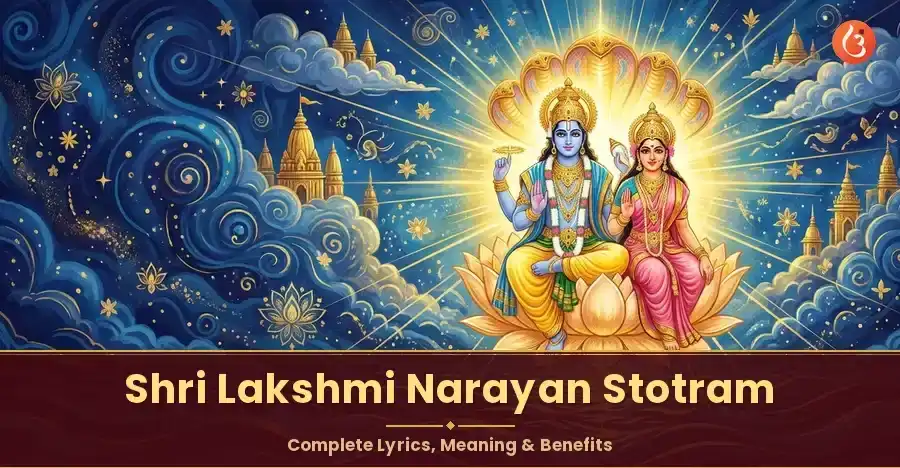
Quick Answer: Lakshmi Narayan Stotram
- What: A sacred Vedic hymn dedicated to the divine couple, Goddess Lakshmi (wealth) and Lord Narayana (sustenance).
- Why: Chanted to attract prosperity, remove obstacles, foster marital harmony, and attain spiritual peace.
- When: Best recited on Fridays, Ekadashi tithis, and during the auspicious month of Kartik.
- How to Participate: You can Participate in a 1008 Vishnu Sahasra Naam Archan at verified temples with Dakshina from ₹501.
Table of Contents
- Origin and Significance of Lakshmi Narayan Stotram
- Complete Lakshmi Narayan Stotram (Lyrics in English)
- Verse-by-Verse Meaning in English
- What Are the Benefits of Chanting This Stotram?
- How to Recite the Stotram (Complete Vidhi)
- Best Days to Chant in 2026
- Participate in Related Pujas on Utsav
- Sources & References
Origin and Significance of Lakshmi Narayan Stotram
This stotram’s roots are deeply embedded in the Vaishnava and Pancharatra traditions, which emphasize the inseparable nature of Vishnu and his consort, Lakshmi. The Pancharatra Agamas are a collection of Vaishnava texts that detail temple rituals and theology, establishing Lakshmi not merely as a consort but as the very Shakti (creative energy) of Narayana, the Shaktiman (possessor of energy). While many variations exist, the core philosophy is consistent. The Skanda Purana explains that Narayana is the protector and sustainer, while Lakshmi is the energy of prosperity and fortune. You can't truly have one without the other.
The Narada Pancharatra states: “Just as radiance is inseparable from the sun, so is Lakshmi inseparable from Vishnu.” This highlights their eternal and indivisible unity.
Worshipping them together harmonizes the spiritual and material aspects of life. It’s not just about asking for wealth; it's about asking for righteous, sustainable prosperity that supports a dharmic life. Think of it this way: Narayana provides the path, and Lakshmi provides the resources to walk it. This beautiful synergy is what makes their joint worship so powerful. Their union is the source of all creation, sustenance, and cosmic order.
Complete Lakshmi Narayan Stotram (Lyrics in English)
Shrinivasa jagannatha shrihare bhaktavatsala |
Lakshmipate namastubhyam trahi mam bhavasagarat ||1||Radharamana govinda bhaktakamaprapuraka |
Narayana namastubhyam trahi mam bhavasagarat ||2||Damodara mahodara sarvapattinnivarana |
Hrishikesha namastubhyam trahi mam bhavasagarat ||3||Garudadhvaja vaikunthanivasinkeshavachyuta |
Janardana namastubhyam trahi mam bhavasagarat ||4||Shankhachakragadapadmadhara shrivatsalanchchana |
Meghashyama namastubhyam trahi mam bhavasagarat ||5||Tvam mata tvam pita bandhu: sadgurustvam dayanidhi: |
Tvatto’s nyo na paro devastrahi mam bhavasagarat ||6||Na jane danadharamadi yogam yagam tapo japam |
Tvam kevalam kuru dayam trahi mam bhavasagarat ||7||Na matsamo yadyapi papakarta na tvatsamo’thapi hi papaharta |
Vijnapitam tvetadashesasakshina mamuddharartam patitam tavagre ||8||
Verse-by-Verse Meaning in English
Here’s what each verse of this profound stotram means. It’s a prayer of complete surrender.
Verse 1:
"O Abode of Lakshmi (Shrinivasa), Lord of the Universe (Jagannath), Shri Hari, who is ever-so-kind to Your devotees! O husband of Lakshmi, I bow to You. Please protect me from the ocean of worldly existence (Bhavasagar)."
Verse 2:
"O beloved of Radha (Radharamana), Govinda, the one who fulfills the desires of devotees! O Narayana, I bow to You. Please protect me from this ocean of worldly existence."
Verse 3:
"O Damodara, the one with a generous heart, the remover of all calamities! O Hrishikesha (master of the senses), I bow to You. Please protect me from this ocean of worldly existence."
The name Damodara refers to the childhood lila of Lord Krishna when Mother Yashoda tied him to a grinding mortar with a rope (dama) around his belly (udara), signifying that the Lord allows Himself to be bound by the love of His devotees.
Verse 4:
"O Lord with Garuda on your flag, resident of Vaikuntha, Keshava, the infallible one (Achyuta)! O Janardana, I bow to You. Please protect me from this ocean of worldly existence."
Verse 5:
"O holder of the conch, discus, mace, and lotus, marked by the Shrivatsa symbol! O Lord with a complexion like a dark cloud (Meghashyama), I bow to You. Please protect me from this ocean of worldly existence."
The Shrivatsa is a special curl of white hair on Lord Vishnu's chest, symbolizing the eternal presence of Goddess Lakshmi.
Verse 6:
"You are my mother, my father, my relative, my true guru, and the ocean of compassion. There is no other God superior to You. Please protect me from this ocean of worldly existence."
Verse 7:
"I do not know charity, dharma, yoga, sacrifice, austerity, or chanting. You alone, please show me mercy. Protect me from this ocean of worldly existence."
Verse 8:
"Although there is no sinner equal to me, there is no destroyer of sin equal to You. Understanding this, O witness of all, I, a fallen soul, have come before You to be saved."
What Are the Benefits of Chanting This Stotram?
According to Vaidik pandits, the regular recitation of this stotram brings a multitude of blessings. It’s not a magic wand, but a tool for aligning your consciousness with divine grace.
- Financial Stability and Prosperity: The most direct benefit is invoking the grace of Goddess Lakshmi. Devotees often experience the removal of financial blockages and the opening of new avenues for wealth. It's about creating sustainable, dharmic abundance that brings contentment, not just material gain.
- Removal of Obstacles: Lord Narayana, as the preserver, is called upon to remove all calamities (
sarvapattinnivarana). Chanting helps clear hurdles in personal and professional life, whether they are related to career, health, or relationships. - Marital Harmony: The stotram celebrates the perfect divine union. It's believed to foster love, understanding, and harmony between spouses when chanted with devotion. It helps resolve conflicts and strengthens the marital bond.
- Spiritual Liberation (Moksha): The recurring prayer, "Trahi mam bhavasagarat" (protect me from the ocean of worldly existence), makes the ultimate goal clear. This "ocean" refers to samsara, the endless cycle of birth, death, and rebirth. It’s a powerful prayer for liberation.
- Inner Peace and Fearlessness: By surrendering completely to the divine (
Tvam mata tvam pita...), you release anxiety and fear. It cultivates a deep sense of trust and protection, knowing that the supreme guardians of the universe are watching over you. - Cultivating Bhakti (Devotion): The stotram's language is one of pure love and surrender. Regular chanting deepens one's devotion and personal relationship with Lakshmi and Narayana, transforming the practice from a ritual into a heartfelt conversation with the divine.
How to Recite the Stotram (Complete Vidhi)
To get the maximum benefit, verified pandits recommend a simple yet disciplined approach. It’s all about creating a sacred space and a focused mind.
- Preparation: Begin by taking a bath and wearing clean clothes, preferably yellow, as this color is dear to Lord Vishnu. A clean body helps create a clean mind.
- The Altar: Sit facing East on a clean asana (mat). Place an image or idol of Lakshmi and Narayana before you.
- Light the Lamp: Light a ghee lamp. The light symbolizes the dispelling of darkness and ignorance. Offer some fresh flowers (like lotus or marigold), and most importantly, a Tulsi leaf, which is indispensable in Vishnu puja. You may also light incense.
- Sankalp (Intention): Close your eyes and state your intention for the prayer. The Sankalp is a crucial step that channels the energy of your chanting towards a specific purpose. Why are you chanting today? Be specific and sincere.
- Recitation: Chant the stotram with clear pronunciation and devotion. Don't rush it. Feel the meaning of each word as you recite. You can chant it 1, 3, or 11 times. Consistency is more important than quantity.
- Closing: After chanting, sit in silence for a few minutes, absorbing the divine energy. Conclude with a simple aarti and offer your heartfelt thanks. You can offer a simple prasad like fruits or milk sweets.
Best Days to Chant in 2026
While you can chant this stotram daily, certain days are considered especially potent for connecting with Lakshmi and Narayana. As per Vaidik traditions, these days amplify the power of your prayers because the cosmic energies are more conducive to spiritual activities.
- Fridays (Shukravar): This day is dedicated to Goddess Lakshmi. Chanting the stotram on Fridays is believed to bring immense prosperity and good fortune.
- Ekadashi: The 11th day of the lunar cycle is sacred to Lord Vishnu. Chanting on days like Aja Ekadashi or Nirjala Ekadashi is highly meritorious.
- Purnima (Full Moon): The full moon is a time of heightened spiritual energy and is strongly associated with both Lakshmi (especially Kojagiri Purnima) and Vishnu (as Satyanarayan).
- Akshaya Tritiya: This day is considered one of the most auspicious days in the Hindu calendar. Any venture started or any prayer offered on this day is believed to yield endless results. It is the day when Lord Vishnu in his Parashurama avatar was born.
- Diwali: The festival of lights is the most important day for Lakshmi Puja, making it a perfect time to recite this stotram to welcome prosperity for the year ahead.
For exact dates and timings in 2026, you should always refer to the Utsav Panchang.
Participate in Related Pujas on Utsav
You can deepen your connection by participating in authentic rituals performed by verified pandits at sacred temples. Utsav makes this possible for every devotee.
Recommended Pujas:
* 1008 Vishnu Sahasra Naam Archan: An elaborate ritual chanting the 1008 names of Lord Vishnu for overall protection and dosha removal. Dakshina starts from ₹501.
* Satyanarayan Vrat Katha Maha Puja: This special puja is performed for peace, prosperity, and the fulfillment of vows made to Lord Satyanarayan.
When you participate, pandits chant your name and gotra (ancestral lineage) during the Sankalp, ensuring the blessings are directed specifically to you and your family. You receive a video of the puja along with blessed prasad delivered to your home.
Scripture Composer/History
The Lakshmi Narayan Stotram is a traditional hymn whose authorship is not attributed to a single, named sage. It is considered a part of the vast devotional literature that emerged from the Puranic and Agamic traditions, particularly within Vaishnavism. Composed in classical Sanskrit, its style and theological focus place its origins within the post-Gupta Puranic era (c. 6th-10th century CE). While the principles of Lakshmi-Narayana worship are detailed in scriptures like the Skanda Purana and the Pancharatra Samhitas, this specific stotram has been primarily transmitted through oral tradition. It was preserved by priests and devotees and later included in various prayer anthologies (stotra sangrahas), becoming a staple in daily household and temple worship.
Sources & References
Scriptural Authority:
- Pancharatra Tradition: The primary devotional school establishing the inseparable nature of Lakshmi and Narayana.
- Skanda Purana: Provides the foundational concept of worshipping Lakshmi and Narayana as a divine couple for complete well-being.
Temple & Ritual Verification:
- Vaishnava Temples, Mathura: The recitation vidhi and benefits are aligned with practices at major Vishnu temples in the Braj region.
- Read our detailed guide on the Dwadash Madhav Parikrama in Prayagraj to learn more about Vishnu worship.
Related Pujas on Utsav:
- 1008 Vishnu Sahasra Naam Archan
- Satyanarayan Vrat Katha Maha Puja