Navagraha Stotram: Lyrics, Meaning, and Astrological Benefits
By Pandit Ravi S., Vedic Astrology Scholar | Reviewed by Utsav editorial team
The Navagraha Stotram (नवग्रह स्तोत्रम्) is a powerful Vedic hymn used to harmonize the energies of the nine planets in one's life. Attributed to the great sage Maharishi Vyasa, this stotram praises the nine planetary deities (Grahas) to mitigate their negative effects and amplify their blessings. Over 5 Lakh+ devotees have sought planetary balance through Utsav's verified temple pujas.
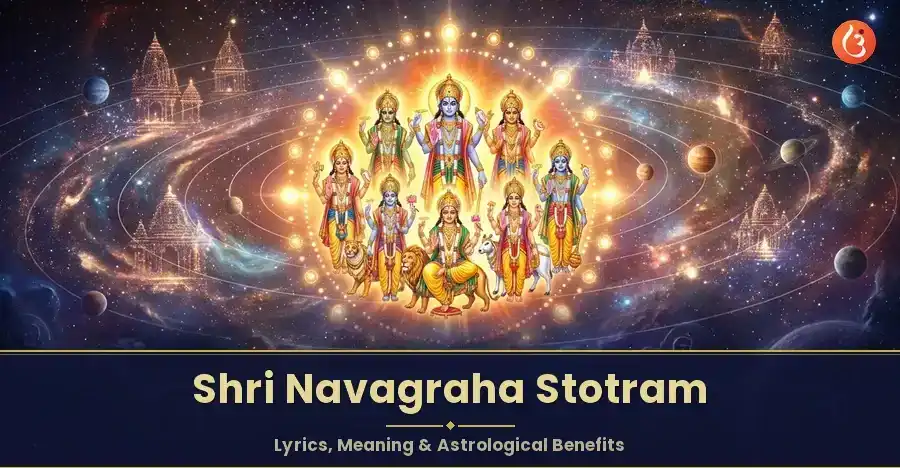
Quick Answer: Navagraha Stotram Essentials
- What: A nine-verse Vedic hymn by Maharishi Vyasa to propitiate the nine planets (Navagrahas).
- Why: To reduce malefic planetary influences (doshas) and enhance positive energies for peace and prosperity.
- When to Chant: Daily in the morning, especially during planetary transits (Gochar) or challenging periods (Dashas).
- How to Participate: You can Participate in a Graha Shanti Puja at verified temples with Dakshina from ₹501.
Table of Contents
- What Is the Navagraha Stotram & Who Composed It?
- Navagraha Stotram: Complete Lyrics in English
- Verse-by-Verse Meaning of the Navagraha Stotram
- What Are the Astrological Benefits of Chanting?
- How Should You Recite the Navagraha Stotram?
- Participate in Graha Shanti Pujas on Utsav
- Sources & References
What Is the Navagraha Stotram & Who Composed It?
The Navagraha Stotram is a foundational hymn in Vedic astrology (Jyotisha), composed by the legendary sage Maharishi Veda Vyasa, the same revered figure credited with compiling the Vedas and authoring the Mahabharata. His authorship lends immense spiritual weight to this stotram. It's not just a collection of mantras; it's a devotional dialogue with the cosmic forces that shape our lives. The term 'Graha' itself means 'one that seizes' or 'grasps,' signifying their power to influence the karmic trajectory of an individual. The text consists of nine primary verses, each dedicated to one of the nine Grahas: Surya (Sun), Chandra (Moon), Mangala (Mars), Budha (Mercury), Guru (Jupiter), Shukra (Venus), Shani (Saturn), Rahu, and Ketu.
Why does this matter so much? According to Jyotisha principles, the positions of these planets at your time of birth create a unique karmic blueprint. Their continuous movement (transits) brings periods of opportunity and challenge. This stotram doesn't seek to fight the planets; instead, it honors their divine nature to transform their influence from harsh lessons into gentle guidance. It's a tool for aligning your consciousness with the cosmos.
ॐ
ग्रहाणामादिरादित्यो लोकरक्षणकारकः ।
विषमस्थानसम्भूतां पीडां हरतु मे रविः ॥
Om
Grahanaam-aadiraadityo lokarakshana-kaarakah |
Vishamasthaana-sambhutaam pidaam haratu me ravih ||
Navagraha Stotram: Complete Lyrics in English
Here is the complete text of the Navagraha Stotram for recitation. Each verse is presented in a clean, easy-to-read format.
1. Surya (Sun) Mantra
Japaa kusuma Sankasam - Kashyapeyam Mahaath’ yuthim
Thamo’urim sarva Paapa ganam - Pranathosmi Divakaram
2. Chandra (Moon) Mantra
Dadhi Shanka thushaa-raabham - Ksheero Dhaarnava Sambhavam
Namaami Shashinam Somam - Shambhor Makuta Bhushanam
3. Mangala (Mars) Mantra
Dharani Garbha Sambhutham - Vidhyuth Kanthi Samaprabham
Kumaram Shakthi Hastham cha - Mangalam Pranamaam Yaham
4. Budha (Mercury) Mantra
Priyangu Kalikaa Shyaamam - Roopenaa Prathimam Budham
Sowmyam Sowmya Guno Petham - tham Budham Pranamamyaham
5. Guru (Jupiter) Mantra
Devaanaam cha Hrisheenaam cha - Gurum Kaanchana Sannibham
Buddhi Bhutham Thrilokesham - tham Namaami Brihaspathim
6. Shukra (Venus) Mantra
Hima Kundha Mrina-laabham - Daithyaanam Paramam Gurum
Sarva Shastra Pravakthaaram - Bhargavam Pranamaam Yaham
7. Shani (Saturn) Mantra
Neelanjana Samaabhasam - Ravi Putram Yamaagrajam
Chaayaa Maarthaanda Sambhutham - tham Namaami Shanaiswaram
8. Rahu Mantra
Ardha Kaayam Mahaa Veeryam - Chandra-Aditya Vimardhanam
Simhika Garbha Sambhutham - tham Rahum Pranamamyaham
9. Ketu Mantra
Palaasha Pushpa Sankaasham - Tarakaa Graha Mastakam
Roudram Roudraathmakam Ghoram - tham Ketum Pranamamyaham
Phala Shruti (Verse of Benefits)
Ithi Vyasa Mukhod-geetham - Yah Pateth Susamahitah
Divaa Vaa Yadi Vaa Raatrau - Vighna Shanthir Bhavishyathi
Verse-by-Verse Meaning of the Navagraha Stotram
Understanding the meaning transforms recitation from a ritual into a heartfelt prayer. Here’s what you are invoking with each verse, as per the translations rooted in the Puranic tradition.
1. For Surya (Sun): "I bow to the Sun, who is radiant as the Japa flower, the son of Kashyapa, the great effulgent one. He is the enemy of darkness and the remover of all sins." (This acknowledges the Sun as the source of life and consciousness).
2. For Chandra (Moon): "I bow to the Moon, who is white as curd, conch, and snow, born from the milky ocean. He is the one whom Soma adorns, the ornament on Lord Shiva's crown." (This honors the Moon's role in governing emotions and mind).
3. For Mangala (Mars): "I bow to Mars, born from the Earth, shining with the brilliance of lightning. He is a youth holding a spear (Shakti)." (This invokes Mars' energy, courage, and drive).
4. For Budha (Mercury): "I bow to Mercury, who is dark like the Priyangu bud, of unequaled form. He is gentle and possesses gentle qualities." (This seeks Mercury's gifts of intellect, communication, and discernment).
5. For Guru (Jupiter): "I bow to Jupiter, the preceptor of gods and sages, radiant as gold. He is the embodiment of intelligence, the lord of all three worlds." (This calls upon Jupiter's wisdom, expansion, and grace).
6. For Shukra (Venus): "I bow to Venus, who is white as snow and jasmine, the supreme guru of the demons. He is the expounder of all scriptures." (This honors Venus's domain over love, beauty, and material happiness).
7. For Shani (Saturn): "I bow to Saturn, who is the color of blue-black collyrium, the son of the Sun and the elder brother of Yama. He is born of Chhaya and Martanda (the Sun)." (This respectfully acknowledges Saturn as the great dispenser of karma and a strict but just teacher who brings discipline and spiritual maturity through life's trials).
8. For Rahu: "I bow to Rahu, who has a half-body and great valor, the subduer of the Sun and Moon. He is born from the womb of Simhika." (As a shadow planet or lunar node, Rahu represents the head of the serpent demon. This prayer seeks to pacify his disruptive, worldly, and obsessive energy).
9. For Ketu: "I bow to Ketu, who resembles the Palasha flower, the head of stars and planets. He is fierce, of a wrathful nature, and terrible." (Representing the serpent's tail, Ketu is a force of detachment and moksha. This prayer is for transforming his detached, spiritualizing, and sometimes confusing influence into profound enlightenment).
What Are the Astrological Benefits of Chanting?
According to Jyotish acharyas, the regular and devotional chanting of the Navagraha Stotram offers profound benefits. It's not a magic pill, but a spiritual practice that realigns your energy with the cosmic order. You're essentially asking the planets to be teachers, not tormentors.
Key benefits include:
- Mitigation of Doshas: The vibrations of the mantras are believed to pacify malefic planetary placements in a horoscope, such as Sade Sati (Saturn's 7.5-year cycle), Mangal Dosha, or the effects of Rahu-Ketu. During periods like Sade Sati, which can bring intense mental pressure and obstacles, the stotram acts as a kavacha (spiritual shield), providing resilience and perspective.
- Strengthening of Benefic Planets: It enhances the positive effects of well-placed planets, amplifying their ability to bring you luck, wisdom, and success.
- Mental Peace and Clarity: By calming the planetary "noise," the stotram helps reduce anxiety, confusion, and emotional turmoil. It’s a direct path to a more centered mind.
- Health and Well-being: In Vedic tradition, each Graha governs specific aspects of health. The Sun rules bones and vitality, the Moon governs fluids and emotions, and Mars relates to blood. Chanting the stotram helps balance these planetary energies within the body, potentially supporting physical health and recovery.
- Removal of Obstacles: The Phala Shruti verse explicitly states that for one who chants with concentration, "obstacles will be pacified, whether chanted during the day or at night."
- Spiritual Growth: Ultimately, the stotram helps you understand the karmic lessons each planet brings, fostering spiritual maturity and detachment. It’s a powerful companion to other spiritual texts like the Dwadash Jyotirlinga Stotram And Its Benefits.
How Should You Recite the Navagraha Stotram?
To get the most out of your practice, follow the traditional vidhi (method) as prescribed by pandits. Consistency is more important than intensity. A simple, daily practice is far more effective than a sporadic one.
Here’s a simple guide:
- Purify Yourself: Begin by taking a bath and wearing clean, fresh clothes.
- Create a Sacred Space: Sit facing east in a clean, quiet area of your home. You can light a lamp (diya) and some incense.
- Set Your Intention (Sankalp): Close your eyes and state your purpose. You can ask for general well-being or focus on a specific planetary issue you are facing.
- Recite with Devotion: Chant the stotram clearly and with feeling. Don't rush. Focus on the sound and meaning of each word. You can recite it once, three times, or even 11 times.
- Best Time to Chant: The most auspicious time is during the Brahma Muhurta (approx. 90 minutes before sunrise). However, chanting any time in the morning is highly beneficial. For specific planetary timings, you can always check the daily Utsav Panchang.
- Focus on Pronunciation: The power of a mantra lies in its sound vibrations (Shabda Brahman). If you are new to Sanskrit, listen to an authentic recording of the stotram to learn the correct pronunciation. This will greatly enhance its efficacy.
Did You Know? Enhancing Your Practice
To deepen your connection with the Grahas, you can make small offerings associated with each deity on their respective day of the week:
- Surya (Sun/Sunday): Offer water (Arghya) to the rising sun, along with a red flower.
- Chandra (Moon/Monday): Offer milk or white sweets.
- Shani (Saturn/Saturday): Light a lamp with sesame (til) oil.
Participate in Graha Shanti Pujas on Utsav
While personal chanting is powerful, sometimes the help of a verified pandit is needed to address deep-seated planetary challenges. At Utsav, you can connect with pandits at verified temples who perform authentic Graha Shanti pujas on your behalf.
Recommended Pujas for Planetary Harmony:
- Navagraha Shani Mandir Ujjain Vish Yog Special Graha Shanti Puja: A comprehensive puja to pacify malefic combinations and bring overall balance. Dakshina starts from ₹501.
- Navagraha Shani Mandir Ujjain Sarvartha Siddhi Raj Yog Prapti Shani: This puja is designed to activate auspicious yogas (planetary combinations) for success and fulfillment.
When you Participate, the pandit will use your name and gotra in the Sankalp, and you'll receive a video of the puja and blessed prasad delivered to your home.
Sources & References
Scriptural Authority:
- The composition is traditionally attributed to Maharishi Veda Vyasa and is considered a part of the Puranic corpus of texts central to Vedic Astrology (Jyotisha).
Temple Verification:
- The practices and benefits described are aligned with the traditions of Jyotish practiced at major temples, including the Navagraha temples in Ujjain.
Related Pujas on Utsav:
- Vish Yog Special Graha Shanti Puja
- For remedies related to serpent energies, which often intersect with Rahu-Ketu issues, devotees also explore the Navnaag Stotram.