Dashrath Shani Stotra: Meaning, Lyrics & Benefits
By Pandit Anand S., Vedic Scholar with 15+ years in Jyotish & temple traditions | Reviewed by Utsav editorial team
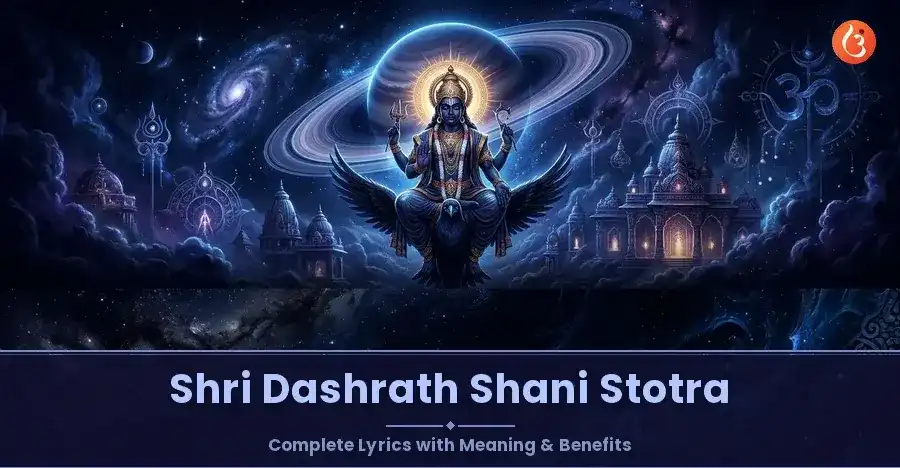
The Dashrath Krit Shani Stotra (दशरथ कृत शनि स्तोत्र) is a powerful Vedic hymn composed by King Dasharatha to appease Lord Shani. According to the Padma Purana, its recitation is one of the most effective remedies to mitigate the harsh effects of Sade Sati, Dhaiyya, and other Saturn-related afflictions. It’s a direct appeal for mercy to the lord of karmic justice, blessed by Shani Dev himself.
Quick Answer
- What: A Vedic hymn composed by King Dasharatha, father of Lord Rama, to praise and pacify Lord Shani.
- Why: To protect his kingdom from a prophesied 12-year drought and gain Shani Dev's blessings. It's now used to reduce the malefic effects of Saturn.
- When: Best recited on Saturdays, especially during the evening (Pradosh Kaal).
- How to Participate: You can complement the recitation by Participating in a Shani Graha Shanti Puja at verified temples.
Table of Contents
- The Legend: Why Did a King Confront a God?
- What Makes this Stotra So Powerful for Devotees?
- Dashrath Krit Shani Stotra: Complete Lyrics in English
- Verse-by-Verse Meaning: Unlocking the Hymn's Power
- How Should You Recite the Stotra for Maximum Impact?
- Who Benefits Most from Chanting this Stotra?
- Participate in Essential Shani Remedies on Utsav
The Legend: Why Did a King Confront a God?
The origin of this stotra is a tale of incredible courage, as described in the Padma Purana (पद्म पुराण). When astrologers warned King Dasharatha that Shani Dev was about to enter the Rohini Nakshatra—a celestial event that would trigger a devastating 12-year famine—he didn't just perform a ritual. He took matters into his own hands. Absolutely determined.
This transit, known as Rohini-Shakata-Bheda, was feared by all, as it was believed to bring immense suffering to the earth. Rather than passively accept fate, Dasharatha embodied the principle of Kshatriya Dharma, the duty to protect one's subjects at any cost. He flew his divine chariot to the planetary realms to confront Shani directly, pleading with him not to afflict his people. Impressed by the king's selflessness and devotion to his kingdom's dharma, Shani Dev granted him a boon. Dasharatha recited this hymn of praise, and in return, Shani promised that anyone who chants it with devotion will be protected from his harshest effects. It’s a powerful story.
What Makes this Stotra So Powerful for Devotees?
This isn't just another hymn. According to verified Utsav pandits, its power comes from its unique origin. Unlike many stotras composed by sages in meditative states, this one was created by a righteous king in a moment of crisis and blessed on the spot by Shani Dev himself. This direct endorsement makes it one of the most authentic and effective tools for Saturn-related challenges.
Why does this matter for you? Chanting it aligns your energy with the very frequency that pleased the Lord of Karma. It’s not about begging for favors; it's about showing the same sincere devotion and responsibility that King Dasharatha did. Shani rewards righteous effort and humility. And that sincerity can make all the difference during a tough transit.
Dashrath Krit Shani Stotra: Complete Lyrics in English
नम: कृष्णाय नीलाय शितिकण्ठनिभाय च ।
नम: कालाग्निरूपाय कृतान्ताय च वै नम: ॥
Namah Krishnaya Neelaya, Shitikantha nibhaya cha |
Namah Kaalagnirupaya Kritantaya cha vai namah ||
Verse 1
Namah Krishnaya neelaya, shitikantha nibhaya cha|
Namah kaalagnirupaya kritantaya cha vai namah ||
Verse 2
Namo nirmans dehaya deergha shmashru jataya cha |
Namo vishal netraya shushkodar bhayakrite ||
Verse 3
Namah pushkal gatraya sthool romnaya vai namah |
Namo deerghay shushkaya kaal dranshta namostute ||
Verse 4
Namaste kotrakshaya durnireekshyaya vai namah |
Namo ghoraya raudraya bheeshanaya karaline ||
Verse 5
Namaste sarv bhakshaya baleemukh namostute |
Surya putra namaste stu bhaskare bhayday cha ||
Verse 6
Adho drishte namaste stu sanwartak namostute |
Namo mandagate tubhyam niristrinshaya vai namah ||
Verse 7
Tapasa dagdha dehaya nityam yogrataya cha |
Namo nityam kshudhartaya atriptaya cha vai namah ||
Verse 8
Gyan chakshur namaste stu kashyap atmaj sunave |
Tushto dadasi vai rajyam rushto harasi tat kshanat ||
Verse 9
Devasur manushyashcha siddha vidyadharo raga |
Tvaya vilokita sarve nasham yanti samoolatah ||
Verse 10
Prasadam kuru me dev vararho ham upagatah |
Evam stutstada sourirgriraho raghunandanah ||
Verse-by-Verse Meaning: Unlocking the Hymn's Power
Understanding what you're chanting deepens its impact. Here’s what King Dasharatha was expressing. It's more than just words.
Verse 1: "I bow to the one who is dark and blue, whose throat is like the blue-throated Shiva. I bow to the one who is like the fire of time and the ultimate ender (Kritanta)."
This acknowledges Shani's formidable, cosmic power. Comparing him to Lord Shiva (Shitikantha) highlights his ascetic nature and his role in dissolution for the sake of cosmic balance.
Verse 2: "I bow to the one who is bodiless, with a long beard and matted hair. I bow to the one with large eyes, a withered stomach, and a fearsome form."
This verse describes Shani's ascetic and intimidating appearance, showing respect for his disciplined nature and detachment from worldly pleasures.
Verse 3: "I bow to the one with a well-built body and thick hair. I bow to the tall, lean one with teeth as strong as time. Salutations to you."
It's a recognition of his physical presence and enduring strength. His form represents the unyielding structure of karmic law.
Verse 4: "Salutations to the one with deep-set eyes, whose gaze is hard to bear. I bow to the terrifying, fierce, and dreadful one."
This is about accepting his role as a just but stern teacher. His gaze penetrates illusions and forces one to confront their own truth.
Verse 5: "Salutations to the one who consumes all, who accepts offerings. Salutations to the son of Surya, the one who brings fear even to the sun."
This highlights his supreme authority in the cosmic order, acknowledging that even his powerful father, Surya, respects his domain of karmic justice.
Verse 6: "Salutations to the one whose gaze is downturned, the dissolver of all. I bow to the slow-moving one, the one who is impartial."
His slow movement (Manda Gati) is what allows karmic lessons to unfold gradually, giving us time to learn and grow. His downward gaze signifies introspection and judgment based on inner truth, not outward appearances.
Verse 7: "To the one whose body is consumed by penance, always engaged in yoga. I bow to the one who is ever-hungry and never fully satisfied."
This speaks to his relentless pursuit of karmic balance. His 'hunger' is for justice and righteousness to prevail in the universe.
Verse 8: "Salutations to the one with the eye of wisdom, the son of Kashyapa's lineage. When pleased, you grant kingdoms, and when angered, you take them away in an instant."
This verse is crucial. It acknowledges his power to both give and take based on karma. He is the ultimate dispenser of the fruits of one's actions, whether they lead to a throne or to ruin.
Verse 9: "Gods, demons, humans, siddhas, and celestial beings—all who are glanced upon by you are completely destroyed."
A powerful statement on the inescapable nature of his influence. Here, "destroyed" refers to the destruction of ego, arrogance, and accumulated negative karma, paving the way for spiritual purification.
Verse 10: "O Lord, grant me your grace, for I have come seeking your boon. Thus praised, the son of Surya was pleased with the descendant of Raghu."
The final appeal, which seals the blessing of the stotra and confirms its efficacy when recited with a pure heart.
How Should You Recite the Stotra for Maximum Impact?
The vidhi (method) for chanting is just as important as the words themselves. Verified pandits recommend following these steps to create the right devotional atmosphere. It's not complicated, but it is essential.
- Purify Yourself: Begin by taking a bath and wearing clean, dark-colored clothes (black or dark blue are ideal).
- Set the Space: Face the west direction. Light a mustard oil lamp (diya) and an incense stick before an image or idol of Shani Dev.
- Take a Sankalpa: With folded hands, state your name, gotra, and the specific reason for your prayer (e.g., relief from Sade Sati). This focuses your intention.
- Make an Offering: Offer blue or black flowers, black sesame seeds (til), and some mustard oil.
- Chant with Intention: Recite the stotra with clear pronunciation and a focused mind. The best practice is to chant it 11 times. Your attitude should be one of humility and acceptance, not fear.
- Timing is Everything: The most auspicious time is on a Saturday, especially during Pradosh Kaal (the period just after sunset). Consistency is key.
Who Benefits Most from Chanting this Stotra?
While anyone can chant this hymn for discipline and focus, it's especially recommended for devotees facing specific astrological challenges. Think of it as a targeted spiritual remedy.
You'll find it most powerful if you are:
* Undergoing Sade Sati: The challenging 7.5-year Saturn transit over your natal moon.
* Experiencing Shani Dhaiyya: The 2.5-year transit of Saturn.
* In a Shani Mahadasha or Antardasha: The major or sub-period of Saturn in your life.
* Born with a weak or afflicted Saturn in your birth chart (kundali), such as a debilitated Saturn or one in a difficult house.
* Working in Saturn-related professions (e.g., law, judiciary, labor, real estate, mining) and seeking stability and ethical growth.
* Seeking to overcome obstacles, delays, and chronic issues in life. Reciting the stotra builds the mental fortitude and patience Shani requires.
Participate in Essential Shani Remedies on Utsav
Reciting the Dashrath Shani Stotra is a powerful personal practice. You can amplify its benefits by pairing it with professionally conducted pujas at verified temples. This combines your personal devotion with the power of formal ritual.
Recommended Pujas for Shani Dev:
* Shanivar Visesh Shani Graha Shanti Weekly Oil & Til Daan Seva: A recurring weekly service to appease Saturn through offerings of oil and sesame seeds. Dakshina starts from ₹51.
* Saturday Special Shani Graha Shanti Weekly Oil & Till Daan: Participate in weekly offerings at the renowned Navgraha Shani Mandir in Ujjain.
* 23,000 Shani Mool Mantra Jaap & Tel Abhishek: A more intensive ritual involving a large number of mantra recitations for significant relief.
When you Participate through Utsav, pandits chant your Nama and Gotra during the ritual, and you receive a video of the puja and authentic prasad delivered to your home.
Scripture Composer/History
The Dashrath Shani Stotra is attributed to King Dasharatha of Ayodhya, the father of Lord Rama from the Treta Yuga. Its origin is detailed in the Padma Purana, one of the eighteen major Puranas. Composed in classical Sanskrit, the hymn is unique as it was not revealed to a sage in meditation but was spontaneously composed by a righteous king during a direct confrontation with Shani Dev. Dasharatha recited it to prevent a catastrophic 12-year famine in his kingdom. The stotra has been transmitted for millennia through the Puranic tradition and is highly revered in Jyotish (Vedic astrology), where priests and devotees use it as a primary remedial measure to pacify Saturn's malefic influences.
Sources & References
Scriptural Authority:
- Padma Purana, Uttara Khanda — The primary source text detailing the legend of King Dasharatha's encounter with Shani Dev.
Compositional Authority:
- King Dasharatha of Ayodhya, Ikshvaku Dynasty — The composer of the stotra.
Recitation & Vidhi Tradition:
- Jyotisha Shastras and traditional temple practices for Graha Shanti (planetary pacification).
Related Pujas on Utsav:
- Shani Graha Shanti Pujas at Navgraha Mandir, Ujjain
- You can also read the Dashrath Krit Shani Stotram in Hindi.