Dolyatra Festival: History, Rituals, Stories & Holi Celebrations in India
As the change from winter to spring occurs, many people are remembering the fun and exciting festival of Dolyatra or Holi, which represents love, happiness and the start of a new season - when everything is alive again! Dolyatra is a beautiful celebration of life (represented by all the different colours!), filled with laughter, music and community spirit.
This blog will look at the different ways of celebrating Dolyatra, providing insight into all the different cultures and religions around India and the many customs celebrated on this special day.
Table of Contents
- History of Dolyatra
- Swinging ceremony
- Dolyatra Rituals and Celebrations
- The story associated with Dolyatra
- The story of Radha and Krishna
- Sri Chaitanya Mahaprabhu’s birthday
- The story of Narsimha Avatar
- Dolyatra Puja Vidhi and Mantras
History of Dolyatra
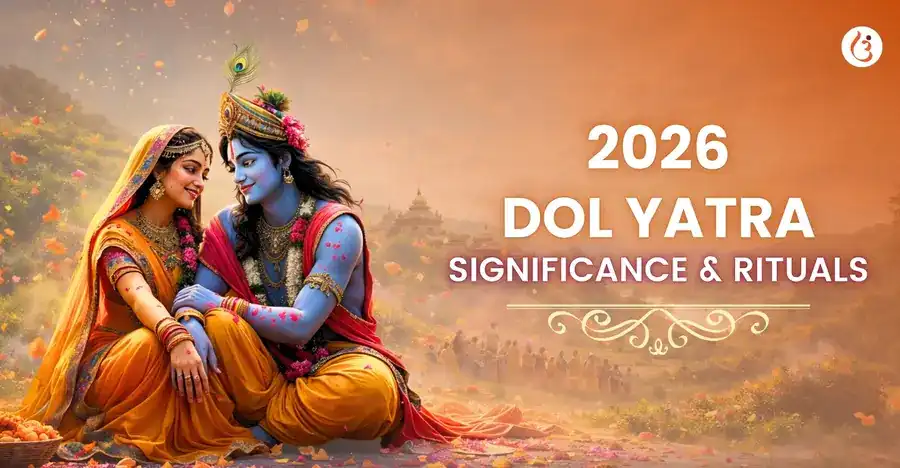
Dolyatra has been linked to many ancient Hindu texts and relates directly to the lives of Krishna and Radha, and their special love for one another. Together these two deities shared an incredible relationship, and their love overcame everything, including all the rules and regulations created by mortal beings. While there are some regional differences, many parts of India celebrate Dolyatra with the same excitement, love, and joy... much like the festival of Holi does!
Swinging Ceremony
One of the most important characteristics of Dolyatra is the "Dola" (Swing) Ceremony. The swing carries the pictures of Lord Krishna and Radha, which are elaborately dressed and decorated, as well as an image/installations representing the divine pair of Krishna and Radha swinging back and forth, signifying friendship and joy. Beautiful Kaengs (swings) are constructed throughout villages/towns from flowers, bamboo and/or colourful material. The act of swinging is meant to illustrate the joyous and playful nature of Krishna; therefore, it is an encouragement to celebrate with Krishna, as well as he sends devotees, pilgrims and revelers into an elevated state of happiness. Children are often prominent participants in the swing ceremony; they will often help push the swing with joy, sing traditional songs that are associated with Dolyatra and add to the joyous nature of the event.
Dolyatra Rituals and Celebration
Many rituals and traditions are performed during this divine festival. Here is the list of the Rituals and Traditions:
1. Celebration: Devotees place the idol of Lord Krishna and Goddess Radha on the decorated swings and sing bhajans and kirtans.
2. Offering and Puja: On this sacred day, devotees perform special prayers and offer various sweets to Radha and Krishna. They also chant the name of Radha Krishna.
3. Playing with color: On this day, people play with colors (abir) to each other which represents unity and love. Devotees also sing and dance in praise of the deities. On this day, the streets in India are filled with people playing with colors and water.
4. Feasting: Food plays an important role in this festival as people prepare gujiya, malpua, sandesh, rasgulla, and ladoos. These sweets are distributed among friends and family.
The story associated with Dolyatra
1. The story of Radha Krishna
According to Hindu Scriptures, Lord Krishna once asked his mother, Yashoda, why Radha was so fair and I am dark. Yashoda Mata suggested Krishna to apply colors on Radha’s face to check if the colors change her complexion. That’s how the Tradition of Playing colors (abir) was started. When people engage in this fun activity, it represents the start of Dolyatra (Holi) and symbolizes appreciation for other people as well as love and unity for all.
2. Sri Chaitanya Mahaprabhu's Birthday
Dol Purnima (or Gaura Purnima), the day that Sri Chaitanya Mahaprabhu was born in 1486 AD at Nabadwip, West Bengal, India. He made the voting process popular through Hare Krishna and encouraged understanding and mutual appreciation amongst his followers. Many devotee practitioners of Gaudiya Vaishnavism practice special kirtan and perform other activities on this auspicious day to show their respect for the birthday of Sri Chaitanya Mahaprabhu.
3. The story of Narasimha Avatar
The demon king Hiranyakashipu obtained a boon from Lord Brahma (the creator) after performing penance. This boon makes him invincible, he cannot be killed by man or beast, he cannot die from inside and outside, he cannot be killed by any weapons, he cannot die in day and night, and he cannot die on land, air, or water. Hiranyakashipu wanted to kill his son Praladh who is a devotee of Lord Vishnu and this made him furious. He tried multiple times to kill Praladh, but Lord Vishnu protected him.
One day, Hiranyakashipu challenged his son and struck a pillar, demanding Vishnu to appear. From that pillar, Lord Narasimha ( an avatar of Lord Vishnu) appeared, who was half-man and half-lion. Narasimha defeated and killed Hiranyakashipu in a unique way that bypassed the boon - He placed him on his lap (not land, water, or air), He appeared at twilight (neither day nor night), He used his claws (not any weapon), He was half-man, half-lion (neither man nor beast), He killed him at the threshold of the palace (neither inside nor outside). Narasimha proved that good always wins over evil.
Dolyatra Puja Vidhi and Mantras
1. Preparation:
- Devotees should wake up early in the morning and take a holy bath.
- Wear clean and traditional attire (preferably yellow or white).
- Devotees must clean the puja area and decorate it with flowers and rangolis.
2. Sankalp (Pray Rajdhani)
The votive should sit with their backs to the Deity and light a diya with ghee as an offering to their beloved. So they can make a Sankalp (to take a sacred vow ) to perform this pooja with love and devotion while also meditating on both Lord Krishna and Goddess Radha, Devotees should chant the following Sankalp Mantra before participating in the Sacred Ceremony – “Om Asya Shri Krishna Prasada Siddharthi Sankalpam Kareeshye”
Once that is complete and the Deity has received decoration with flowers, the next step is to offer pooja, which can be done at one‘s home.
1. Sprinkle Ganga Jal (Holy Waters) on the Deity to purify;
2. Apply Sandalwood Paste (Chandan) and Flowers (Lotus, Marigold, or Tulsi);
3. Recite Krishna Moola Mantra to invite blessings;
4. Place the deities on decorative swings and sing Bhajans/Kirtans.
Krishna Moola Mantra – "Om Kleem Krishnaya Namah".
4. Prasad:
Kheer, Malpua, Sandesh & Rasgulla, and Panta Bhat – Fermented rice (offered in some traditions).
5. Playing with color:
Devotees should apply abir (colored powder) on Krishna’s idol as a mark of devotion.
6. Perform Arti
Perform Arti with a ghee lamp, camphor, and flowers, and also chant the mantra.
Arti Mantra: Jai Radha Madhava, Jai Kunj Bihari
Gopi Jana Vallabha, Girivardhari.