Lakshmi Jayanti 2026: Date, Meaning, Puja Rituals & Falgun Purnima Significance
The festival of Lakshmi Jayanti honors the goddess Lakshmi's birth. It occurs on the full moon day, also called Falgun Purnima, during the Falgun month. Devotees fully dedicate themselves to worshiping Maa Lakshmi, the Goddess of wealth and prosperity, on this auspicious occasion. Madan Purnima and Vasant Purnima are other names for the festival. Lakshmi Jayanti is celebrated as Uttara Phalguninakshatram in various areas. Goddess Lakshmi sprang from the ocean's churning on this day. Lakshmi is a goddess of wealth and purity.
Table of Contents
- Date and timings of Lakshmi Jayanti
- Meaning of Lakshmi Jayanti
- Legend of Goddess Lakshmi
- Rituals and Celebrations
Date and timings of Lakshmi Jayanti
Lakshmi Jayanti will take place on Tuesday, March 3, 2026. According to the lunar calendar, Phalguna Purnima (Full Moon Day) falls in the month of Phalguna.
Timings mings for Lakshmi Jayanti 2026:
• Purnima Tithi begins at 05:55 PM on March 2, 2026
• Purnima Tithi ends at 05:07 PM on March 3, 2026.
Meaning of Lakshmi Jayanti
By worshiping Lakshmi Devi with fervor, devotees receive her blessings. The mantras or yantras that are followed by the offerings and ceremonies satisfy Goddess Lakshmi. All of the devotees' wishes will come true if Goddess Lakshmi is pleased. Goddess Lakshmi also bestows spiritual knowledge, supernatural techniques, and mental and spiritual serenity.
Lakshmi puja is thought to have great power.The financial crisis is alleviated by the goddess Lakshmi. Success in all area of life is brought about by this pooja. This puja should be performed by devotees in order to avoid financial difficulties in their lives. To get Goddess Lakshmi's blessings, the puja must be offered with fervor.
Legend of Goddess Lakshmi
The Sanskrit term Lakshya, which means aim, is the source of the word Lakshmi.The Goddess of wealth, prosperity, and good fortune is Lakshmi. She also promotes spiritual and material development. She shields her followers from suffering and financial difficulties. She is also known as Shri and is the consort of Lord Vishnu. Lakshmi is the daughter of Bhrigu and Khyaati, according to the Vishnu Purana. Because of the curse of the sage Durvasa, she left Swarga and settled in Ksheera Sagara. She is the sister of both the planet Chandra and the yogi Sukracharya.Chandra and Lakshmi emerged from the sea when the Devas and Daanavaas stirred the ksheera Sagara, or ocean of milk.
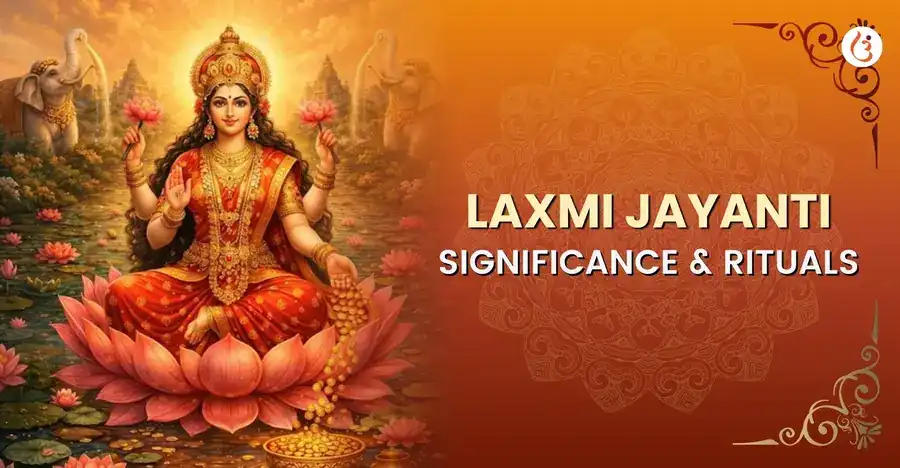
Adi Param Prakriti, the spiritual feminine force of Lord Vishnu, is embodied in Lakshmi, who empowers and elevates her devotees to a greater level of spirituality. She is the beauty goddess. She has long, wavy hair and a golden complexion, which are symbols of happiness.Fulfillment is symbolized by her crimson or golden attire, gold-studded crown, and gold jewels. The Abhay and Gyan mudras on her right hand represent strength and intelligence.She is shown as a giver of money and prosperity, holding a paddy sheaf and a pot of gold in her left hand.
Rituals and Celebrations
The four wicks of Deepak are lit, and the idol of Goddess Lakshmi is set on the altar. Above it, conch are also positioned. Roli and Chawal are used in Lakshmi Maa's abhisheka. To honor Goddess Lakshmi, the idol is presented with flowers and garlands, and the Aarti is performed.Following the prayers, the sweets are distributed to all of the devotees as the bhog of Goddess Lakshmi.