Sharad Purnima 2026: Date, Kojagiri Rituals & Raas Leela Story
Sharad Purnima 2026 falls on Sunday, October 25. This auspicious night, also known as Kojagiri or Sharad Purnima, is when the moon is believed to shower divine nectar (Amrit) upon the Earth. According to the Brahma Purana, the moon shines with all 16 kalas (divine virtues), and its rays carry immense healing and spiritual power. Devotees worship Goddess Lakshmi for prosperity and celebrate Lord Krishna's divine Raas Leela.
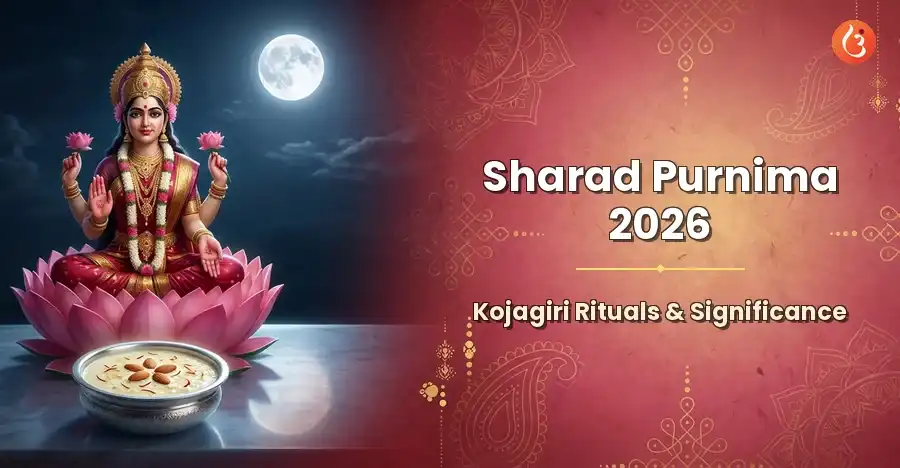
Table of Contents
- Sharad Purnima 2026: Date, Tithi & Shubh Muhurat
- The Triple Significance of Sharad Purnima
- The Legend of Kojagiri: Why Goddess Lakshmi Visits Earth
- Sharad Purnima Puja Vidhi: Step-by-Step
- Sharad Purnima Samagri Checklist
- Lakshmi Aarti
- Key Mantras for Sharad Purnima
- Sharad Purnima Vrat (Fasting) Rules
- Do's and Don'ts on Sharad Purnima
- How Sharad Purnima Is Celebrated Across India
- Sources & References
Sharad Purnima 2026: Date, Tithi & Shubh Muhurat
The timings for this festival are absolutely critical, as the rituals are aligned with the moon's presence. According to verified Panchang data, the Purnima tithi is predominantly active during the night of October 25th, making it the primary day for all observances. You need to get this right.
- Purnima Date: Sunday, October 25, 2026
- Purnima Tithi Begins: 11:55 PM on Oct 25, 2026
- Purnima Tithi Ends: 09:41 PM on Oct 26, 2026
- Moonrise on Sharad Purnima: Approx. 05:45 PM
- Kojagari Lakshmi Puja Muhurat: 11:40 PM (Oct 25) to 12:31 AM (Oct 26)
Here’s what that means for you. Plan your puja and kheer preparation for the night of the 25th to harness the most powerful lunar energies.
City-wise Moonrise Timings for October 25, 2026
City | Moonrise Time |
|---|---|
Delhi | 05:46 PM |
Mumbai | 06:19 PM |
Varanasi | 05:27 PM |
Chennai | 06:01 PM |
Kolkata | 05:09 PM |
The Triple Significance of Sharad Purnima
This isn't just another full moon night; it's a convergence of three powerful spiritual streams. The Skanda Purana describes the Ashwin Purnima moon as unique in the entire year. Why does this matter so much? Because each aspect offers a different path to divine connection.
- Kaumudi Vrat (The Moon's Nectar): This is the only night the moon is believed to shine with all 16 kalas (divine virtues). Its rays are considered equivalent to Amrit (divine nectar), possessing profound healing and nourishing properties. The ritual of placing kheer in the moonlight isn't just a tradition; it's a method of charging food with this celestial energy.
- Kojagiri Purnima (Lakshmi's Blessings): This night is deeply connected to the Goddess of Wealth. It's believed that Goddess Lakshmi descends to Earth asking "Ko jagarti?" ("Who is awake?"), blessing devotees who are awake, fasting, and chanting her name with immense prosperity. It’s a divine audit of devotion. You can learn more about her worship on Lakshmi Jayanti.
- Raas Purnima (Krishna's Divine Love): For Vaishnavas, this is the holiest of nights. The Bhagavata Purana (Canto 10) provides a beautiful description of the Maha Raas, where Lord Krishna multiplied himself to dance with every Gopi in Vrindavan. It symbolizes the ultimate union of the Jivatma (individual soul) with the Paramatma (Supreme Soul). This divine event is also celebrated as Rash Purnima.
The Legend of Kojagiri: Why Goddess Lakshmi Visits Earth
The tradition of staying awake all night (jagran) comes from a powerful story, documented in regional folklore and Puranic narratives. It’s a story about faith and divine reward. A righteous king, through a series of misfortunes and past karmic debts, had lost all his wealth. His queen, a devout follower of Goddess Lakshmi, was deeply distressed.
On the advice of a sage, the queen observed a strict fast and performed a jagran on the night of Ashwin Purnima. She worshipped Goddess Lakshmi with full devotion, staying awake and singing her praises. Pleased by her unwavering faith, Goddess Lakshmi appeared and blessed the couple, restoring their kingdom's prosperity. This story isn't just a legend; it's the foundation of the belief that sincere devotion on this night can reverse fortunes.
Sharad Purnima Puja Vidhi: Step-by-Step
Following the correct procedure is essential to receive the full blessings of this night. This vidhi, based on traditional Grihya Sutra practices, is simple enough for any devotee to perform at home. It’s a direct way to connect with the divine energies at play.
- Preparation: First, clean your entire home. A clean space invites positive energy. Then, take a ritual bath and wear clean, preferably white or yellow, clothes.
- Sankalp: Sit in your puja area, hold some water and flowers in your hand, and take a vow (sankalp) to observe the fast and perform the puja with pure devotion for the well-being of your family.
- Kheer Preparation: Prepare a simple rice kheer (rice pudding) with milk and sugar. It's best to cook it in a silver or earthen pot if you have one.
- Lakshmi Puja: During the Nishita Kaal (midnight), install an idol or image of Goddess Lakshmi on a clean cloth. Offer her red flowers, incense, kumkum, and fruits as naivedya.
- Moon Worship: When the moon is clearly visible, offer it Arghya—a simple offering of milk, water, and uncooked rice from a small pot.
- Placing the Kheer: Now, place the pot of kheer under the direct moonlight. It should be covered with a thin cloth to prevent anything from falling into it. Let it absorb the lunar rays for at least 3-4 hours.
- Jagran (Vigil): This is the most important part. You must stay awake for the night, singing bhajans, chanting mantras, and reading stories of Goddess Lakshmi.
- Prasad Distribution: The next morning, the moon-charged kheer becomes divine prasad. Distribute it among all family members before consuming any other food.
Sharad Purnima Samagri Checklist
Being prepared makes the puja process smooth and devotional. Here’s a simple checklist of items you’ll need.
Category | Item | Purpose |
|---|---|---|
Puja Items | Idol/Image of Lakshmi, Kumkum, Haldi, Chandan, Akshat | Deity worship and adornment |
Lamps & Incense | Ghee Diya, Agarbatti, Camphor (Kapur) | Invoking divine presence |
Offerings | Rice, Milk, Sugar, Makhana, Coconut, Fruits, Betel Leaves | For Kheer and Naivedya |
Special Items | Silver or Earthen Pot, Thin White Cloth | For preparing and covering the kheer |
For the Devotee | Clean White/Yellow Clothes, Asana (mat) | For performing the puja |
Lakshmi Aarti
The Aarti is the culmination of your puja, an expression of pure devotion. After the midnight Lakshmi puja, sing the "Om Jai Lakshmi Mata" aarti with your family. It's a powerful and beautiful hymn.
ॐ जय लक्ष्मी माता, मैया जय लक्ष्मी माता।
तुमको निशदिन सेवत, हरि विष्णु विधाता॥
ॐ जय लक्ष्मी माता...
Om Jai Lakshmi Mata, Maiya Jai Lakshmi Mata,
Tumko nishdin sevat, Hari Vishnu Vidhata.
Om Jai Lakshmi Mata...
Meaning: This aarti praises Goddess Lakshmi as the universal mother, served day and night by even Lord Vishnu. It's a prayer acknowledging her supreme power to grant wealth, fortune, and liberation.
Recitation: Sing this once with deep feeling at the end of the puja, while offering a ghee lamp to the Goddess.
Key Mantras for Sharad Purnima
Mantra chanting on Sharad Purnima is especially potent, as the full moon's divine rays are believed to amplify the spiritual energy of the night. The vibrations from these sacred chants align your consciousness with the benevolent frequencies of Goddess Lakshmi and Chandra Deva.
Lakshmi Mool Mantra
ॐ श्रीं महालक्ष्म्यै नमः
Om Shreem Mahalakshmyai Namah
Meaning: I bow to the great Goddess Lakshmi, the source of all abundance, both material and spiritual. The Bija (seed) sound "Shreem" within this mantra is the sonic essence of Lakshmi's prosperous energy.
Recitation: Chant this 108 times using a kamal gatta (lotus seed) or crystal mala during the midnight puja.
Chandra (Moon) Mantra
ॐ सों सोमाय नमः
Om Som Somaya Namah
Meaning: I bow to Soma, the Moon God, who is the source of divine nectar (amrita) and tranquil coolness. This mantra invokes his healing and calming properties.
Recitation: Chant this while offering Arghya to the moon or while meditating under its light to absorb its restorative vibrations.
Sharad Purnima Vrat (Fasting) Rules
Observing a fast on this day purifies the body and mind, making you more receptive to divine grace. It's not about starvation; it's about discipline.
- Type of Fast: Most devotees observe a Phalahar fast (consuming only fruits, milk, and vrat-specific items) or an Ekabhukta fast (eating only one meal after the puja).
- What to Eat: Milk products, fruits, sabudana, makhana, and other foods permitted during fasts are perfectly fine.
- What to Avoid: You must strictly avoid grains, salt (in some traditions), onion, garlic, non-vegetarian food, and alcohol.
- When to Break (Paran): The fast is traditionally broken on the morning of October 26, 2026, after consuming the moon-charged kheer as the first food.
Do's and Don'ts on Sharad Purnima
To maximize the benefits of this sacred night, there are a few simple guidelines to follow. Think of them as a way to maintain a pure and positive environment.
Do's
- Wear white or other light-colored clothes to better absorb the moon's positive energy.
- Spend at least 15-30 minutes meditating or simply sitting under the moonlight.
- Stay awake as long as possible, ideally all night, chanting or listening to bhajans.
- Donate white-colored items like rice, sugar, milk, or silver to the needy on the next day.
- Maintain a calm and positive state of mind.
Don'ts
- Don't consume tamasic foods (onion, garlic, non-veg) or alcohol.
- Avoid getting into arguments or using harsh language. This disturbs the sattvic energy.
- Try not to sleep during the night if you are observing the jagran.
- Don't hold onto anger or resentment. It's a night for purification.
How Sharad Purnima Is Celebrated Across India
The beauty of Sanatana Dharma is its unity in diversity, and Sharad Purnima celebrations reflect this perfectly. As per regional Panchangs, the core essence remains the same, but the expressions differ.
- Maharashtra & Gujarat: Here, it's popularly known as Kojagiri Purnima. Families and communities gather on terraces, play games, and drink sweetened, saffron-infused masala milk that has been kept under the moonlight.
- Braj Region (Uttar Pradesh): This is the heart of Raas Purnima. Temples in Vrindavan and Mathura are decorated, and special enactments of the Raas Leela are performed. It's a celebration of pure devotional love.
- Odisha: The festival is called Kumar Purnima. It's a significant day for unmarried women, who perform rituals to pray for a suitable and loving husband, inspired by Lord Kartikeya.
- Bengal: In Bengal, this night is celebrated as Lokkhi Pujo. Households worship Goddess Lakshmi with elaborate rituals, offering fruits, sweets, and coconut-based delicacies, similar to the celebrations during Diwali.
Sources & References
Scriptural Authority:
- Brahma Purana & Skanda Purana (Significance of Ashwin Purnima and the Moon's 16 Kalas)
- Bhagavata Purana, Canto 10, Chapters 29-33 (The authoritative narrative of the Maha Raas Leela)
- Kojagari Vrat Katha (Traditional folklore associated with Lakshmi Puja on this night)
Panchang & Timing:
- Drikpanchang.com (Tithi and muhurat timings cross-verified for 2026)
- Utsav Panchang (https://utsavapp.in/panchang)
Related Gyan Articles on Utsav:
- Rash Purnima: The Divine Dance of Love
- Lakshmi Jayanti: The Auspicious Appearance of the Goddess