
- Tithi begins
- 15 Jan, 2:13 PM
- Tithi ends
- 16 Jan, 1:42 PM
About Banada Ashtami
The bright-half Ashtami of Paush, when Karnataka's Banashankari festival and North India's Shakambhari Navratri begin, honouring the Mother who feeds the world.
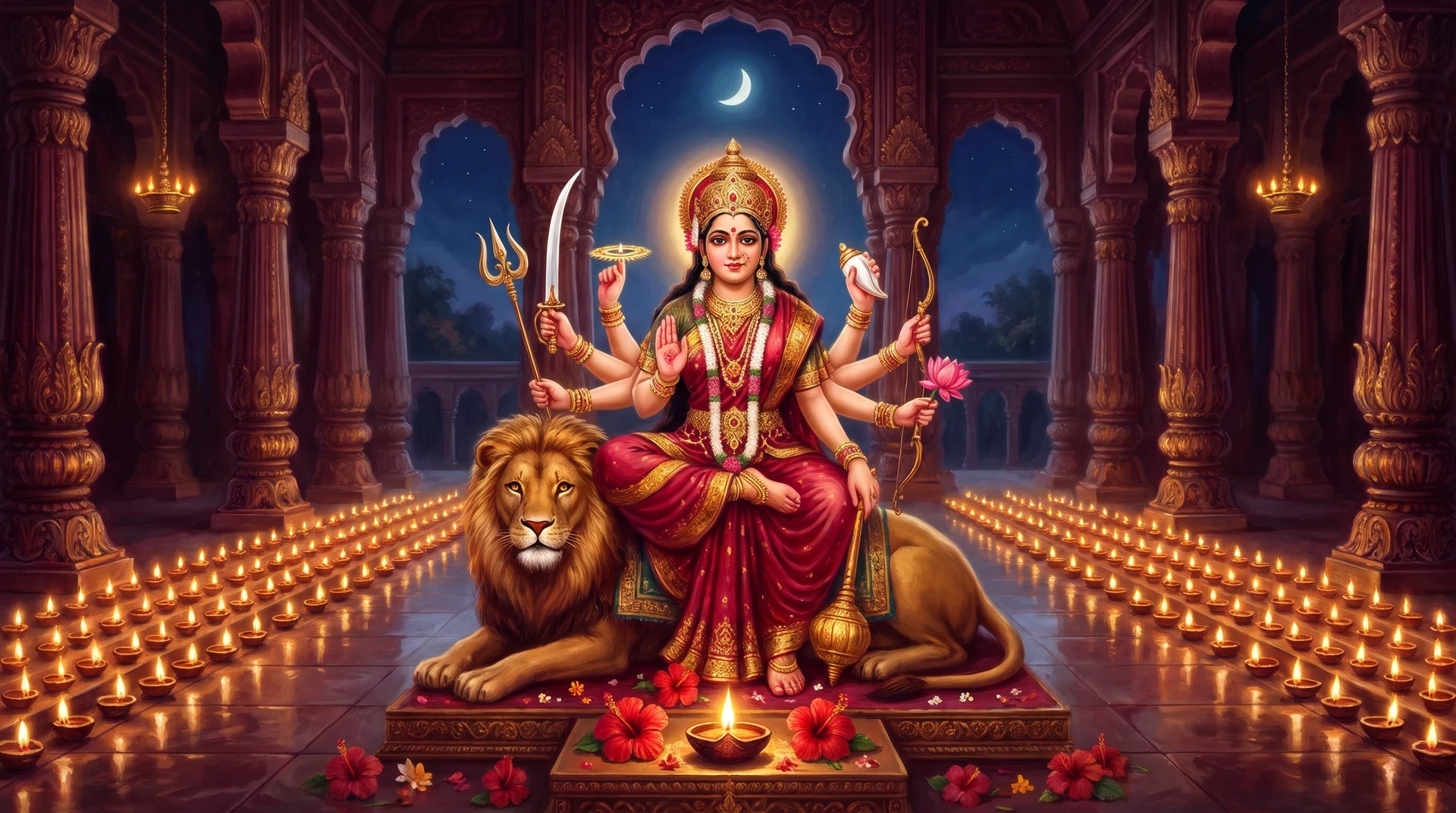
Banada Ashtami, on the Ashtami of the bright half (Shukla paksha) of Paush, is the day of Banashankari Amma, the forest goddess worshipped as Shakambhari. In Karnataka it opens the Banashankari Jatre near Badami, and in North India Shakambhari Navratri, both running until Paush Purnima.
The story behind it
The Devi Bhagavatam tells that when the rains failed for a hundred years, the sages prayed to the Divine Mother. She appeared with countless eyes, and her tears became rain. She fed the world with greens from her own body, so she was called Shakambhari and Shatakshi. She also defeated Durgamasura, who caused the drought, and became known as Durga.
How it is observed
- Devotees fast and do Devi puja, many until Paush Purnima.
- At Badami, the jatre opens with pujas and a fair.
- The goddess is decorated with vegetables, fruits and greens.
- Annadaan, in the spirit of the Mother who fed the world.
What devotees offer
- Fresh vegetables, greens and seasonal fruits.
- Red flowers, kumkum and a green or red sari.
- Daan of food, grain and vegetables.
Panchang for the day
Saturday, 16 January 2027 · Times for Delhi
What is Ashtami
The 8th day of each half of the lunar month, kept for Ma Durga in the bright half and for Kaal Bhairav and Krishna in the dark half.
Ashtami, the 8th tithi, comes twice a month. In the bright half (Shukla paksha) it is Masik Durgashtami, for Ma Durga. In the dark half (Krishna paksha) it is Kalashtami, for Kaal Bhairav, Shiva's fierce form, and Masik Krishna Janmashtami.
Why it matters
Tradition sees Ashtami as a day of shakti and protection. Devotees pray to Ma Durga for courage and the family's safety, and to Kaal Bhairav, guardian of Kashi, to be free of fear. On Masik Janmashtami, they remember Krishna's birth.
Ashtami through the year
Krishna Janmashtami, the night of Krishna's birth, is the biggest Ashtami of all, and Radha Ashtami comes about two weeks later. Durga Ashtami (Maha Ashtami) is the eighth day of Navratri. Mothers fast on Ahoi Ashtami for their children, and Kaal Bhairav Jayanti falls on the Kalashtami of Margashirsha.
What to do
- Keep a gentle fast: fruit and milk, or one simple meal.
- On Durgashtami, some families feed young girls as forms of the Devi.
- On Kalashtami, many read the Kaal Bhairav Ashtakam and feed a dog.
- On Masik Janmashtami, sing Krishna's bhajans and stay up for midnight puja.
What to avoid
- Many avoid meat, eggs, alcohol, onion and garlic; those fasting skip grains.
- Seeing women and girls as forms of the Devi, devotees avoid disrespect.
- On Kalashtami, devotees never hurt or chase away a dog.
- Elders, the unwell and pregnant women keep a lighter fast, or none.
Recommended Pujas


Recommended Bhet
Varahi Mata Uttarakhand Visesh Path & Daan Seva
Puja For Getting Relief from Land Related Issues

Varahi Devi Temple, Devidhura
Fri - Dec 04, 2026 - Shukravar Visesh

Adi Kaal Bhairav Kashi Visesh Daan Seva
Get Prosperity and Growth in your life
Adi Kaal Bhairav, Varanasi
Sun - Nov 29, 2026 - Ravivar Visesh