
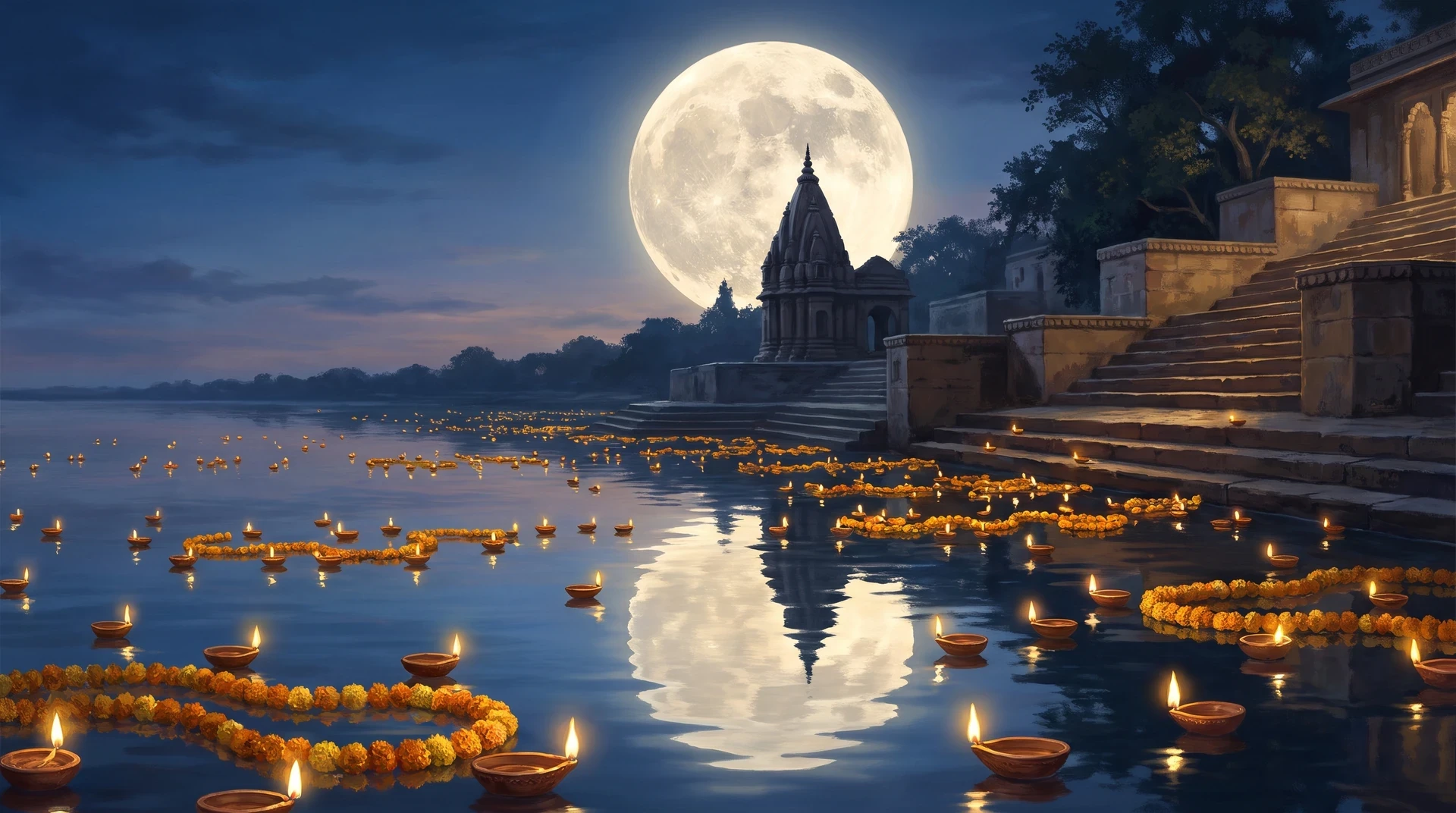
- Tithi begins
- 21 Jan, 9:29 PM
- Tithi ends
- 22 Jan, 5:46 PM
About Paush Purnima
The full moon of Paush, when the month-long Magh Snan and Kalpavas begin at Prayagraj. A day for a holy winter bath, prayer to Surya and Daan.
Paush Purnima is the full moon (Purnima tithi) ending the bright half (Shukla paksha) of Paush, in deep winter. It begins Magh Snan, a month of daily holy baths until Maghi Purnima, during the Magh Mela at Prayagraj. It is also Shakambhari Jayanti.
The story behind it
Paush Purnima has no single story; its meaning comes from the holiness of Magh, when tradition holds the gods come down to bathe at the Sangam. Kalpavasis live in simple tents by the river for the month, bathing before dawn, eating one meal a day and praying. For others, it is a gentle start to a month of simple prayer.
How it is observed
- An early holy bath, or with Ganga jal at home.
- Arghya to the Sun at dawn and the moon in the evening.
- Satyanarayan puja and Katha, and Kalpavasis take their Sankalp.
- Daan of blankets, warm clothes, til and jaggery.
What devotees offer
- Water, red flowers and akshat in arghya to the Sun.
- Til laddoos, jaggery and kheer as Bhog.
- Annadaan, and Daan of blankets and warm clothes.
Panchang for the day
Friday, 22 January 2027 · Times for Delhi
What is Purnima
The full moon day that ends the bright half of every lunar month, kept with prayer to Vishnu and the moon, holy baths and Daan.
Purnima is the full moon day, the 15th and last tithi of the bright half (Shukla paksha), coming once a month. It is linked with Lord Vishnu and Chandra Dev (the moon), and in many homes with Ma Lakshmi.
Why it matters
Tradition sees the full moon as a time of calm. The moon is linked with the mind, and devotees believe prayer on Purnima brings peace and clarity. A holy bath, Daan and the Satyanarayan Katha are seen as especially meaningful.
Purnima through the year
Many big festivals fall on a Purnima. In much of North India, Hanuman Jayanti is on Chaitra Purnima. Guru Purnima is in Ashadha, Raksha Bandhan in Shravan, and Holika Dahan is lit on Phalguna Purnima. On Sharad Purnima, kheer is kept out in the moonlight. Kartik Purnima brings Dev Deepawali.
What to do
- Invite family or neighbours to the Satyanarayan Katha and share the prasad.
- In the evening, light ghee diyas at the Tulsi and main door.
- After the arghya, sit quietly in the moonlight with japa or prayer.
- Give food or clothes to someone in need, or feed a cow.
What to avoid
- Many avoid meat, eggs, alcohol, onion and garlic; those fasting skip grains.
- Tradition holds the fast is not broken before arghya to the moon.
- If clouds hide the moon, many offer arghya at moonrise time.
- Elders, the unwell and pregnant women may fast lightly or simply pray.
Recommended Pujas

Recommended Bhet

Gajlaxmi Temple Ujjain Visesh Daan Seva
Seek blessings of wealth and prosperity in your life

Gaj Laxmi Mandir, Ujjain
Fri - Dec 04, 2026 - Shukravar Visesh
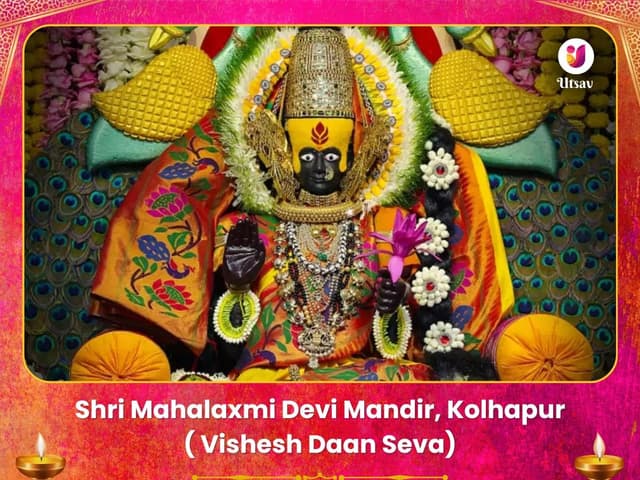
Mahalaxmi Temple Kolhapur Visesh Daan Seva
Attain blessings of wealth, prosperity, and financial well-being.
Mahalaxmi Temple, Kolhapur
Fri - Dec 04, 2026 - Shukravar Visesh