

- Tithi begins
- 21 Jan, 9:29 PM
- Tithi ends
- 22 Jan, 5:46 PM
About Shakambhari Purnima
The full moon of Paush, the last day of Shakambhari Navratri, when Ma Shakambhari is honoured as the goddess who fed the world with greens, fruits and vegetables.
Shakambhari Purnima, also called Shakambhari Jayanti, is the Purnima tithi of Paush. It closes Shakambhari Navratri, which begins on the Ashtami of the same Shukla paksha. Ma Shakambhari, a form of Ma Durga, is "she who carries greens", the mother who nourishes.
The story behind it
The Devi Mahatmya tells that the asura Durgama hid away the Vedas. Prayer stopped and a long drought followed. The gods prayed to the Devi, who appeared as Shatakshi, with a hundred eyes. Her tears fell as rain, and she fed everyone with greens and fruits from her own body. Then she defeated Durgama and returned the Vedas.
How it is observed
- Many fast or eat sattvic food through Shakambhari Navratri.
- The Devi is decorated with fresh vegetables, fruits and greens.
- Reading the Durga Saptashati, with bhajans in the evening.
- Cooked vegetables and fruit shared as prasad, and Annadaan.
What devotees offer
- Fresh seasonal vegetables, leafy greens and fruits.
- Red flowers, a red chunri and kumkum to the Devi.
- Halwa, puri or a vegetable dish as Bhog.
Panchang for the day
Friday, 22 January 2027 · Times for Delhi
What is Purnima
The full moon day that ends the bright half of every lunar month, kept with prayer to Vishnu and the moon, holy baths and Daan.
Purnima is the full moon day, the 15th and last tithi of the bright half (Shukla paksha), coming once a month. It is linked with Lord Vishnu and Chandra Dev (the moon), and in many homes with Ma Lakshmi.
Why it matters
Tradition sees the full moon as a time of calm. The moon is linked with the mind, and devotees believe prayer on Purnima brings peace and clarity. A holy bath, Daan and the Satyanarayan Katha are seen as especially meaningful.
Purnima through the year
Many big festivals fall on a Purnima. In much of North India, Hanuman Jayanti is on Chaitra Purnima. Guru Purnima is in Ashadha, Raksha Bandhan in Shravan, and Holika Dahan is lit on Phalguna Purnima. On Sharad Purnima, kheer is kept out in the moonlight. Kartik Purnima brings Dev Deepawali.
What to do
- Invite family or neighbours to the Satyanarayan Katha and share the prasad.
- In the evening, light ghee diyas at the Tulsi and main door.
- After the arghya, sit quietly in the moonlight with japa or prayer.
- Give food or clothes to someone in need, or feed a cow.
What to avoid
- Many avoid meat, eggs, alcohol, onion and garlic; those fasting skip grains.
- Tradition holds the fast is not broken before arghya to the moon.
- If clouds hide the moon, many offer arghya at moonrise time.
- Elders, the unwell and pregnant women may fast lightly or simply pray.
Recommended Pujas

Recommended Bhet

Gajlaxmi Temple Ujjain Visesh Daan Seva
Seek blessings of wealth and prosperity in your life

Gaj Laxmi Mandir, Ujjain
Fri - Dec 04, 2026 - Shukravar Visesh
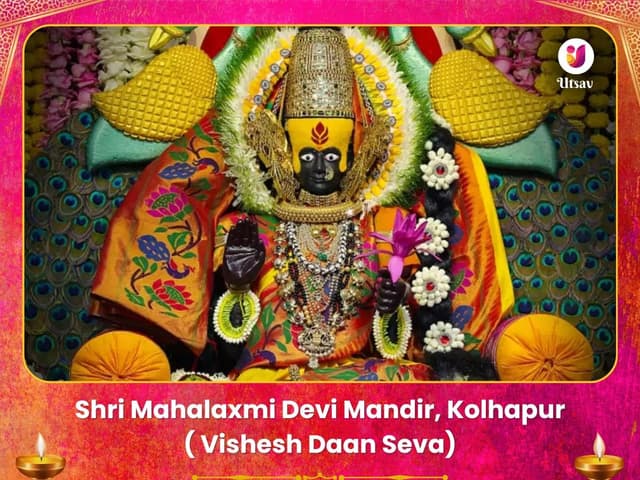
Mahalaxmi Temple Kolhapur Visesh Daan Seva
Attain blessings of wealth, prosperity, and financial well-being.
Mahalaxmi Temple, Kolhapur
Fri - Dec 04, 2026 - Shukravar Visesh